Élevé · Issue 4 · Quietly Extraordinary
The Blessing He Couldn’t Keep to Himself
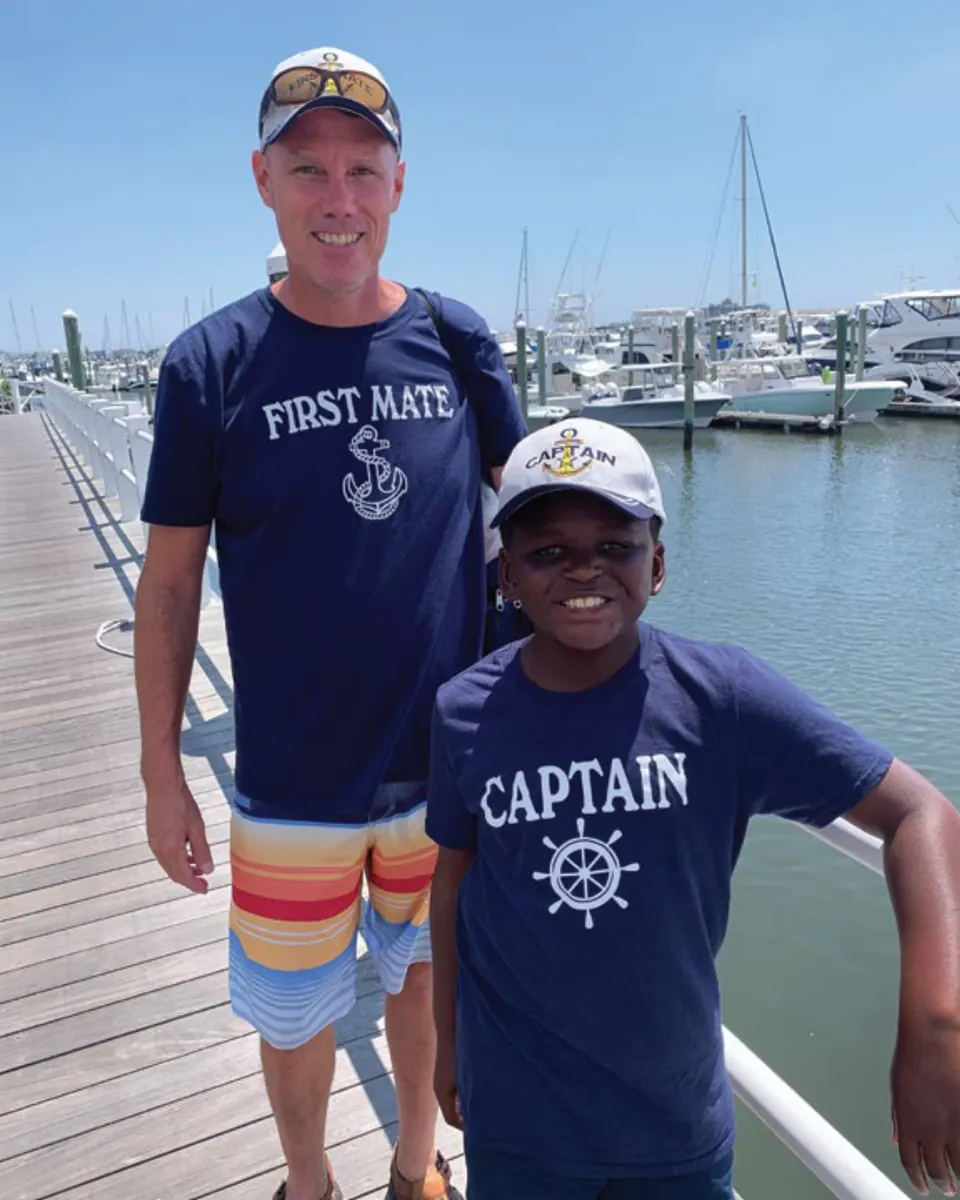
There is a piece of paper somewhere in Todd Robinson’s house, filled out in his father’s handwriting: baby born, date, time, weight. It is the record of the day, in the late summer of 1970, that a couple raced to Columbus, Ohio, wholly unprepared, to bring home a child who was not biologically theirs. That first night, with no crib, they pulled a drawer from the dresser, lined it with a blanket, and laid him inside. More than forty years later, Todd would answer a phone call of his own and drive to a hospital in Detroit to meet a son. He has spent a lifetime turning the circumstances of his beginning into a single guiding belief: that every day he is here at all is a blessing worth passing on.
He does not treat that as a figure of speech.
“Had certain things not happened in the chronological order, I would not be standing here right now,” Todd says. He means it literally. The marriage, the children, the house in New Jersey, the whole shape of his fifty-plus years all trace back to a decision made by a woman he has never met, and to a couple in Ohio who drove down to collect him with nothing ready at home.
Todd was born in August of 1970, into what was then a closed adoption. His parents adopted a daughter too, two years younger, and they never hid the truth from either child. He knew he was adopted almost as early as he could understand the word. The irony was not lost on him growing up, when people kept telling him how much he resembled his father.
“You’re looking more and more like your old man,” they would say.
He wasn’t, of course. Not by blood. But he had spent every day of his life beside the man, and that closeness did its own quiet work.
The details his parents kept became a kind of family folklore. The dresser drawer that served as his first crib. A wax candle shaped like an apple that, as a baby, he bit into thinking it was real, pressing the marks of his first two teeth into the surface. Small artifacts of a beginning that could just as easily never have happened.
That awareness, that his whole life rested on a
THE ECHO
Two calls, forty years apart, that asked him to become the parents who raced in for him
1970 - COLUMBUS, OHIO
A couple raced in, wholly unprepared, to bring home a child who was not biologically theirs.
2011 - DETROIT, MICHIGAN
A young couple had chosen them. He met his son, and both birth parents, in the same hospital room.
Two weeks later, still catching his breath from all of it, he brought his son home for good.
Someone chose him. He chose Jaylin. single yes, settled into him as gratitude rather than grief. ly after marrying. When a second biological child did not come, adoption felt, to Todd especially, less like a fallback than a homecoming.
“My glass is always half full, not half empty,” he says. He divides the world into givers, takers, and equalizers, and counts himself firmly among the first. “I’m a giver in life.”
“Katie was very open to it,” he says. “Primarily because I was adopted.”
In 2011, the call came. A young couple in Detroit had chosen them. Todd was forty, near the top of his sales career, scheduled that very week to leave for a trip he had earned three years running.
Still, one question has never closed. Around 2010, when Ohio unsealed its older adoption records, Todd requested his. He hoped, quietly, that the papers might help him find the woman who gave birth to him. What arrived instead confirmed that she was aware of the change too, and had chosen to remain anonymous. She did, however, take the time to pass along his medical history and something of his heritage.
Todd Robinson
Then, still catching his breath from all of it, he flew to Cabo San Lucas for the trip, came home, and two weeks later brought his son home for good.
He opened the envelope expecting an answer. He got a boundary and a small act of care at the same time.
They named him Jaylin Joseph Robinson, keeping the first name his birth parents had given him and adding a middle name from Katie’s side. Keeping it was never in question.
“There’s always been a piece of me that feels like something’s missing,” Todd says. “I just want to know who she is.”
“It felt natural,” Todd says. The connection to Jaylin’s first family has stayed open by design. A photograph of his birth mother sits on his dresser. Katie exchanges emails with her, more often around holidays and birthdays. Todd hopes that one day, when the timing is right, Jaylin will read those messages himself and understand exactly how much he was loved before he ever arrived.
Sixteen years later, he still has not gone looking. He knows he probably could. He also knows the risk that she may no longer be alive, that some doors close on their own.
“That was an exciting day and a sad day for me, all in one,” he says.
It would have been easy for that ache to curdle. Instead, it pointed him somewhere.
Todd and his wife, Katie, had their daughter, Holly, almost immediate- The birth parents were about twenty when Jaylin was born. They are still
He met his son first. He held him. He met both birth parents in the hospital, an intimacy most adoptive parents never get. together. They married, and they have since had another child, which means somewhere out there Jaylin has a younger brother of his own. To Todd, none of that reads as loss. It reads as two people who wanted to give their child a life they could not yet provide, and who trusted him to provide it.
That is the whole architecture of his gratitude. Someone chose him. He chose Jaylin. The blessing was never meant to stop with him.
He thinks about the future in the language of stewardship, not ownership. Holly, now twenty-four and finishing graduate school, will soon leave for good. Jaylin will follow in his own time.
“He’s on loan to us,” Todd says. He says it without sadness. It is simply how he understands the job: to love them fully, raise them well, and let them go where they are meant to go.
“Wherever he wants to end up is his choice,” Todd says. “He’ll always have a part in our lives, no matter what.”
He was a baby once, laid down to sleep in a dresser drawer by strangers who chose to keep him. Everything after that, the marriage, the children, the ordinary mornings at the mirror, has felt to him like interest paid on a gift he never earned.
So he keeps giving it away.
“What says more about Todd than his job title is the incredible depth of knowledge he has built around the CAS vendor ecosystem and, more importantly, how freely he shares it with others. When we’re working with firms, Todd consistently brings the right insight, connections, and perspective to help them navigate the ever-changing landscape of technology and services. He never holds back his knowledge; he genuinely wants to help firms make better decisions and succeed. That combination of expertise and generosity is what makes Todd such a valuable partner and, more importantly, such a great person to work alongside.”
- Deborah Defer, Director of CAS Consulting, Woodard
Text adapted from the print edition of Élevé.
 The Cost of Doing It All Herself
 She Would Not Let Grief Have the Last Word
 We All Contain Multitudes