Élevé · Issue 3 · Coming Back
Success Got Her Here. Now She’s Bringing Everyone With Her
After a childhood shaped by financial stress and sacrifice, Tiffany Gonzalez is redefining success by creating the kind of family
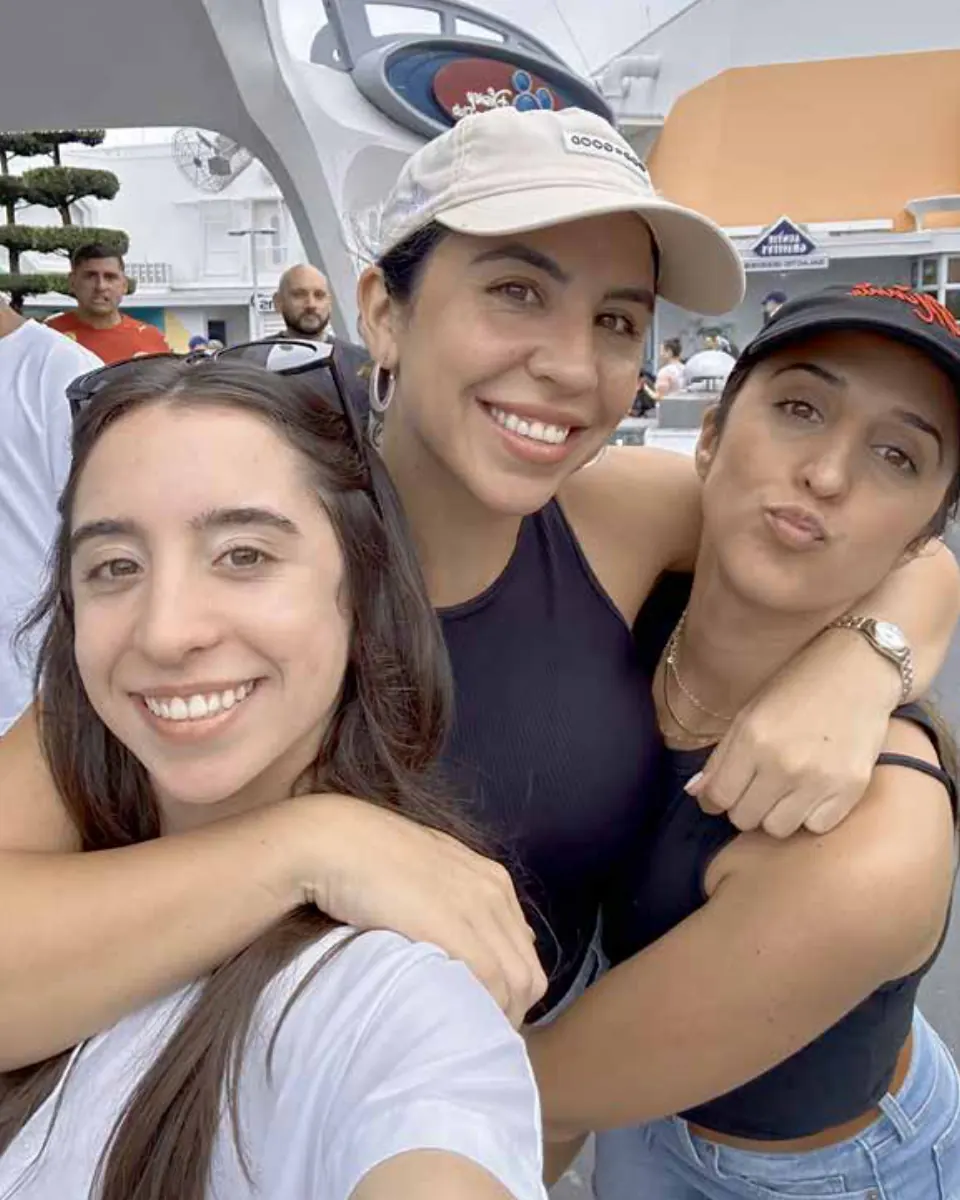
She can already see it. Thirteen people, kids under six running through the sand, her parents finally still, everyone together in a way that never quite felt possible before. “A little chaotic,” she admits, laughing, “like Home Alone mixed with the Brady Bunch.” But this isn’t just a family vacation. It’s the outcome of years of work, sacrifice, and a deeply personal definition of success that has evolved over time. “The feeling is gratitude,” she says. “It’s giving back.” For Tiffany, the dream is simple on the surface: pay for the trip, bring everyone together. But underneath, it’s about rewriting what those moments cost, and what they’re worth.
For most of her early life, money was something you felt before you understood. Tiffany grew up in a two-bedroom apartment with her parents and two sisters, three girls sharing a room that held both a crib and a bunk bed. It was close, in every sense of the word. Close quarters. Close relationships. Close enough to overhear the quiet conversations about bills, about overtime, about how they were going to make it all work.
Her father worked blue-collar jobs. Her mother worked as an administrator. Both worked constantly. Overtime wasn’t optional, it was necessary. “We were very aware,” Tiffany says. “Why isn’t dad here on Saturday? He’s working overtime.” There wasn’t blame, just reality. A steady understanding that time, energy, and presence were often exchanged for stability.
Vacations, when they happened, carried that same tension. They were rare, and they were meaningful, but they were also heavy. Tiffany remembers two trips to Germany to visit family who had left Cuba and built lives there. As a child, those trips felt expansive. She was ten years old, playing with cousins, racing go-karts, standing in a moment that felt bigger than anything she had known. “This is so nice,” she remembers thinking. “This is so nice to be carefree and fun with your family together on vacation.”
But even then, she could feel it. The stress before the trip. The counting of dollars during it. The weight that followed after. Years later, as a teenager, she learned the full picture. Those trips had put her parents into debt that took years to repay. “Six years,” she recalls thinking. “You’re still paying off a vacation that happened six years ago?”
That realization didn’t take away the beauty of those memories, but it reframed them. It planted a question that would follow her into adulthood: what does it take to create these moments, and at what cost?
The answer, for Tiffany, became both practical and deeply personal. If money was the barrier, she would learn everything about it. She would understand it, control it, use it differently. “If you want to fix something, you have to be super knowledgeable about it,” she says. That decision led her into accounting, into studying the time value of money, budgeting, investing, taxes. Not just as a profession, but as a way to rewrite the story she had grown up inside of.
At first, success looked like what you would expect. Revenue milestones. Team growth. Recognition. The external markers that signal you’ve made it. Then it shifted. It became the ability to travel, to create experiences for herself, then for her husband, then for her children.
And then, quietly, it shifted again.
On family trips with her own kids, she started to notice something. They were having fun, but they were missing something too. “They get bored,” she says. “They want to play.” Play with their cousins. Share the experience with more than just their immediate family. And at the same time, she knew her parents and siblings couldn’t easily join. Not without the same kind of financial strain she remembered from childhood.
The idea came together slowly. Part instinct, part realization. She was already creating these kinds of experiences for her team through company retreats. Why not do the same for her family?
Now, the vision is clear. Thirteen people. Her parents, her sisters, their partners, their children, her own family. All in one place. No one calculating the cost. No one carrying the stress. Just presence.
“A sense of relief,” she says, when asked what she hopes they feel. “Relaxation. Gratitude for life and health.” Without the pressure of money, the experience becomes something else entirely. Simpler. Fuller. A conversation that lingers longer. A moment that doesn’t come with a cost waiting on the other side.
For Tiffany, that shift is everything. Because behind this dream is another story, one that has shaped her understanding of sacrifice in a way that goes far beyond finances.
Her father left Cuba at 22 years old on a handmade raft. The story is one she grew up hearing, but its weight has only deepened over time. Facing forced military recruitment and limited options, he made a decision that required a level of courage Tiffany still measures her own life against. He built the raft in secret, hiding materials in rocky coves. Told almost no one. Left in the early hours of the morning with only a cousin and, unexpectedly, a third person who forced their way into the plan.
They launched from near the Coast Guard, a choice that felt almost unthinkable. “The Coast Guard is looking everywhere else,” he reasoned. “They don’t think anyone is crazy enough to leave from right here.”
For three nights, they drifted. Paddles lost. Taking turns kicking the raft forward. Navigating by stars. Sunburned, dehydrated, surrounded by darkness so complete they couldn’t see their own hands. “It’s only you and the stars out there,” Tiffany says, recalling his words.
Eventually, a Russian ship found them. Then the U.S. Coast Guard. Then, finally, Miami.
That decision, that moment of risk and uncertainty, is something Tiffany returns to often. Especially when she faces her own fears. “Nothing I can do in this lifetime is ever going to be as courageous as that,” she says.
It’s not just the courage that stays with her. It’s the sacrifice.
“I think one of the biggest life lessons I’ve gotten from my dad is that it’s not just about courage,” she says. “It’s the sacrifice. I’m willing to sacrifice my life for my next generation to have a better life.”
That belief runs quietly through everything she’s built. The long hours. The missed events. The discipline required to create something sustainable. Turning sacrifice into something the next generation doesn’t have to carry in the same way.
Which is why this dream, this one trip, holds so much weight.
It’s not just a vacation. It’s proof.
Proof that the sacrifices made before her, and the ones she continues to make now, have led somewhere. That they’ve created a life where giving back doesn’t come at the same cost. That success can look like a full table, a crowded beach, a moment where no one is thinking about what it took to get there.
If you ask her what that moment will mean, she doesn’t hesitate.
“Success.”
Not the kind measured in revenue or recognition, but something quieter, more lasting. The ability to bring everyone with her. To let her parents rest. To let her children play. To stand in a moment that once felt out of reach and know it no longer is.
And maybe, most importantly, to give her father a reflection of what his sacrifice made possible.
“I think he would feel very proud,” she says.
Text adapted from the print edition of Élevé.
 A Creative Life, Waiting Its Turn
 What Happens When the Dream Isn’t Enough
 What If Your Biggest Dream Was the Impact You Leave Behind?