Élevé · Issue 3 · Coming Back
What Happens When the Dream Isn’t Enough
Theater gave her purpose, identity, and a place to belong. Leaving it meant redefining
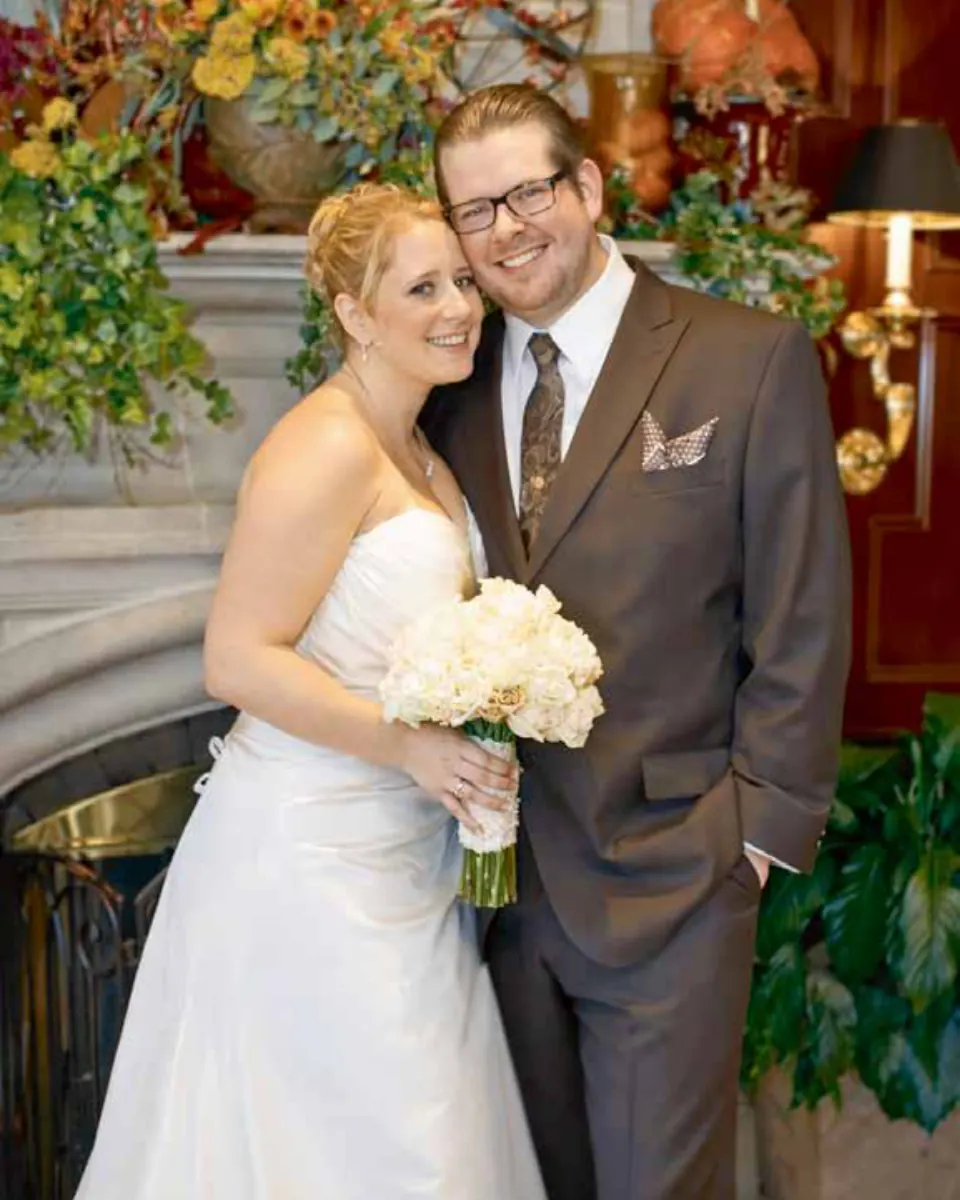
Sabrina Burke doesn’t hesitate when she talks about what theater once meant to her. “I love theater so much, but I hate acting,” she says, laughing at the contradiction that shaped her path. What she loved wasn’t the spotlight, it was everything behind it. Running shows off-Broadway, coordinating lights and music, managing the chaos so the magic could happen, she found her place in a world most people never see. It was her dream, even if it didn’t look like one from the outside. But loving something deeply doesn’t always mean you can stay. And for Sabrina, that realization came slowly, then all at once.
Long before she was managing productions in Manhattan, Sabrina knew she wanted to be part of something creative, something alive. The moment that crystallized it came unexpectedly, while she was running the soundboard at Queens College for a dance performance. She was juggling cues, syncing music with lighting, listening to instructions, when something shifted. “I couldn’t stop myself from dancing,” she recalls. In that instant, she wasn’t just operating the show, she was inside it. Not performing, not exposed, but essential. “I felt like a part of this huge production without having to put on the costumes or rehearse or practice or anything.” It was the perfect balance, and it hooked her completely.
That feeling followed her into the off-Broadway world, where she spent years working her way up from spotlight operator to production manager. The work was demanding in ways few people outside the industry fully understand. Days blurred into nights. Shows didn’t start until late, often 10 p.m., and ran past midnight. Her mornings began slowly, recovering from exhaustion, before shifting into the quiet, meticulous work of production, printing playbills, organizing costumes, managing equipment. But the real intensity came on weekends, when rehearsals stacked, actors rotated in and out, and everything had to be ready, always.
She remembers walking through Manhattan in the afternoons, flyers in hand, slipping them under windshield wipers to promote the show. Then it was back to the theater, opening the space, checking mic packs, running tests, preparing for the unpredictable. Because once the show started, anything could happen.
And often, it did.
The productions she worked on weren’t traditional. In one, the audience stood shoulder to shoulder on a dance floor, drinks in hand, as actors performed around them. It was immersive, chaotic, electric, and required constant vigilance. A missed cue, a technical failure, or even a blackout could throw everything into disarray. In one instance, the power went out midshow, leaving actors in costume among a crowd that didn’t quite know what to do next. “It was a little scary,” she admits. There were no clear boundaries, no easy exits, just a team trying to hold the experience together in real time.
And still, she loved it. When she thinks back, it’s not the stress that surfaces first, but the joy. The music, especially, stayed with her. “When I’m having a bad day, I put on Studio 54 Pandora, and I listen to disco,” she says. Years later, she still knows every word, every movement, every beat of the choreography she watched over and over again. “There was never a time that it wasn’t a blast.” Even now, the memory lives in her body.
But the same world that gave her that joy also asked for something she couldn’t ignore forever.
The financial reality of theater was stark. Despite her growing responsibilities, despite years of commitment, the pay remained minimal. At one point, she was earning just $50 a week. It barely covered transportation and food, let alone rent. When she finally asked for a raise, the response stayed with her. “Well, whatever happened to people doing it for the love of theater?”
The question lingered, not because it inspired her, but because it clarified something she hadn’t wanted to face. Love, on its own, wasn’t enough.
“I have to eat too,” she remembers thinking.
Around the same time, another decision was forming, one that had nothing to do with money
She chose her family.
Leaving theater wasn’t a triumphant pivot or a clean break toward something better. It was, in many ways, a quiet reckoning.
“I felt like the dream disappointed me,” she says.
Not because she hadn’t achieved it, but because it hadn’t sustained her in the ways she needed. The long hours, the low pay, the isolation behind the scenes, it all added up to something that no longer aligned with the life she wanted to build.
And yet, she doesn’t speak about it with regret.
If anything, there’s clarity in how she looks back. She understands what theater gave her, and everything to do with what she valued most. She had been offered a role at the Philadelphia Opera House, an opportunity to grow, to learn, to move deeper into the career she had worked toward for years. But it would require leaving home, leaving her family, at a moment when her life outside of work was beginning to shift. Her older sister was expecting her first child.
The choice was clear, even if it wasn’t easy.
“If you’re going to travel for work, you miss your family,” she says. “And if you stay for your family, you might miss out on work.” and what it didn’t. She recognizes the skills she carried forward, the ability to manage high-pressure environments, to navigate personalities, to ensure that no matter what happens, the show goes on.
Today, those same instincts show up in a very different setting. In finance, in client relationships, in the way she approaches her work, she still draws from that foundation. “Dealing with CFOs and CEOs is not very different than dealing with directors and producers,” she says. The environments may have changed, but the core of the work, the coordination, the problem-solving, the resilience, remains.
She also brings something else with her, something less tangible but just as important. A sense of creativity, of presence, of understanding how people engage with what they see and experience. It shows up in how she presents herself, how she builds her business, how she connects.
The dream didn’t disappear. It evolved.
And in some ways, it expanded.
She met her husband through theater, a connection that continues to shape her life today. He now teaches theater, not to create performers, but to help students learn how to communicate, how to engage, how to be understood. It’s a different kind of stage, one that reaches into the future.
For Sabrina, that may be the most meaningful part of all of it. Not the shows themselves, but what they made possible.
Because the truth is, the dream didn’t fail. It just revealed itself more honestly than she expected.
There was a time when professionalism had a dress code you could recognize from across the room.It lived in structure. In pressed trousers, tailored jackets, fabrics that held their shape no matter how long the day stretched. You dressed to signal something. Competence.
Credibility. Distance. The uniform did part of the talking before you ever had to.
That version of work hasn’t disappeared. But it’s no longer the default.
Today, work happens in quieter, more personal spaces. A morning call from the kitchen. A strategy session from a home office. A client conversation that begins on screen and ends somewhere in between everything else your day holds. The boundaries have softened, and with them, the expectations around how we show up.
Not just visually. Interpersonally.
There is a growing pull toward something more human. Less performative. More reflective of real life. The kind of presence that doesn’t rely on formality to establish credibility, but on clarity, consistency, and the ability to connect.
And what we wear has had to evolve alongside that shift.
The modern uniform is no longer about dressing for a place.
It’s about dressing for a rhythm.
One that moves between focus and flexibility, structure and ease, work and everything around it.
This is where the off-duty uniform begins to take shape.
Three ways of showing up
The shift away from a single dress code has not created chaos, but range.
What has emerged instead is something more nuanced. A set of choices that reflect not just where you are going, but how you want to feel when you get there.
The modern professional doesn’t rely on one uniform. They move between versions of it, depending on the moment.
Some days require structure.
Others call for ease. Most live somewhere in between.
And while there are countless brands shaping this landscape, three stand out for how clearly they represent these different modes of showing up: Theory, Alo
Yoga, and Everlane.
Theory: when presence still carries weight
There are still moments when structure matters.
Not in the rigid, performative way it once did, but in a quieter, more grounded sense. A leadership meeting. A high-stakes conversation. An environment where clarity and confidence need to be felt before they are spoken.
Theory exists in that space.
Its tailoring is precise, but not heavy. The lines are clean, the fabrics lighter, the overall effect more modern than traditional. It offers a version of professionalism that feels considered without feeling distant.
What makes Theory relevant now is not that it preserves the old uniform. It’s that it refines it.
You can wear a structured blazer over something soft. Pair tailored trousers with a more relaxed top. The pieces integrate rather than dictate. They allow you to hold presence without fully stepping away from yourself.
For professionals who still navigate moments where perception matters, Theory provides a kind of anchor. Not armor, but alignment.
Alo: the middle ground, perfect- If Theory represents structure,
Alo Yoga lives in the space most professionals now occupy most of the time.
The in-between.
Days that are full, but not formal.
Meetings that matter, but don’t require a full shift in identity. Work that happens at home, but still asks you to show up with intention.
Alo has built its identity around that balance.
The pieces are comfortable, but not casual in the traditional sense.
There is a visual clarity to them.
Neutral palettes, streamlined silhouettes, outfits that feel cohesive without effort. You look put together, even if you didn’t spend time trying to be.
That distinction is what makes
Alo feel so aligned with the current moment.
It supports the reality that most professionals are no longer dressing for an audience. They are dressing for themselves, and for the kind of day they are stepping into. One that moves fluidly between work and life without clear transitions.
Alo doesn’t ask you to change outfits to match those shifts. It moves with you through them.
Everlane: consistency over com-
plexity
There is another approach emerging alongside all of this. One that is less about balancing extremes and more about removing them altogether.
Simplify the wardrobe. Reduce the decisions. Build something that works, every day, without needing to be reconsidered.
Everlane has become a natural choice for this mindset.
The brand doesn’t rely on statement pieces. It doesn’t chase attention. Instead, it offers consistency. Well-made basics, neutral tones, silhouettes that repeat easily across different contexts.
For professionals navigating full schedules and constant decision-making, that simplicity becomes valuable.
You don’t have to think about what to wear. You already know it will work.
There is a quiet confidence in that kind of consistency. It doesn’t draw attention to itself, but it supports everything else you are doing. It allows you to show up as yourself without adding unnecessary layers.
In a world that asks for more from your attention than ever before, that restraint feels intentional.
What the off-duty uniform really
reflects
It would be easy to read all of this as a shift toward comfort. And in part, it is. But comfort isn’t really the point. It’s a result. What’s actually changing is the role clothing plays in how we work.
The old model relied on visual signals. You looked the part first, and credibility followed. There was a kind of distance built into that.
The uniform created separation between who you were and how you were expected to show up.
That distance doesn’t hold in the same way anymore.
Work is more visible now, but also more personal. People are on video, in their own spaces, having more direct conversations, often without the layers that used to sit in between. And because of that, how you come across has less to do with formality and more to do with clarity and presence, and whether people feel like they can actually engage with you.
What you wear still plays a role in that, just not in the same way.
It doesn’t need to signal authority as much as it needs to make sense. To feel consistent with how you work, how you communicate, and how you move through the day. Something that holds up across contexts without needing to be adjusted or explained.
That’s where brands like Theory,
Alo Yoga, and Everlane fit in. Each one reflects a different way people are navigating what “professional” looks like now.
Because for most people, there isn’t a clean transition between on and off anymore. Work doesn’t begin and end in the same defined way. It sits alongside everything else. Meetings, errands, breaks, conversations, all moving in and out of focus throughout the day.
And the uniform has adapted to that. Less about stepping into a role. More about continuity.
Text adapted from the print edition of Élevé.
 What If Your Biggest Dream Was the Impact You Leave Behind?
 More Than a Stamp: The Tradition That Keeps Them Coming Back
 Seven Hours That Changed Everything