Élevé · Issue 3 · Coming Back
What If Your Biggest Dream Was the Impact You Leave Behind?
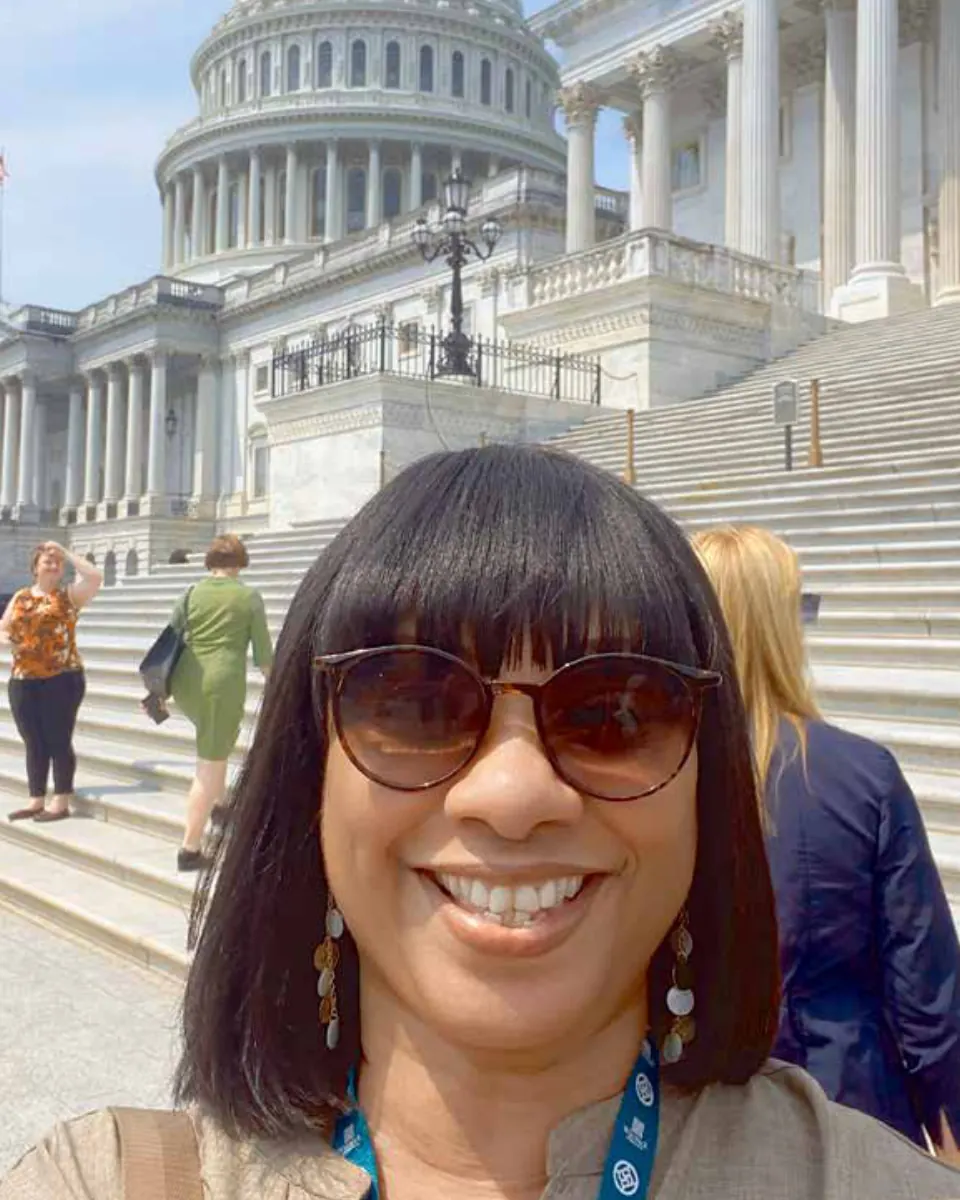
When asked about her dreams, Hope Brown doesn’t have a place, a purchase, or a personal milestone. Instead, she answers with something far less tangible and far more enduring. Legacy. “Leave people better than you found them,” she says, describing the impact she hopes to have on the people who pass through her life. It’s not a typical response to a question about bucket lists, but then again, Hope has never approached life in typical ways. Whether she’s calming a client in a moment of stress or listening to a stranger open up on a subway, her focus is the same. Add something positive. Leave something behind that lasts.
For Hope, that mindset didn’t come from a single defining moment. It was modeled early, shaped by what she witnessed growing up in a family where responsibility extended beyond the walls of their own home. Her father, a business owner, wasn’t just focused on success. He created opportunities. He gave people work, taught them skills, and helped them support their families. Watching that, Hope internalized something that would stay with her: if you’re in a position to help, you should.
“It’s really your responsibility to reach back and help other people,” she says. Not out of obligation, and not for recognition, but because someone once did that for you. A cycle. A continuation.
That philosophy shows up in the smallest moments, the ones most people might overlook. A conversation that steadies someone who feels overwhelmed. A pause to meet someone exactly where they are instead of pushing them to explain more than they’re ready to share. Hope is intentional about that. “I try not to add to the overwhelm,” she says. Instead, she focuses on creating a space where people can either open up or simply exist without pressure.
It’s a subtle skill, but a powerful one. And for Hope, it’s something that has followed her for as long as she can remember.
Even as a child, people gravitated toward her. Classmates, strangers, people who somehow felt comfortable sharing more than expected.
“I remember thinking on the playground, why is this kid telling me this stuff?” she says, laughing. But over time, she stopped questioning it and started recognizing it for what it was. A kind of trust. A quiet invitation to show up for people in a way that mattered.
Now, those moments happen everywhere. On a subway, she once noticed a woman who seemed to be having a difficult day. They started talking, nothing extraordinary at first, just a conversation between two strangers. But it didn’t stay surface-level for long. The woman opened up, sharing pieces of what she was going through. Hope listened, offered reassurance, and when it was time for the woman to get off, they hugged.
Then came the moment that stayed.
“She was like, ‘What is your name?’” Hope recalls. “And I said, ‘I’m Hope.’ And she was like, ‘Oh my gosh, you’re Hope. You were what I needed today.’”
It’s happened more than once. Enough times that Hope no longer sees it as coincidence. She sees it as a privilege.
“It’s a privilege that someone would feel comfortable enough to talk to you,” she says. And in those moments, her name feels less like something she was given and more like something she’s grown into.
That wasn’t always the case.
Growing up, her name made her stand out in ways she didn’t always appreciate. It drew attention. It invited teasing. At one point, she even questioned why her father chose it. But his answer reframed everything. He saw something in her. A kind of energy. A light. And he wanted her to carry that forward, even in moments when life felt uncertain.
Over time, she began to understand the weight and the gift of it.
“I realized the power in that name,” she says. Now, it shapes the way she moves through the world. In her work, that same presence shows up in a different form. Tax season, for most people, is synonymous with stress. Fear. Uncertainty. Even when nothing is wrong, the process itself can feel overwhelming. Hope has learned how to meet people in that moment and shift it.
“Listen, we’re doing everything right,” she tells them. “Even if we aren’t, we can pivot and correct it.”
It’s not just about solving the problem. It’s about helping people feel steady again. Capable again. And that’s where
It’s a simple image, but it holds everything she’s working toward. Her children. Their future. The emotional, financial, and personal stability she hopes they inherit and build on.
But legacy, for Hope, isn’t only about support. It’s also about accountability.
“I know I seem like a nice person,” she says, smiling, “but some days you are not going to like me.”
She holds people to the things they say they want. She challenges them when needed. Not to push them away, but to push them forward. Because growth, she believes, doesn’t come from comfort alone.
“It’s not all flowers,” she says. “You have to go through the challenges to appreciate the highs.”
That balance, encouragement and honesty, empathy and accountability, is part of what makes her impact last. It’s not just how she makes people feel in the moment. It’s what stays with them after.
Even she isn’t immune to the moments she helps others navigate. her definition of legacy becomes clear.
She doesn’t want people to leave her feeling dependent. She wants them to leave empowered.
“Whatever that might mean for them,” she says.
That idea extends beyond individual interactions and into something broader. In her community, in her relationships, in the people she works with, Hope is focused on what continues after her. Not just success in the traditional sense, but sustainability. Growth that carries forward into the next generation.
She talks about it like a staircase.
“Every generation is building that next stair,” she explains. “So the next generation can step on it and go a little higher.”
Despite a long and successful career, she still finds herself in new rooms, facing new challenges, questioning whether she belongs. It’s a feeling she knows well. But instead of letting it take over, she’s learned how to respond to it.
“If the door opened for you,” she says, “you’re supposed to be in the room.”
So she walks through it. Even when it’s uncomfortable. Even when it’s uncertain. Because the alternative, wondering what might have been, is something she refuses to carry.
“I don’t want to be some old lady with regrets,” she says. It’s one of several mottos she lives by. Another is simpler, almost playful in its delivery but serious in its application: “I never tell myself no.”
That mindset has led her to ask questions she once might have avoided. To pursue opportunities that felt just out of reach. And more often than not, she’s found that the answer waiting on the other side is yes.
Not because it was guaranteed, but because she was willing to ask.
Still, even with all of that, her definition of success remains remarkably grounded.
It isn’t about recognition. It isn’t about scale. It’s about the ripple effect. She wants people to feel like they’re not alone. To understand that whatever mountain they’re facing, others have climbed it too. That they can do it. That they’re capable. That they belong.
Sometimes, she says, people just need to hear it.
“You can do it.”
And sometimes, that’s enough to change everything.
When she thinks about how she wants to be remembered, her answer doesn’t shift.
“If I could just add a little bit of light to people’s lives,” she says, “that’s good.”
A smile that lasts a little longer. A moment of clarity. A sense of warmth that lingers after the conversation ends.
For Hope, that’s the dream. Not something to check off. Not something to arrive at. Something to leave behind.
Text adapted from the print edition of Élevé.
 More Than a Stamp: The Tradition That Keeps Them Coming Back
 Seven Hours That Changed Everything
 One Goal, a Thousand Small Efforts