Élevé · Issue 4 · Quietly Extraordinary
Twenty Years Later, She Still Knows Every Note
Before she was a mother building a quieter life outside Houston, Melody Haney spent seventeen years chasing a sport that once tried
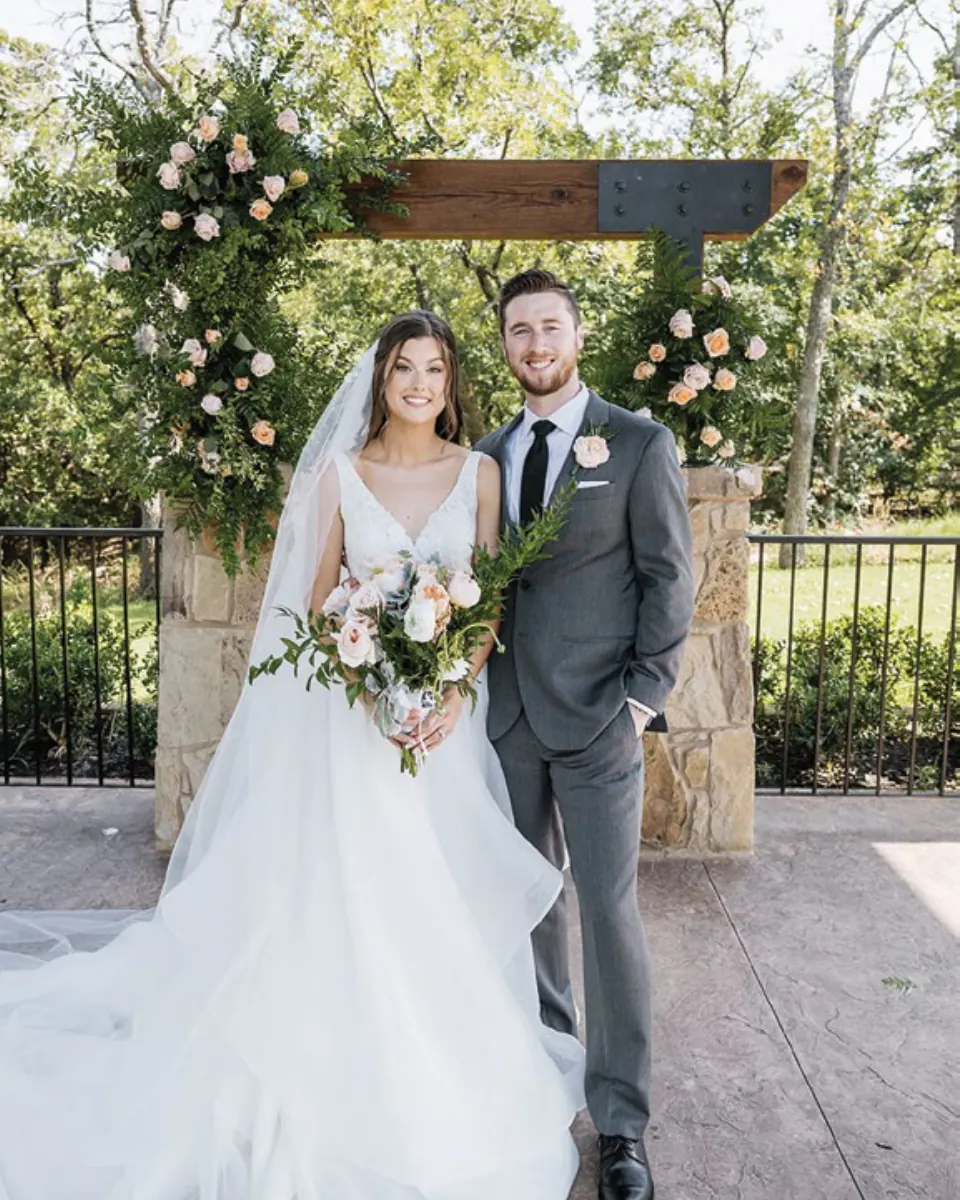
Melody doesn't talk about soccer much these days. She works in marketing from her home outside Houston, splits her time between client calls and a two-year-old son, and the seventeen years she spent on a soccer field rarely come up in conversation anymore. "We're so far removed from college that it just doesn't come up," she says. But before the marketing job, before her son, before any of it, soccer was the thing that built her, broke her, and then built her back again.
She was five years old when she started, trailing her neighbors onto a field because they made it look like the most exciting thing in the world. Her first practice, she was too nervous to get out of the car. It took her mom several tries. But by her first real game, something shifted. She scored her first goal and looked over to see her dad jumping up and down on the sideline. "It was a feeling that could not be matched with anything else in my life at that point," Melody says, "and even up until I finished playing."
She played forward first, the position built for scoring, before a coach who wasn't even hers pulled her aside one day and told her flatly: "She's not a defender. You need to put her in the middle." By ten, Melody had found her home at center mid, the position she'd play for the rest of her career, through travel teams, through ECNL, through high school and eventually college.
By her freshman year of high school, she was playing about five hours of soccer a day between her national travel team, a Division One club, and her high school squad. There wasn't much conversation back then about overtraining or recovery. Melody just played through what she could tolerate, and she could tolerate a lot. "I am a tough cookie," she says. "I can take a lot. I don't normally crack."
So when a dull ache settled into her lower back, nobody thought much of it at first, least of all Melody. It didn't respond to ice, heat, or the stretches her trainers gave her. Her mom took her in for an X-ray. Nothing. Then another, and another, four in total, and still nothing showed up. One doctor floated kidney stones. Another, watching a teenage girl describe pain that wouldn't let up, quietly asked her mother if Melody was "mentally okay." The unspoken suggestion: that she was making it up. That it was growing pains. That she was just a girl.
For two to three months, Melody played on a fractured spine that no one could find. In games, if she took a hit, she'd go down and simply couldn't get back up. At school, getting out of her desk chair meant sliding out hunched over, taking thirty or forty seconds just to stand up straight enough to walk to her next class. "I felt like I was ninety years old," she says.
It was an MRI, and eventually a visit to an orthopedic back specialist, that finally found it: fractures in her L4 and L5 vertebrae. "I don't know how people could have missed this," the specialist told her. "It's clear as day."
The diagnosis meant an immediate stop. No soccer, not in games, not in practice, not at all. For a fourteen-yearold who had spent her entire life on a field, the silence was its own kind of injury. She sat in the stands and watched her team practice without her. She watched them play games she couldn't be part of. "I am the soccer girl," she remembers thinking. "That's my life. That's who I'm supposed to be. That's my jam."
For a while, she genuinely didn't know if she'd play again, or if she even wanted to. What if she got hit again? What would that mean for her body, for her goals of playing in college, maybe even professionally? The recovery stretched to nine months in total, including two months of bed rest, before she slowly rebuilt her strength from the ground up.
Somewhere in that stretch, something clicked. She decided she wanted to prove she could come back, not just return to the field, but reach the goals she'd set before any of this happened. The work that followed, months of physical therapy and strength training, was slow and deliberate. When she finally stepped back onto the field for the first time, she was terrified. It never gave her trouble again.
"It was the most exhilarating experience," Melody says of that comeback. "It felt like so much freedom, because I was finally back into something I truly loved, and I could be my full self." She describes it simply: "Everything just felt right in my world." Every doubt she'd carried about whether soccer was still meant for her went quiet.
She came back sharper than before, not just physically but in how she carried herself. By the time college recruiters came calling, she had five or six offers on the table, from Division Two, Division One, and NAIA programs. Melody had been certain she'd never leave Texas. Schools from Oklahoma, Arkansas, and South Carolina reached out anyway.
A teammate's excitement about her own commitment to John Brown University, a small NAIA school in Siloam Springs, Arkansas, eventually led its coach to scout Melody at a game. At first, she resisted the idea. NAIA felt small, maybe too small, and she worried people would assume she wasn't good enough for Division One. Her parents pushed her to just visit before deciding anything.
That visit changed her mind entirely. The campus was, in her words, the most beautiful place she'd ever seen. Classes topped out around twenty-seven students. She loved the coach, loved the team, and loved that the school's faith and her own could sit alongside her soccer instead of competing with it. Ninety percent of her tuition was covered. Two months later, she committed, as a junior in high school, and felt something settle in her for the first time in years: peace.
It was at that same school, in the same freshman dorm, that she met her husband, Conner. Fraternizing between the men's and women's teams was technically against the rules, which made it almost inevitable that she'd notice him. She first spotted him on a team bus, during an initiation ritual that had every freshman sing a cappella into a set of noise-canceling headphones. Conner rapped "White and Nerdy." She thought he was cute and told herself, firmly, that it didn't matter.
It mattered. They grew close through mutual friends be- Melody originally joined our team in a different position, but we often use the phrase “right person, right seat.” When the company needed her to step into a new seat, she embraced the opportunity without hesitation and has excelled in the role. Melody consistently models our core value of owning it through her willingness to take responsibility and do what the team needs.
— Alex Suber, Chief Operating Officer, ChurchCandy Marketing, LLC
They married in 2022 and moved to Houston, where they're now raising their son, a boy Melody describes as "crazy in all the best ways." Every year, they return to Arkansas for alumni games, and Melody brings him along to meet the friends and coaches who knew her back when soccer was still the center of everything. "It's been a surreal moment," she says.
Asked what she'd want her fourteen-year-old self, hunched over a desk chair and unsure if she'd ever play again, to know now, Melody doesn't hesitate long. She was a starter for all four years of college. She won awards. Her team beat nationally ranked opponents. None of it happened despite the injury; in some ways, it happened because of what the injury taught her about coming back from anything.
"We didn't give up when it got hard," she says. "I accomplished my dreams, and I met my husband doing it. I can do anything I set my mind to." fore either of them said anything out loud, until her own mother pointed him out at a game, and a teammate's crush on him forced Melody to admit she had feelings of her own. Their coaches eventually caught on and called them in for what turned out to be a fairly gentle conversation about keeping things respectful. They dated for the rest of college, pushing each other in training, trading bragging rights over which team won conference more often (hers, three years running), and building a relationship inside the same sport that had once nearly disappeared from her life.
Text adapted from the print edition of Élevé.
 Wonderful Chaos
 On Point
 Clearing the Runway