Élevé · Issue 4 · Quietly Extraordinary
Clearing the Runway
Everyone assumes the veteran plates belong to her husband. They don't. Before the books and the New Hampshire quiet, Dawn Ankiewicz ran a Navy control tower in Sicily, and the eighteen-year-old who left home to do it never fully left.
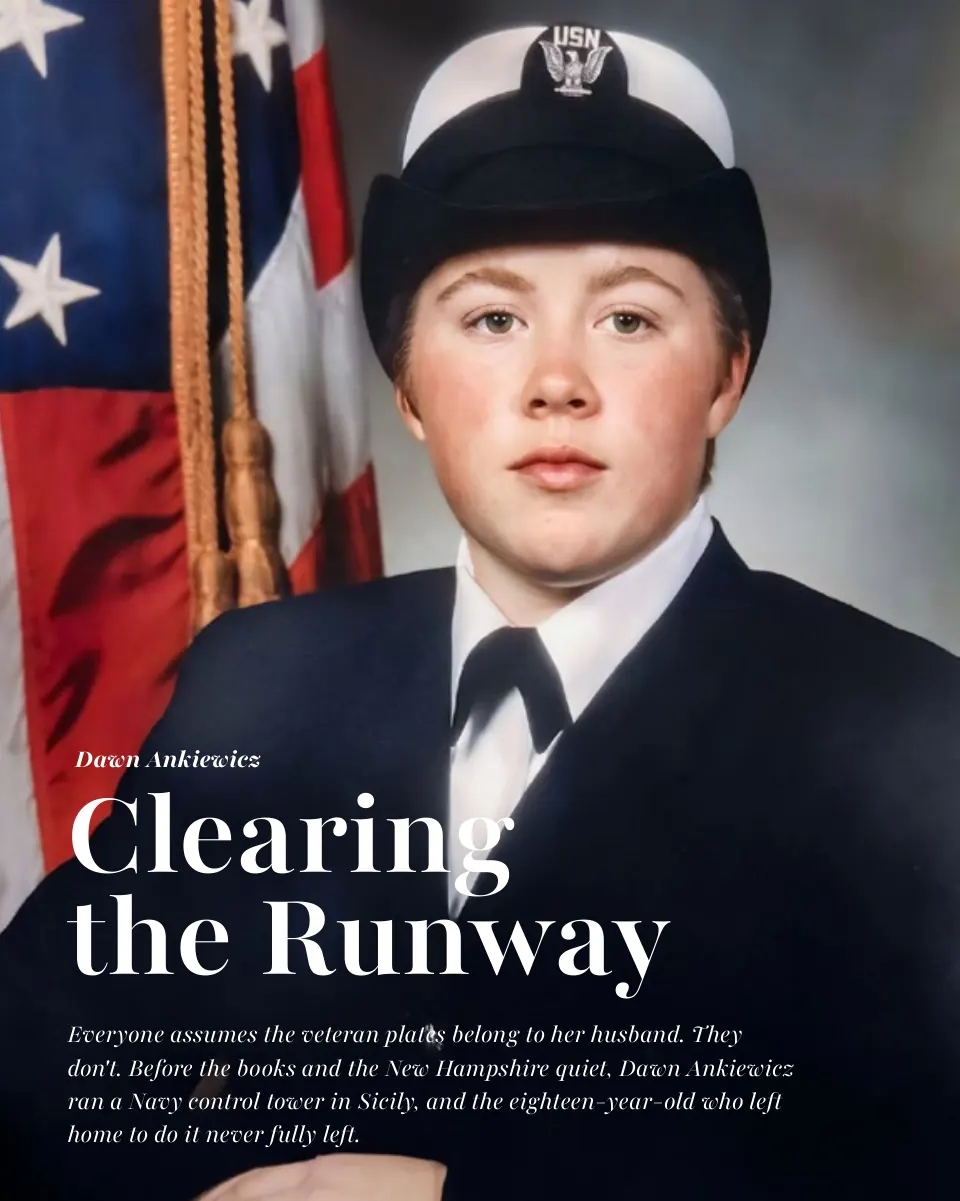
Ask Dawn Ankiewicz what people are surprised to learn about her, and she doesn't hesitate. "People look at me and don't ever really think that I'm a veteran," she says. And yet, Dawn spent five years in the Navy as an air traffic controller, directing planes from a tower in Sicily. She left home at eighteen because it was, honestly, her only real option. She wasn't headed to college. She wanted out, and independence, and something new. "I just wanted to get out and explore," she says. What she didn't expect was how much of that girl she'd carry forward.
The plates are the small, recurring version of it. She'll be driving around, and people will nod at her husband, who did serve. Dawn's answer is dry and unbothered.
"Hello, I could do it too." She was raised in California and had no path laid out, no plan pinned to a corkboard. College wasn't for her, and even if it had been, the logistics never added up. "Who was gonna send me," she says. The Navy was the door that was actually open. It was a job. It would be consistent. It came with benefits, and eventually it would pay for school. It also came with the one thing she wanted most, which was somewhere else to be.
Boot camp came first, in Chicago, shortly after she graduated high school. It was her first real stretch away from home, and it began, as boot camp does, with someone yelling. She laughs about it now. She'd go back and do it again.
Then came air traffic control school, the simulators, the procedures. And then a piece of paper that changed the shape of her twenties. She had submitted a list of her top three duty stations, never expecting to land the first one.
She landed the first one. Sicily. Sigonella. Nothing prepared her for the arrival. She stepped off the plane onto the ramp and walked, taking in an airport that looked nothing like the ones back home. She had no idea how to get to the base and no one waiting to show her. What she had was instinct. She spotted a few people who looked like they might be military, or at least might know the way, and asked if she could share a taxi.
"No one was there to meet me. I was just on my own." That sentence turns out to be the whole story in miniature. In Sicily, for the first time, there was no one to make her doctor's appointments or figure out dinner or handle the small machinery of a life. At first it flattened her. She thought, more than once, that maybe she just wouldn't go to the doctor, because she didn't know how to call and make the appointment and didn't want to ask. And then, slowly, she did the thing anyway. Then the next thing.
"I guess it's all on me," she remembers thinking. "So I just started doing it."
There is a particular pleasure she still remembers from that season, the quiet luxury of not having to check with anyone. "I didn't have to ask anyone or get permission for anything," she says. For a girl who had leaned on her parents and her friends for nearly everything, it was a revelation.
Here is the part that makes the story worth telling: Dawn is an introvert. Not in the casual, self-deprecating way people use the word now, but in the freezes-whenput-on-the-spot way. "When I left, I was super shy. I hated talking to strangers," she says. Which is a genuinely strange starting point for a job whose entire premise is talking to strangers, over a radio, with authority.
She picked it because it sounded interesting, and because it wasn't quite what she pictured. Looking back, she finds her younger self a little funny. "Now you have to talk to strangers, and you have to be the boss of these strangers you're talking to over the radio."
The tower was busier than most people imagine, and never busier than in the stretch right after September 11th.
Sigonella became a stop for a flood of aircraft, and the traffic increased enormously. New kinds of planes needed procedures she hadn't used. Aircraft parked in places aircraft don't usually park. More planes meant more vehicles, more people, and every one of them needed to talk to the tower to move an inch. It ran twenty-four hours a day.
What surprised her most wasn't the planes. It was the
Dawn Ankiewicz
sheer web of coordination behind them, the people in the same room, the people down the street, the people in another state, the notes clattering in over the teletype, the constant triage. You could be in a clean rhythm with your aircraft when an emergency landed and forced you to rebuild the entire plan on the spot.
"It's not like you're just standing there looking out a window telling an airplane where to go."
If that sounds like a description of her workday now, that's the point. The skills didn't retire when she did. Ask her colleague Beth, and you'll hear that Dawn doesn't forget anything. Ask Dawn, and she'll credit the tower: remembering where things are, where a project left off, what still needs doing, holding all the pieces so none of them fall apart. She's a good listener, aware of her surroundings, and things simply stick. A client mentions loving the caramel apples at the fair, and six months later, when it's time to send a gift, Dawn is the one who remembers to send caramel something.
Air traffic control, for the record, was never her passion. The forceful part, telling officers what to do when she wasn't an officer, intimidated her. What she loved was everything around it. The traveling. The people. Being on her own.
After Sicily came Point Mugu, in California, closer to family, her last duty station. Then a decision that ended one life and started another. She'd had a daughter, and the Navy wanted a plan for who would raise her if Dawn deployed. She went back and forth. Getting out meant starting over as a single mom, and starting over was hard, hard enough that she thought about going back in just for the familiar paycheck. But she couldn't hand her daughter off and disappear for long stretches.
"The military wasn't a mistake, and I would totally do it again," she says. "But at that point in my life, I needed to go a different way."
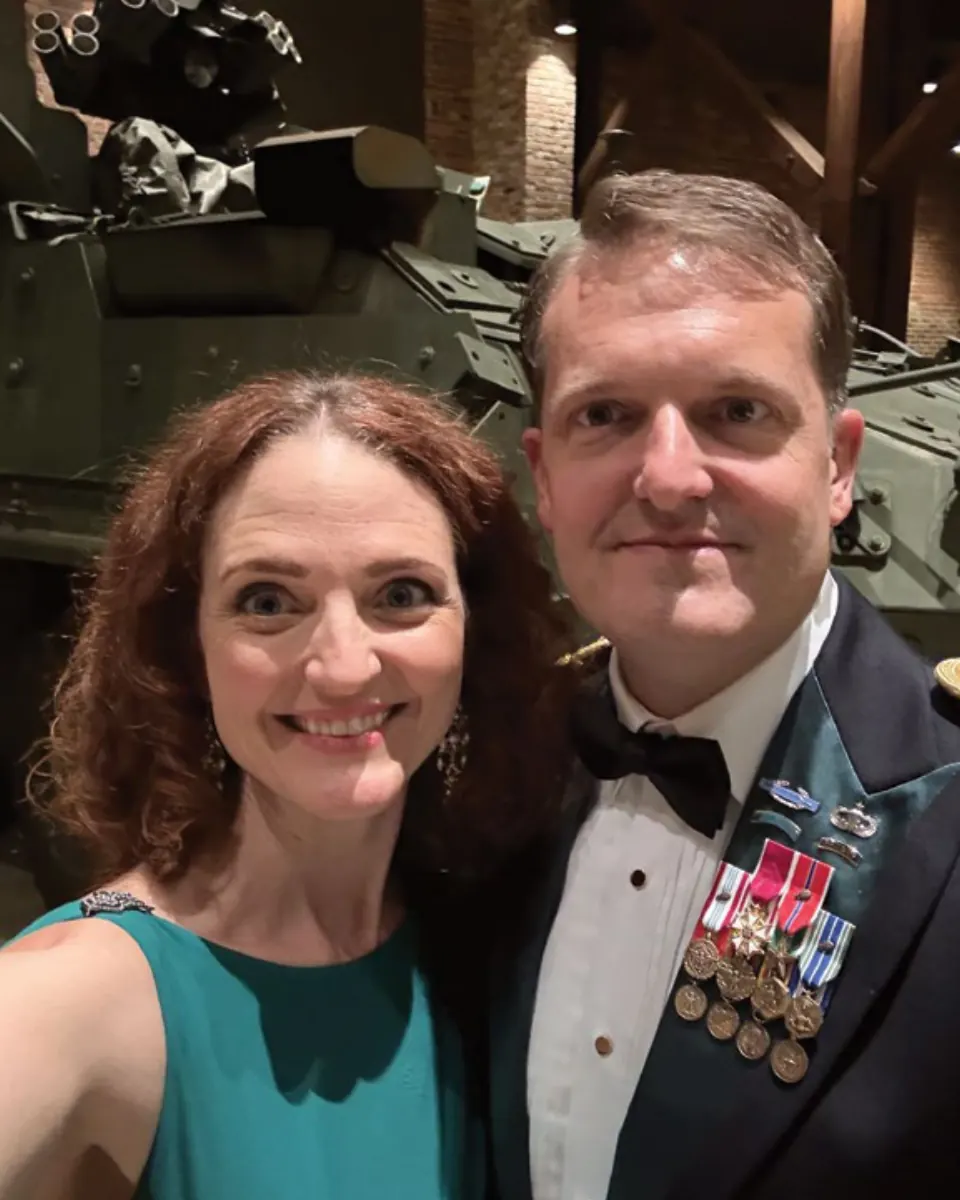
The going-a-different-way is still unspooling. Her husband, it turns out, was there in Sicily the whole time. They worked together, different shifts, barely more than a passing hello, for two years. Eight years later they reconnected on MySpace. They've been married sixteen years now, with two kids.
"It's weird to think how things work out," she says. "The decisions you make have impact on your whole life."
New Hampshire is the longest she has ever lived anywhere. That's its own quiet marvel for a woman who once measured her life in duty stations. She tells her kids the
“For years we talked about building a real client master list, and for years we just lived with a pile of half-updated spreadsheets that nobody could keep straight. Nobody assigned this to Dawn. She taught herself how to use AI and built us an intranet portal that answers every single frustration we'd been complaining about for a decade. It's beautiful, and it works. That's Dawn: she sees the thing everyone else has learned to tolerate, and she goes and fixes it.” - Beth Carter, BBA Bookkeeping, CEO same thing she once told herself, standing on a foreign ramp with no ride and no one waiting.
"Don't sit around and think about it. If there's something you want to do, just go do it. That time is going to pass regardless."
Text adapted from the print edition of Élevé.
 Better Than She Could Have Imagined
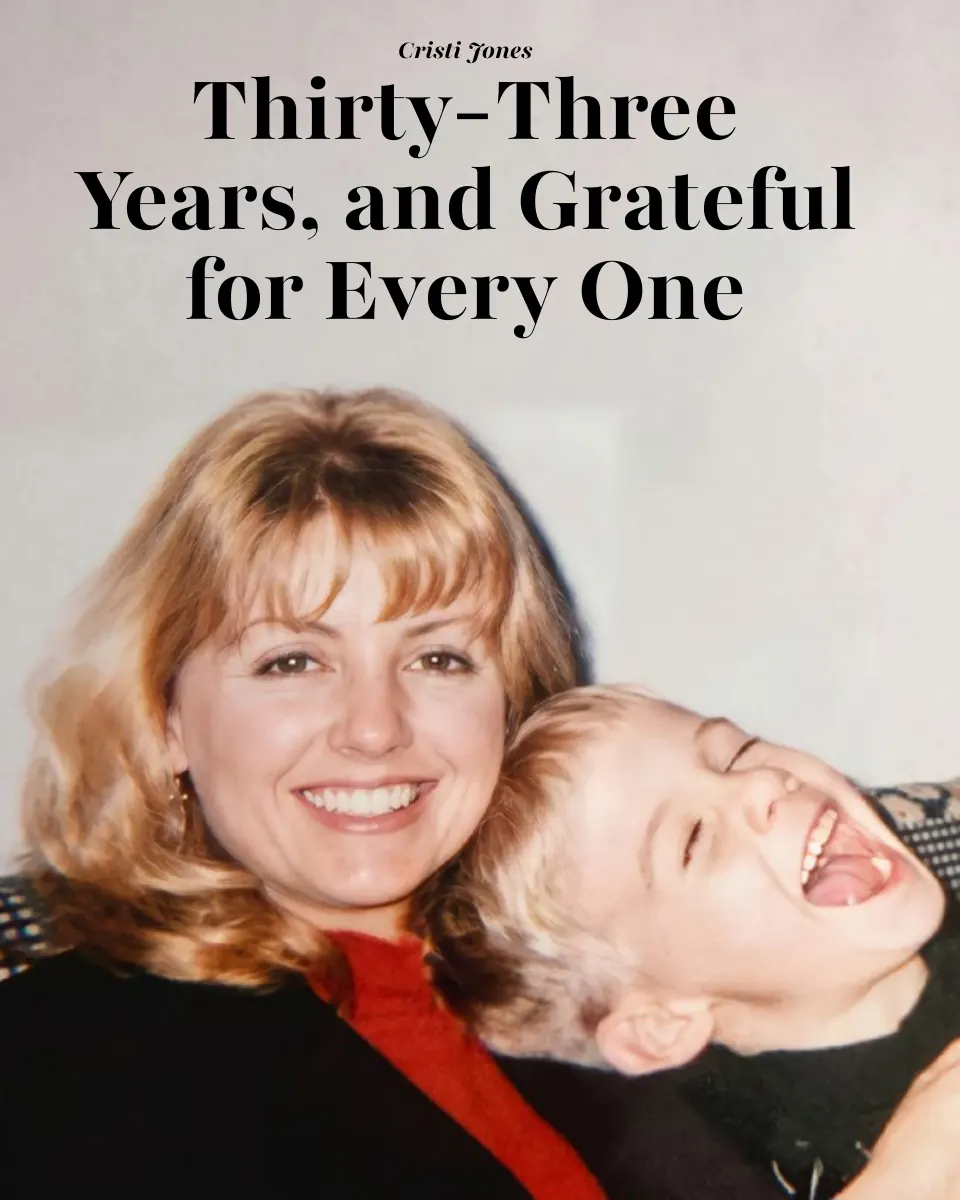 Thirty-Three Years, and Grateful for Every One
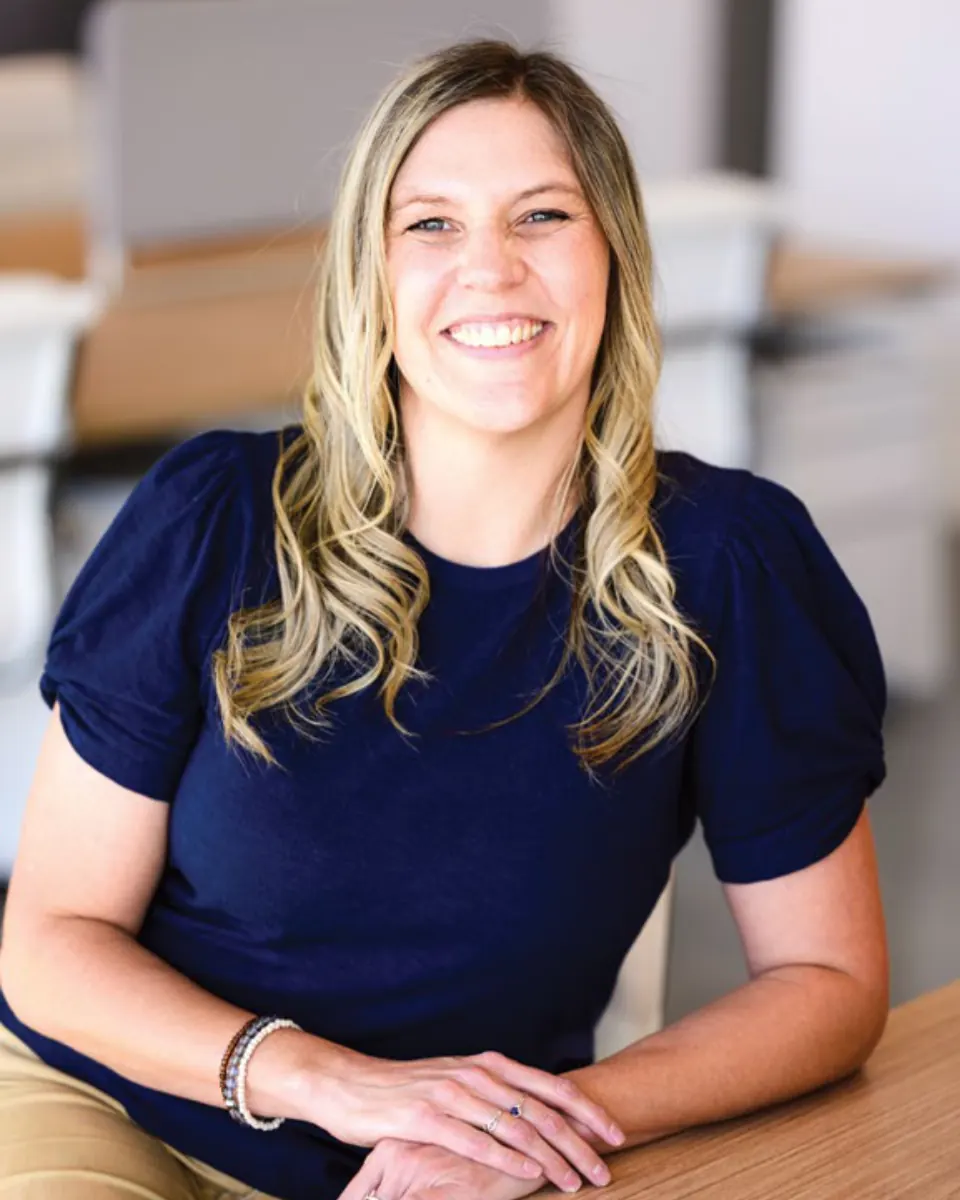 The Woman Underneath