Élevé · Issue 4 · Quietly Extraordinary
The Woman Underneath
For years she avoided one word. Now Kiri Levie is saying the rest of the story out loud: four kids, a life rebuilt from the ground up, and the quiet,
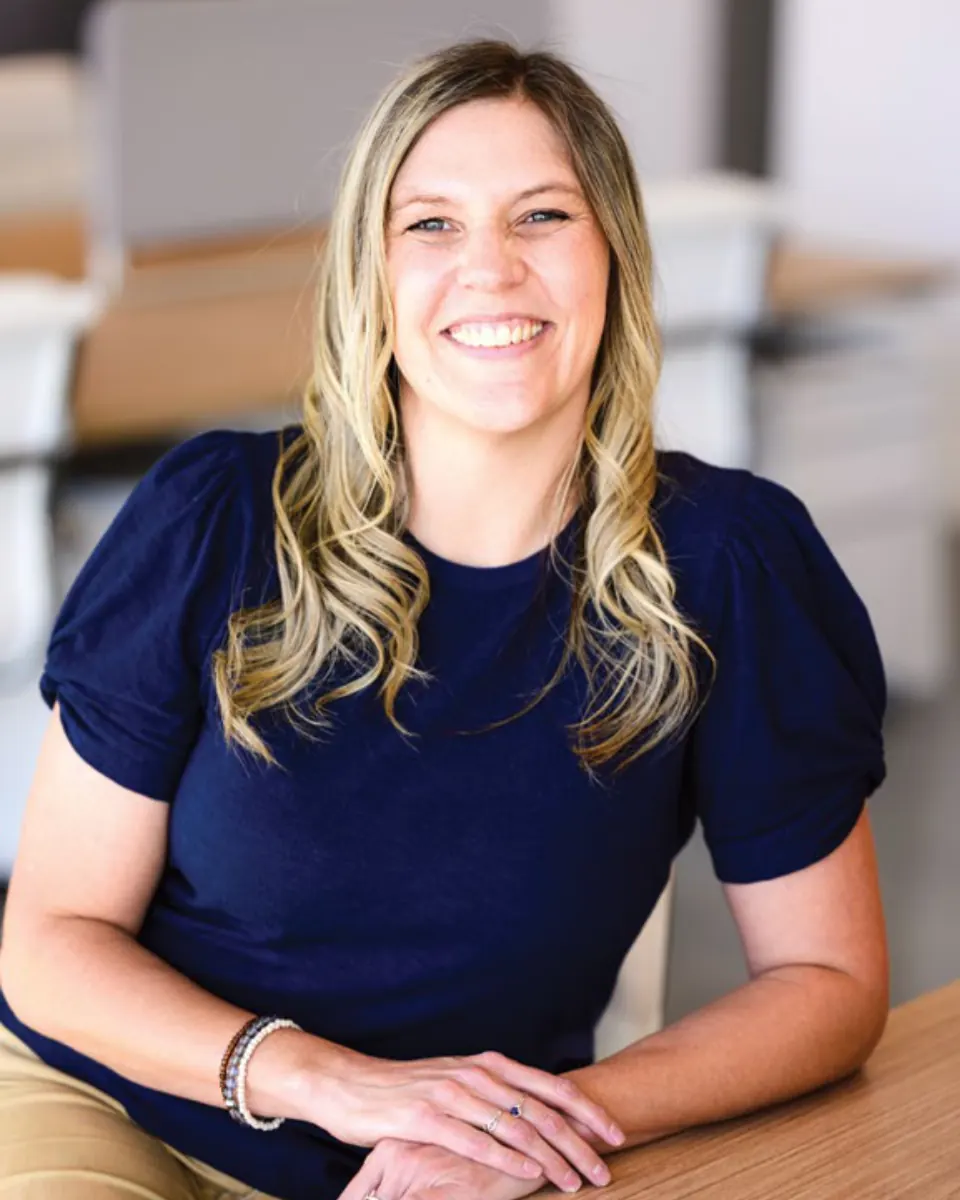
For years, Kiri Levie tied her whole worth to being a wife and a mother, the two roles she had dreamed of since she was a little girl. Then, four years ago, one of them ended, and she found herself scrambling to fill every empty hour so she would not have to sit alone with the loss. She has said the word "divorced" maybe twice in all that time. What people see when they meet Kiri is a hiker, a musician, a mom of four teenagers. What they do not see is the quieter, harder thing she has been building underneath it all: a relationship with herself. "I feel different," she says. "Friends who've known me a long time say I'm a completely different person than I was five years ago. And I do, I feel it."
Start with the word itself, because Kiri does.
She almost never says "divorced." She calls the man she was married to for seventeen and a half years "my kids' dad." She has reached for "ex husband" exactly once, cornered on a phone call with an insurance company that could not follow her. Everywhere else, she softens it. "I'm no longer married." "I'm actually single."
This is not avoidance so much as intention. "Language is really important," she says. "For me, divorce just carries such a negative stigma.
It's all wrapped up in those words: guilt and shame and fear and loneliness and loss." She noticed something telling, too. When other people say they are divorced, she feels nothing. The weight is hers alone, and she has been careful about where she sets it down.
To understand what came apart, you have to understand how deliberately she had built it.
Kiri went to college on a full academic scholarship. She started in engineering. She wanted to work for NASA, to build spacecraft, and she was serious about astronomy. Then, a year in, she stopped and asked whether the life she was training for matched the life she actually wanted. It did not. She switched to accounting for one clear-eyed reason: it was work she could eventually do from home, on her own terms, once she had children. Being a mother was never a fallback. It was the plan the rest of her life was built around.
So when her first baby arrived, she left public accounting without a second thought. "I loved every second of it," she says. She read to her daughter, taught her, poured herself in completely. Years later, when her oldest was about eight, she stepped back toward work by helping her sister build the financial side of a new salon.
She loved all of it. She would also, later, name the cost of loving it that way.
"I had wrapped my worth so much, and my identity so much, into these roles of wife and mother that I didn't really know who I was without those."
When the marriage ended, that was the ground that gave way. Not just a relationship, but the entire architecture she had used to answer the question of who she was.
The early days of rebuilding did not look like rebuilding. They looked like motion. When her kids were not with her, Kiri refused to be home. She filled every free weekend, every open hour, with plans, with friends, with work, with anything at all. "I just pushed myself to be as busy as possible," she says, "so that I didn't have to sit with loneliness.
So I didn't have to sit with any of the feelings." She had always measured her worth in productivity. Now she leaned on it like a crutch. As long as she was doing enough, she was still someone.
It could not hold. Eventually the busyness started to feel unsustainable, then genuinely unhealthy, and she arrived at a harder assignment than staying busy. She had to figure out who she was underneath all of it.
She sat down one day and tried to write a list of things she liked. She could not think of a single one.
The healing, when it came, came in small, deliberate acts rather than one big turn. She points to year three as the pivotal one, the stretch when the internal work she had been putting in finally began to pay dividends. She is quick to point out she did not do this alone. "It was a lot of internal work and growth, but I couldn't have done any of it without my faith in God, who brought opportunities into my life just when I was ready to receive them," she says, "and without my village, especially my best friend, who scraped me off the sidewalk multiple times when I needed it. Her therapist had given her permission to stop trying to fix everything at once. Take one thing at a time. If sleep is the most valuable thing right now, start with sleep. Eat. Get outside. Move when you can. Give yourself grace. "If I don't take care of myself, I can't take care of my kids," she says. "It's not selfish to take care of yourself."
Then she started choosing things simply because she wanted them.
There was a hike to Francis Peak she had wanted to do for years and never had the time for. One free Saturday, no kids, no commitments, the kind of open day that once would have been crippling, she called a close friend and they climbed it. "I just remember getting to the top and thinking, this is amazing," she says. "I did this. I created this."
After that, a pattern. She saw an ad for the Utah Symphony's Messiah sing-along at Christmas and went alone, because she wanted to. She went to a movie by herself. She took a salsa dancing class, then went swing dancing, both of which were terrifying for a woman who had spent her life avoiding anything she might not be instantly good at. At forty-two, she went golfing for the first time. She was not good at it.
"But it was fun," she says. "I can do things that I'm not going to be good at, and it's going to be okay."
Somewhere in there, the sense that she did not matter began to loosen too. Kiri had spent most of her life in leadership roles, in school, in church, at work, and had never once felt she belonged in them. Impostor syndrome shadowed all of it. The shift came at a leadership course her employer sent her to, about a year and a half ago, when the presenter told the room that everyone in it mattered. Her reflex was to assume he meant everyone but her. This time, for the first time, she let it land. "You know what, he's right," she remembers thinking. "What I do matters. I can have an impact."
Ask her now what she is proudest of building, and she pauses before landing somewhere she did not expect to.
"My relationship with myself, honestly."
That is the thing underneath the hikes and the sing-alongs and the golf. A relationship in which she gives herself space to be imperfect, to feel what she feels, to try and fail and keep going. The proof surfaced just last week. A friend
“Kiri is someone I can count on completely. She’s the rare person I never have to follow up with or wonder whether she’s doing what we agreed to. Years ago I stopped setting reminders to check on anything I’d handed her, because I know with certainty she’ll either get it done or tell me the moment she hits a roadblock. That kind of reliability is hard to find and impossible to fake. She is easy to lead, and that’s one of the highest compliments I know how to give.” - Dave Olsen, Co-founder | CEO,
nimbl
asked her, offhand, what simple pleasures she enjoyed, and Kiri reeled off fifteen or twenty without pausing: fireworks, hot tubs, cozy socks, candles, hot chocolate. The friend was stunned. "How did you do that? Most people couldn't do that." Only later did it hit Kiri how far she had come from the woman who once stared at a blank page and could not name one thing.
She is careful, still, about what this story is and is not. She does not want the divorce to be her identity, and she is clear that marriage still matters to her, is still something she wants and is working toward. But she is no longer waiting on it to be whole.
"It's a pivot moment. It's something you can learn and grow from, and through, and with. It doesn't have to define who you are. It's not who you are. It's just a part of my story."
For the woman who once could not spend a Saturday alone without flinching, that is the whole distance, traveled one deliberate choice at a time. And she wants anyone standing where she stood four years ago to hear the part she wishes someone had told her.
"Have hope. And work on trusting yourself. There's nothing special about me that's different from anybody else. You can rebuild from any kind of loss, any kind of change. You can go out there and change your world, which is really the most important one."
Text adapted from the print edition of Élevé.
 Running Back to Twenty-One
 Dogs for Good
 The Quiet on the Other Side of Control