Élevé · Issue 3 · Coming Back
A Life That Leads Back to the Classroom
It’s about returning to where it all started, this time with something meaningful to give.
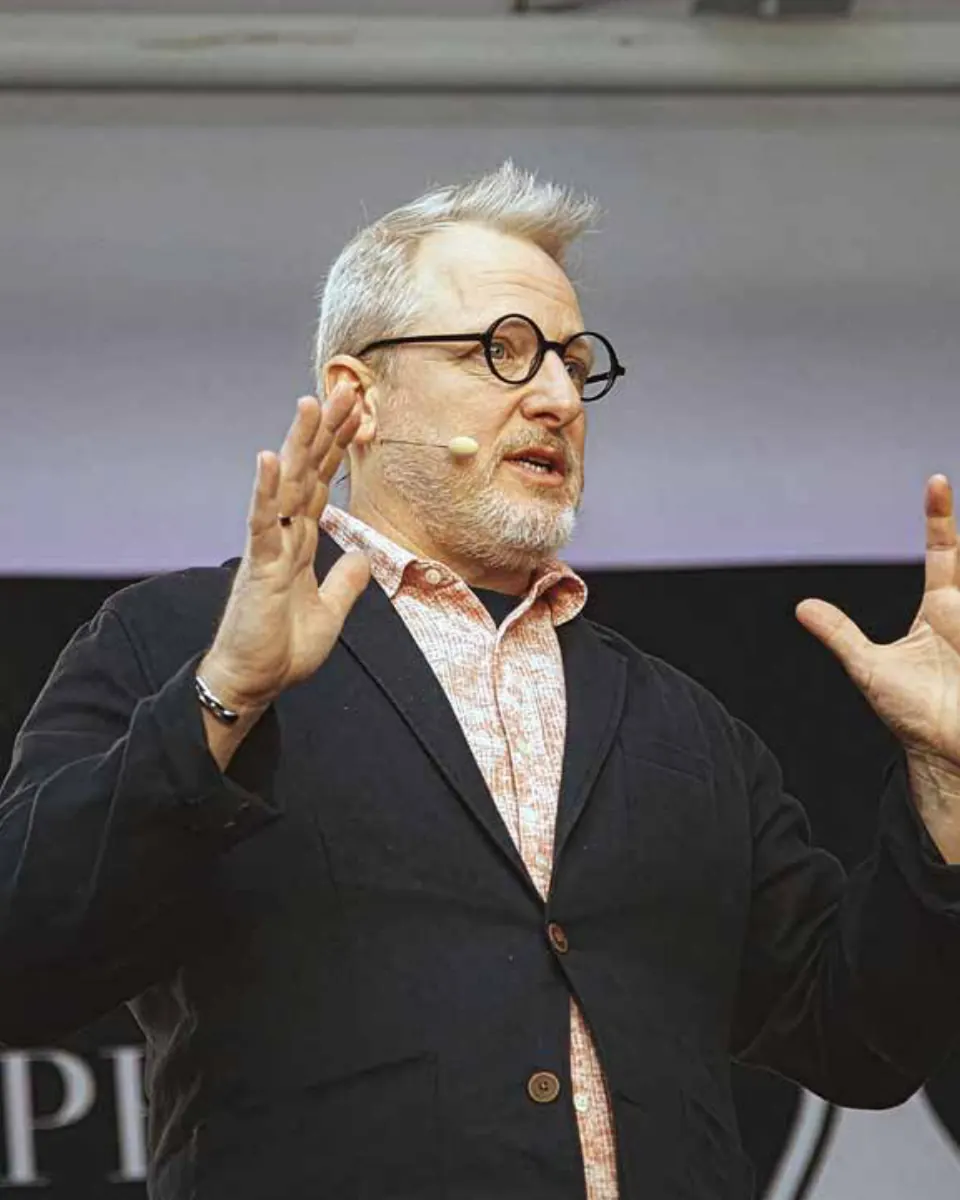
Jason Blumer doesn’t hesitate when he talks about what’s next. After more than 30 years in entrepreneurship, he’s thinking about a new chapter, one that looks very different from the life he’s built so far. “You get to a point where you want to give back,” he says. For Jason, that means becoming a professor. The idea traces back to his own college experience, where a handful of professors didn’t just teach, they cared. Now, decades later, he can still remember them. And as he looks ahead, he keeps coming back to one question. What would it mean to be that kind of person for someone else?
The answer, for him, is not about slowing down. If anything, it’s about focusing more intentionally on what matters.
Entrepreneurship, as Jason describes it, is not a quiet career. It is relentless, demanding, and deeply consuming. “These companies really can take over,” he says. For more than 25 years, he has lived inside that pace, building, leading, and navigating the constant pressure that comes with creating something from nothing. It’s a path filled with uncertainty, wins, losses, and a level of responsibility that doesn’t easily turn off at the end of the day.
Over time, that kind of intensity changes how you think about the future.
Now, Jason finds himself reflecting in a way he hadn’t before. He talks about remembering what his parents used to say, about beginning to see the world from the perspective of someone not just building but also transitioning. It’s a strange realization, he admits. One that brings both clarity and a new set of questions.
What comes next is not an ending. It’s an iteration.
He already sees the shift happening. In his current work, he spends less time doing technical accounting and more time coaching leaders, consulting with entrepreneurs, and helping others navigate the same challenges he’s faced. It’s a role built on experience, on pattern recognition, on understanding what works and what doesn’t because he’s lived it.
But there’s something about the idea of a classroom that feels different.
“I really wonder if I could do it for younger people,” he says. “It would be a joy to do it.”
That word, joy, shows up often when he talks about this next chapter.
Part of it comes from memory. Jason’s own college experience was shaped by professors who went beyond instruction. In a small program, with only a handful of students, those relationships mattered. They were mentors, not just teachers. They paid attention. They cared. And even now, more than 30 years later, those moments have stayed with him.
That kind of impact is what he hopes to recreate.
Not through perfection or authority, but through honesty.
By his own admission, much of what he’s learned over the course of his career has come from mistakes. “You can look back on some really impactful mistakes,” he says. Both personal and professional. The kind that shapes how you lead, how you make decisions, how you show up for other people.
That perspective, he believes, is what students need most.
Not someone who claims to have all the answers, but someone who understands what it feels like to not have them.
“I am not here to be the expert,” he says of how he imagines himself in the classroom. “We’re going to learn and grow together.”
It’s a philosophy rooted in empathy. In remembering what it felt like to be at the beginning of something, unsure, overwhelmed, and trying to figure out if you’re capable of building a life that works.
College, he says, is both freeing and terrifying. There is space to explore, but also a quiet pressure. Will this lead somewhere? Will I be able to make it? Those questions don’t always get answered in a syllabus.
But they can be met with encouragement.
Jason talks about wanting students to feel safe enough to fail. To try things, get them wrong, and learn without the weight of real-world consequences pressing down on them. He imagines a classroom where curiosity is valued, where questions are welcomed, and where the goal is not just technical mastery, but personal growth.
“I hope they’ll fail a little bit,” he says. “And fail safely.”
That kind of environment, he knows, can change people.
It’s the same kind of environment he now tries to create in his work with entrepreneurs and leaders. Spaces where people can be honest about what’s not working, where they can process challenges, and where they can find a way forward without having to pretend they have it all figured out.
Because the truth is, even after decades of experience, no one really does.
There’s also something else pulling him toward this path. A curiosity that hasn’t faded.
Jason doesn’t talk about retirement the way most people do. In fact, he doesn’t talk about it at all. “I would just go to school forever if I could,” he says. He reads constantly, often choosing material that challenges him rather than entertains him. He listens to ideas he doesn’t fully understand, trusting that over time, they will start to make sense.
That desire to keep learning is what makes the idea of going back to school, even later in life, feel exciting rather than intimidating.
“I love to read things that I don’t get,” he says. “And if I keep washing myself with it, I start to learn.”
In that way, the classroom is not just a place where he would teach. It’s a place where he would continue to be a student.
That dual role feels important to him.
It also reflects something deeper about how he sees this next chapter. It’s not about stepping away from ambition or drive. It’s about redirecting it.
Even the practical challenges, going back to school, earning additional degrees, adjusting to a slower pace, don’t deter him. If anything, they’re part of the appeal. Another problem to solve. Another experience to move through.
“I anticipate it would be hard,” he says. “But I want to go through that transition.”
The same mindset shows up when he talks about writing his first book, a goal that once felt overwhelming. At the beginning, he wasn’t sure he had enough to say. By the end, he had more than he could include.
“Anytime you do something hard, you can do it again,” he says.
That belief shapes how he sees everything that comes next.
Including the impact he hopes to have.
If there’s one thing Jason returns to again and again, it’s this idea of change. Not the kind measured in metrics or milestones, but the kind that lasts in people.
“I hope they are changed as people,” he says, speaking about the entrepreneurs he’s worked with, the leaders he’s coached, and the students he hopes to teach one day.
More encouraged. More thoughtful. More capable.
He doesn’t need them to remember his name. What matters is that they remember how they felt. That there was someone who cared enough to share not just knowledge, but perspective. Someone who helped them see what was possible, even when they weren’t sure yet.
“There was a professor,” he says, imagining the future. “Who cared enough to talk about life.”
That, for him, would be enough.
Because in the end, this dream isn’t about changing direction. It’s about coming full circle.
From student to entrepreneur. From builder to mentor. From learning to teaching.
And back again.
Text adapted from the print edition of Élevé.
 For the First Time, She’s Not Letting Herself Quit
 Now, It’s Time to Fly
 The Phone Call That Made Him a Dad