Élevé · Issue 3 · Coming Back
The Phone Call That Made Him a Dad
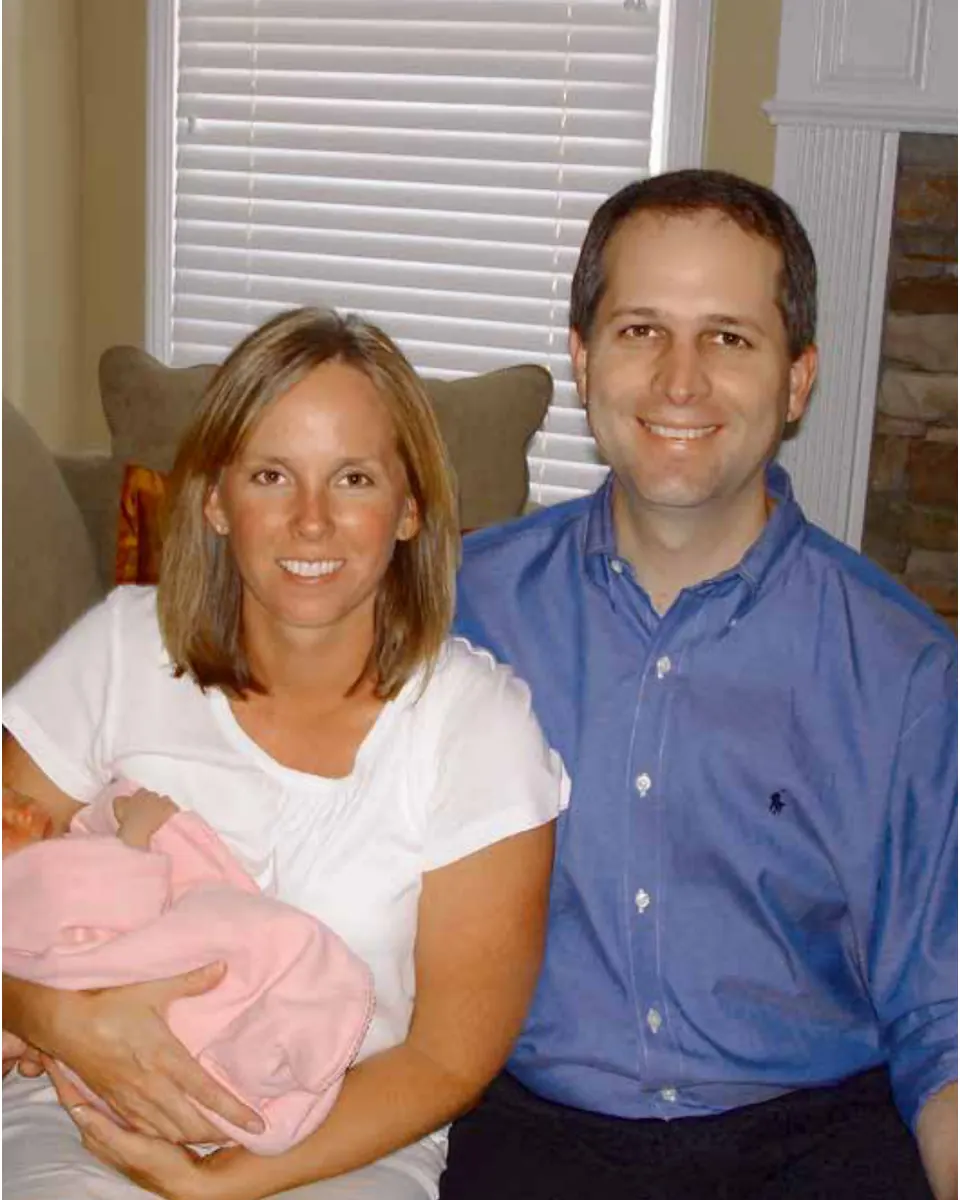
Joe doesn’t hesitate when he names the dream that quietly shaped his life long before it came true. “My dream was to be a father,” he says, a desire rooted in the “very strong nuclear family” he grew up in and hoped to recreate for his own children. For years, that dream felt both close and out of reach, shaped by loss, grief, and the slow acceptance that it might never happen. And then, without warning, everything changed. One phone call. One decision. One moment that seemed to collapse time itself. “We woke up that morning not parents,” Joe says, “and we went to bed that night parents.”
That dream began long before the call. Joe was raised in a family he describes as tight, consistent, and deeply formative. He was close with his parents and his brother, shaped by the kind of everyday experiences that, over time, create a sense of belonging. It isn’t something he takes for granted. “I understand I’m privileged to have experienced this type of childhood,” he says. But it also planted something lasting. He didn’t just want a family one day. He wanted to recreate that experience, to give his own children the same kind of foundation his parents had given him.
When he met his wife, Sandra, shortly after moving to Atlanta, it felt aligned with that vision. They met at church, both new to the city, both building something from scratch. What started as a moment of recognition turned into a relationship, and eventually, a shared plan for the future. They married knowing they wanted a family, and because they had started later, both in their mid30’s, they didn’t wait long to begin trying.
At first, it seemed possible.
They were able to get pregnant. However, staying pregnant proved to be something else entirely.
Over the course of a few years, they experienced multiple miscarriages. Each one brought its own emotional and psychological weight, but one loss, in particular, shifted everything. After reaching the second trimester, after letting hope settle in more deeply than before, they lost the baby. The emotional impact was profound. “The news of the miscarriage was devastating to both of us, and, given the level of bonding Sandra had formed with our son in the womb, I know that whatever grief I went through doesn’t compare to my her journey during that difficult time,” Joe says.
On the advice of a grief counselor, they named their son Stephen, and a couple of years later, they buried the tiny urn of his ashes with Sandra’s grandmother. They grieved Stephen not just in the immediate aftermath, but in the years that followed. Sandra, he says, still carries that grief decades later. For Joe, the loss was layered, both the loss of a child and the experience of watching his wife endure that kind of pain.
Eventually, they made a decision that felt both necessary and heartbreaking. The emotional cycle of hope and loss had become too much. They chose to step away from trying. Not because they no longer wanted a child, but because they needed to protect themselves from what continued trying might cost them.
“We’re going to have a home,” Joe says of that time, “but it will be a childless home.”
Life moved forward.
They focused on their careers. Joe was traveling frequently for work, teaching across the country. His wife was building her career in corporate America. The dream of becoming parents didn’t disappear, but it became something quieter, something that lived in the background rather than at the center of their plans.
And then the phone rang. A birth mother had delivered a baby girl. During her time in the hospital, she made a decision that Joe still describes with reverence. She decided she was not in a position to raise her daughter and wanted to place her for adoption. However, she had two conditions. She didn’t want her child placed into the system, and she wanted her to be raised in a Christian home.
The birth mother called Joe’s church. The church called Joe and Sandra.
What followed was sudden and disorienting. “Kind of a panic and excitement all in one,” Joe recalls. They prayed. They talked. And then they decided.
They would go get her.
There was no long leadup, no gradual transition into parenthood. No nine months to prepare. No nursery built in advance. No steady adjustment to the idea of a child entering their lives.
His wife went to the hospital, while Joe was across the country, trying to get home, pacing airport floors in frantic and futile attempts to find a last-minute flight home. Even with extraordinary efforts to reroute him, he couldn’t make it back in time. So, he did the only thing he could do. He waited.
Meanwhile, while Sandra was at the hospital getting their new daughter, something else was happening at home.
Joe and Sandra’s friends, who had already been through the early years of parenting, emptied their basements of everything they had saved: Baby clothes, supplies, furniture. One of these friends had a key to the house, and within hours, they transformed a room in Joe and Sandra’s home into a nursery. Not slowly, not over weeks, but all in a matter of hours. A space built by community, in real time, for a child who had not been part of the plan just hours before.
“I had no idea a baby could move a house,” Joe says, whimsically.
By the time his wife brought their daughter home, the house had already begun to reshape itself around her. Joe secured a spot on a redeye and met his daughter the following morning.
They named her Karis. The name came from Joe’s background in classical Greek. It means, as he explains, receiving goodness you did not deserve. A gift that
That idea stayed with him. It shifted how he thought about success, impact, and what mattered most. The work he had been doing, the career he had built, didn’t lose its importance. However, the family took the central role.
“I believe that whatever I’ve been able to accomplish in my life,” he says, “what she is going to do with her life… is so much greater.”
Today, Karis is 18. She’s pursuing her own dream, one she’s held since middle school, to attend NYU. She worked toward it for years and is now there, shaping a path that is entirely her own.
For Joe, the dream that once defined him has evolved into something quieter, but no less powerful.
He wanted to be a father.
He became one in a single day.
And now, the dream is no longer about him at all.
“I just hope I live long enough,” he says, “to see the goodness she brings to the world.” isn’t earned but given.
The meaning stayed with them, not just as a name, but as a framework for understanding what had happened.
Parenthood, for Joe, wasn’t just about raising a child. It became something more expansive. A reorientation of purpose.
“My pastor says maybe the most important thing in your life is not what you do, but who you raise,” he says.
Text adapted from the print edition of Élevé.
 The Unfinished Part of an Otherwise Complete Career
 “He’s My Why”: The Life She’s Building for What Matters Most
 What If Conferences Felt Like This Instead?