Élevé · Issue 3 · Coming Back
The Unfinished Part of an Otherwise Complete Career
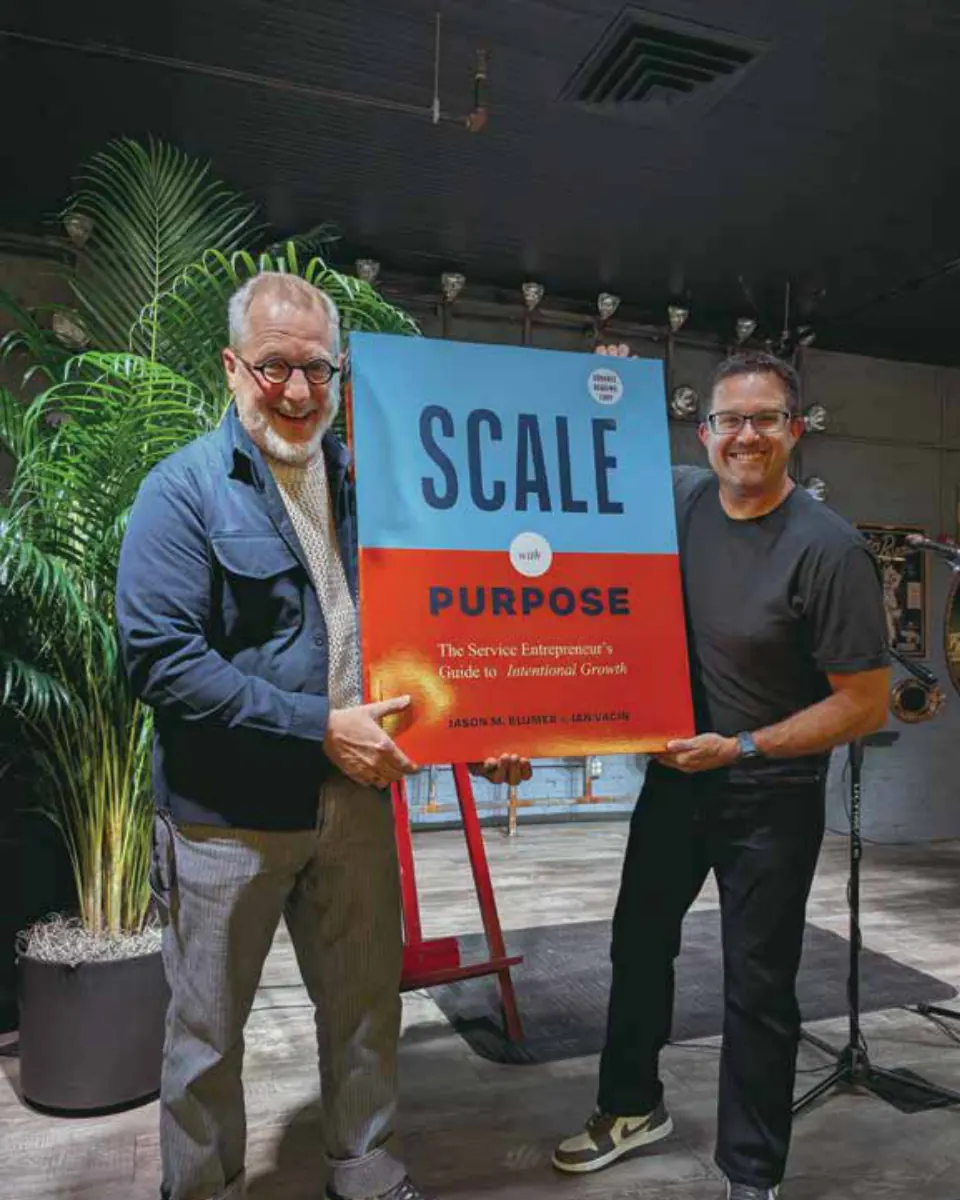
For Ian Vacin, the dream has never really gone away. It’s lingered quietly, resurfacing in moments of reflection, in classrooms where he stood at the front instead of sitting among students, and in the research he’s spent decades shaping on his own terms. Pursuing a PhD isn’t about reinvention. It’s about returning to something unfinished. “I got cold feet,” he says of the moment he walked away from a fully funded PhD engineering program just one week before it began.
At the time, the decision felt practical. He had already been working full-time, building momentum in a career that was both financially rewarding and grounded in real-world application. The alternative meant stepping away from that progress and into five or six years of uncertainty, with no clear picture of what would come next. He chose the path that made sense. The one that moved forward.
But clarity in the moment doesn’t always translate to closure over time.
What he left behind wasn’t just a program. It was a version of himself. One that leaned fully into research, into depth, into the kind of academic rigor that formalizes curiosity. And even as he continued to build, earning two master’s degrees, teaching at UC Berkeley, and eventually co-authoring a book rooted in years of research and observation, the feeling never fully disappeared. “It’s always kind of been in the back of my mind,” he says.
That lingering question isn’t about capability. He’s already done the work in many ways. Over the past two decades, Ian has studied the accounting profession from the inside out, analyzing patterns, behaviors, and the invisible forces that determine why some firms grow while others stall. That work culminated in Scale with Purpose, a book he co-authored after years of research, testing, and refinement. The process itself was exhaustive. Nearly two years from start to finish, layered on top of an already eight-year foundation of research.
And even that didn’t fully satisfy the curiosity.
If anything, it deepened it.
“Writing the book was a really big undertaking,” he says. “It satisfied that a little bit, but it also kind of scratches the itch more.”
It’s an interesting tension. The closer he gets to answering the question, the more expansive it becomes. Not because the work is incomplete, but because the framework surrounding it is different. A PhD wouldn’t just be about doing research. It would be about doing it within a system that demands a different level of rigor, structure, and validation.
That distinction matters to him.
Not for recognition, at least not primarily. Though he’s honest enough to acknowledge that part of it exists. “I’ve got a lot of friends who are PhDs, so they’re all doctors,” he says. “That’s the ego part of it.”
But the deeper motivation is something else entirely.
Curiosity.
The desire to explore ideas more fully, to test them in a more formal environment, to be pushed by mentors and frameworks that operate at a different level of depth. It’s about creating space to think in a way that everyday life doesn’t always allow. And that’s where the question becomes more complicated.
Because life, as it exists now, is full. There’s the company he’s still building, one that supports hundreds of employees and, by extension, their families. There’s the responsibility that comes with that, the weight of unfinished work that feels more immediate than any personal pursuit. There’s coaching, teaching, parenting, the everyday moments that pass quickly if you’re not paying attention.
And there’s the reality that time is no longer abstract.
Going back to pursue a PhD now wouldn’t look like it did at 22. It would mean stepping into a room where he’s older than most of the students and, in many cases, older than the professors. It would mean revisiting material he’s already mastered, relearning processes he’s already lived through, and doing it all while checking his ego at the door.
“It’s a lot of humble pie,” he says. There’s something deeply human about that recognition. The awareness that growth doesn’t always move forward in a straight line. Sometimes it requires stepping back, starting over, placing yourself in environments where you are no longer the most experienced person in the room.
And choosing to do that anyway.
But even that clarity doesn’t make the decision obvious.
Because the question isn’t just what he would gain. It’s what it would cost.
Time away from his family. Time away from the company. The ripple effects of stepping back from one area of life to invest deeply in another. Those trade-offs feel heavier now, more consequential in ways they didn’t before.
“You realize that decisions you make have impacts beyond yourself,” he says.
That awareness reframes everything. It shifts the dream from something purely personal into something that has to be evaluated within a broader context. Not just can I do this, but should I. Not just what will this give me, but what will it take from the people around me.
And yet, even with all of that, the question doesn’t disappear.
It evolves.
In some ways, he’s already found alternative paths toward the same outcome. Writing the book. Continuing research independently. Exploring new ideas, like how AI will reshape the structure of accounting firms, and considering how those ideas might turn into future work. These are ways of engaging the same curiosity without committing to the formal path.
But they don’t fully replace it.
Because the PhD represents something specific. Not just knowledge, but completion. A box that was never checked. A decision that was made quickly but lived with for years.
“Satisfy the fact that I never actually did do it,” he says.
There’s a quiet honesty in that. The acknowledgment that not every dream is about transformation. Some are about resolution.
Closing a loop.
Proving something to yourself, not because you need the outcome, but because the question has stayed with you long enough to matter.
Still, even that isn’t the final answer.
Because when he talks about what matters most, the conversation shifts. Away from degrees and achievements and into something more immediate. The impact he has on the people around him. The moments that happen in everyday life. The students he teaches, the teams he coaches, the small but meaningful ways he helps others grow.
Those are the things that feel tangible.
The things that feel enough.
And yet, the presence of “enough” doesn’t always eliminate the desire for something more.
For Ian, the PhD sits in that space. Not as a necessity. Not as a missing piece that defines his success. But as an open question. One that has followed him through different stages of life, changing shape but never fully fading.
Maybe that’s what makes it matter.
Not the outcome, but the persistence.
The way certain ideas stay with you, asking to be revisited, reconsidered, reimagined as you grow. The way they challenge you to decide, again and again, what’s worth pursuing and what can be left unfinished.
And maybe, in the end, that’s the real dream. Not the degree itself, but the willingness to keep asking the question.
Text adapted from the print edition of Élevé.
 “He’s My Why”: The Life She’s Building for What Matters Most
 What If Conferences Felt Like This Instead?
 For the Ones Who Never Get Credit