Élevé · Issue 3 · Coming Back
For the Ones Who Never Get Credit
She’s not interested in writing about the hero. She wants to tell the story of the person who made the hero possible.
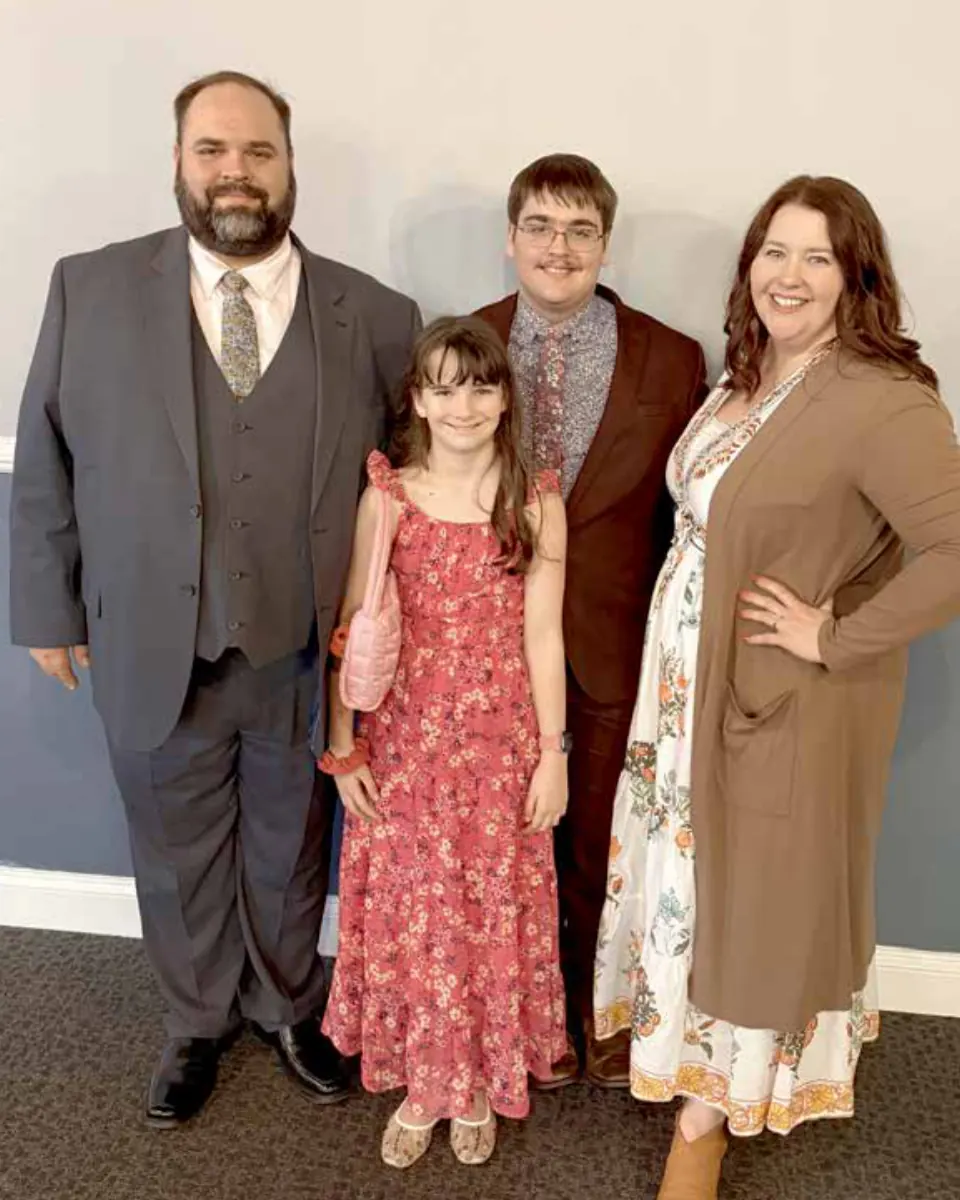
Corry Jankowski doesn’t hesitate when asked about her biggest dream. “To write a book that people actually read,” she says, laughing a little at how simple and big it sounds all at once. It’s a dream she’s carried since she was ten, shaped by a lifelong love of reading, writing, and history. But what she wants to create isn’t centered on the obvious heroes. It’s something more subtle. A historical fiction novel that focuses on the people “no one would ever know that they had a name,” the ones who stood just outside the spotlight, but still changed everything. Drawn to stories from moments like World War II, she’s especially interested in the quiet acts of courage that rarely get recorded. The goal isn’t to write the next great novel. It’s to tell the kinds of stories that make people feel something real.
For Corry, stories have always been more than entertainment. They’ve been a way of understanding people. Growing up, she gravitated toward books set in the past, especially those rooted in real events but told through imagined lives. She wasn’t just interested in what happened. She was interested in how it felt to live through it.
That instinct never left.
She describes her interest in historical fiction as something that has always lived quietly in the background. A steady pull. A curiosity about how people respond when the world around them shifts in ways they can’t control. Moments when fear, uncertainty, and courage all exist at the same time.
World War II is one of the time periods she returns to often, not because of its scale, but because of the human stories within it. “There were so many amazing heroes,” she says, “but there were also so many people who maybe their contribution was not classified as heroic, but it still was something that really impacted people.”
It’s those people she keeps thinking about.
Not the ones whose names are remembered. The ones who stood beside them. The ones who helped, enabled, or simply showed up at the right moment.
“They’re not the people who are credited with it,” she explains. “But the heroes in those stories, they don’t do them alone.”
In the book, she imagines, the story wouldn’t follow the hero. It would follow the person just outside the frame. A driver. A maid. A witness. Someone whose presence made everything else possible, even if no one ever recorded their name.
That idea, that impact often lives in the background, is what makes the story feel important to her.
Long before she ever considered writing a novel, writing itself was already part of her life. She comes from a family of writers, not professionally, but as a shared way of expressing themselves. For Corry, it became something natural. Something she turned to without thinking.
Today, that still shows up in small ways. She writes poetry for her children, often inspired by everyday moments. The kind of writing that turns something ordinary into something memorable. It’s playful, sometimes silly, and deeply personal.
But writing a novel feels different.
“It takes time,” she says. “And myself, probably.”
Because for her, writing isn’t just about storytelling. It’s about honesty.
“There’s also a lot of vulnerability in writing,” she explains. “Writing has to come from somewhat from personal experience.”
Even in fiction, something real has to exist underneath it.
Some of that reality comes from her own experiences of starting over. Moments where life didn’t follow the path she expected. She describes a time when everything felt stable. A home. A business. A growing family. And then, suddenly, that stability shifted.
“We had that experience of where we had a very comfortable life,” she says, “and that vulnerability of really having to start over and have nothing.”
It wasn’t just about losing something. It was about deciding what came next.
“We built this life from nothing,” she says. “We can rebuild this life from nothing. We did it once, we can do it again.”
That experience didn’t just shape her life. It shaped the way she thinks about stories.
Because the moments that define people aren’t always the ones that get recognized. They’re often the quiet decisions. The risks taken without certainty. The choice to act when it would be easier not to.
“We can’t just be passive bystanders and expect that we are going to positively impact anything,” she says.
That belief sits at the center of everything she hopes to write.
The people she’s drawn to, the ones she calls “hidden heroes,” aren’t fearless. They’re people who understand what they could lose and choose to act anyway.
“They have so much to lose,” she says, “but they know that there is so much to potentially gain from taking this risk and helping someone else.”
It’s not about recognition. It’s about impact.
That same perspective shows up in how she thinks about confidence. She believes people often use language like imposter syndrome as a way to hold themselves back from doing something meaningful.
“I’m not an imposter,” she says. “I am competent. I’m confident.”
It’s the kind of mindset she hopes readers would carry with them after finishing her book. Not just inspiration, but permission. Permission to act. To try. To believe they are capable of more than they think.
When she imagines actually sitting down to write the novel, what excites her most isn’t the outcome. It’s the process of stepping into someone else’s experience.
“I think that empathy is a great place to start on anything,” she says.
To her, storytelling is a way to experience life beyond your own perspective. To feel something you haven’t felt before. To understand someone you’ve never met.
Because, as she puts it, “we’re generally self-centered,” even when we care deeply about others.
Stories create a pause in that. A moment where someone else’s experience becomes real.
And in that moment, something shifts.
That’s what she wants to create.
When asked what it would mean to finally write the book, her answer is simple.
“It has been on my to-do list probably since I was like 10 years old,” she says.
But success, for her, isn’t about how many people read it.
“My goal has really just been to impact one person,” she explains. “If just one person can be present and benefit from the experience, then I feel like that was what I did.”
One person.
One story that stays with them a little longer than expected.
One reminder that you don’t have to be the hero to matter.
Sometimes, the most important role you’ll ever play is the one no one sees.
Text adapted from the print edition of Élevé.
 The Three-Day Workweek
 The Kind of Dream That Only Comes After Survival
 Letter From the Editor