Élevé · Issue 3 · Coming Back
The Kind of Dream That Only Comes After Survival
Dreaming was once about escape. Now, it’s about building a life that lasts, one shaped by presence,
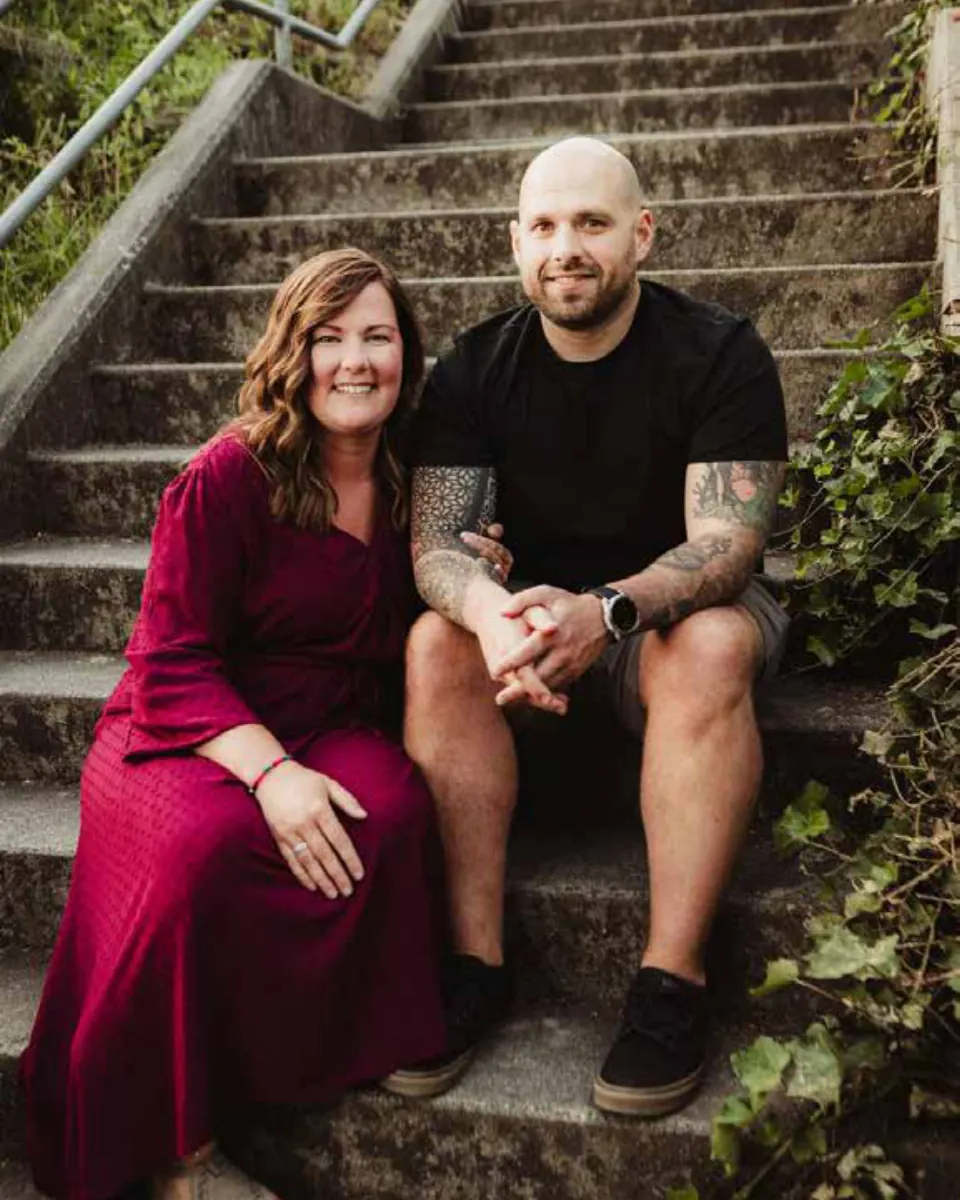
For Brittany Malidore, the dream isn’t a destination, a title, or even a single defining goal. It’s something far more fundamental, and far harder won. The ability to dream at all. “Before, I dreamed because I had to,” she says, reflecting on a childhood shaped by survival, instability, and being told who she would become long before she had the chance to decide for herself. Today, that has shifted. Now, her dreams are about building, something steady, something meaningful, something that outlives her. A life for her five children rooted not in escape, but in intention. Not in proving people wrong, but in creating something right.
For most of Brittany’s early life, dreaming wasn’t expansive. It wasn’t creative or future-facing. It was immediate. Necessary. A way to get through. She describes growing up in “chaos,” a word that carries more weight the longer she talks. It wasn’t just instability, it was a constant tension, a feeling of bracing for something before it even happened. “You’re almost bracing for impact,” she says. “You feel this weight… this heaviness.”
That kind of environment doesn’t just shape your circumstances. It shapes how you see yourself. When you’re told over and over that you won’t become anything, that your future has already been decided, it becomes easy to believe it. Dreams, in the way most people understand them, don’t have room to exist. Instead, they’re replaced with something more urgent. Survival. “I needed to have food and shelter and be able to support myself,” she says.
And in that kind of reality, something else happens too. You learn to shrink. “It teaches you to stay quiet, to not expect anything good,” she says.
Looking back now, Brittany can name what she needed in those moments with a clarity that only comes from distance. “She needed someone to see her,” she says, speaking about her younger self. Not fix her. Not define her. Just see her. But in a childhood shaped by conflict, movement, and competing narratives, she often felt more like something being managed than someone being understood. “It was almost administrative. Executional,” she says.
So the shift didn’t come all at once.
There was no singular, cinematic turning point where everything changed. Instead, it was built through a series of decisions. Quiet ones. The kind that don’t always feel significant in the moment but, over time, begin to redirect the entire course of a life. “I don’t know that it was one big moment,” she says. “I think it’s a series of quiet decisions.”
Decisions to choose differently. To question what had been handed to her. To push against the version of herself that had been written by someone else.
Some of those decisions came early. Brittany became a mother at 19. She married young, quickly, trying to reshape the narrative in real time. Looking back, she’s honest about it. Not every decision was the right one. But they were the only decisions she knew how to make without a roadmap, without guidance, without someone in her corner saying, this is another way.
And then, slowly, something began to change.
When she met her now husband in her late twenties, there was a shift in clarity. Not just in who she chose, but in how she chose. “I was very clear on what I wanted,” she says. There’s a story she tells, sitting on a couch, eating guacamole and chips, early in their relationship. She turned to him and said plainly, “If you don’t want to have kids, I don’t even know why we’re dating.”
And that certainty, that willingness to say this is what I want, became one of the first real signs that something had shifted internally.
Motherhood deepened that shift.
“It made everything real,” she says.
Success stopped being about titles or money. It became about stability. Presence. Safety. The things she didn’t consistently have became the exact things she wanted to give. But alongside the joy, there was something else too. Anger. Confusion. A kind of grief that surfaces when you see your own children and realize how different their experience is from your own.
“I would look at my kids and think, how could someone do what happened to me?” she says.
It’s a question without a clean answer. One that doesn’t resolve neatly, even with time.
But instead of letting that question define her,
Brittany made another series of decisions.
To create something different. To build a life her children wouldn’t have to recover from.
In practical terms, it looks like consistency. Emotional safety. A home where her kids can feel, speak, exist without fear. “It’s not perfection, it’s presence,” she says.
And maybe most importantly, it’s the absence of something. The absence of that long, quiet process of undoing your childhood in adulthood.
“I don’t want them to spend their adulthood trying to undo their childhood,” she says.
That idea, more than anything else, sits at the center of her dream now.
But life, for Brittany, hasn’t followed a clean upward trajectory.
In January 2024, she was in a severe car accident. The kind that doesn’t just interrupt your life, but rewrites it. She lost her ability to speak. Lost parts of her memory. Couldn’t walk. Couldn’t do basic things for herself.
“It changed my entire life,” she says.
Before the accident, she describes herself as driven, structured, always in motion. Focused on what needed to be done next. After, everything slowed down in a way she didn’t choose but couldn’t ignore.
“When you lose your ability to function, you realize how much of your identity is tied to doing,” she says.
And in that forced stillness, something unexpected emerged.
Clarity. Not the kind you get from planning or reflection, but the kind that comes when everything unnecessary is stripped away.
“In a split second, I could have left this earth,” she says.
That realization shifted her relationship with time. With presence. With the people around her. The version of Brittany that came out of that experience is different. Softer. More open. More intentional.
“I was like a hard shell before,” she says. “Now there’s a softness.”
There are still pieces of survival that live in her. A constant awareness of what could go wrong. A tendency to prepare for the next thing before it arrives. But instead of letting that define her, she’s learned how to redirect it.
Into leadership. Into entrepreneurship. Into building something meaningful not just for herself, but for others.
And at the center of it all is still that original shift.
The one from surviving to choosing. The one from escaping to building. Because today, when Brittany talks about her dreams, they’re not abstract. They’re not distant. They’re grounded in the life she’s actively creating. A life where her children feel safe, seen, supported. A life where they are allowed to dream without first having to survive.
“I hope they say I was real, I was raw, I was their protector,” she says.
That she showed up. That she was there. That what she built was intentional.
And maybe, most importantly, that she changed the trajectory.
Not just for them, but for everything that comes after.
It didn’t erase her past. It didn’t resolve everything. But it changed how she carries it.
Because even now, she’ll tell you she isn’t healed. Not fully. Maybe not ever in a clean, complete way.
“I will always be a beautiful work in progress,” she says.
Text adapted from the print edition of Élevé.
 Letter From the Editor
 Slow and Steady, She Finally Got It Right
 “I Can’t Wander Out of It, I Have to Be Intentional”