Élevé · Issue 3 · Coming Back
For the First Time, She’s Not Letting Herself Quit
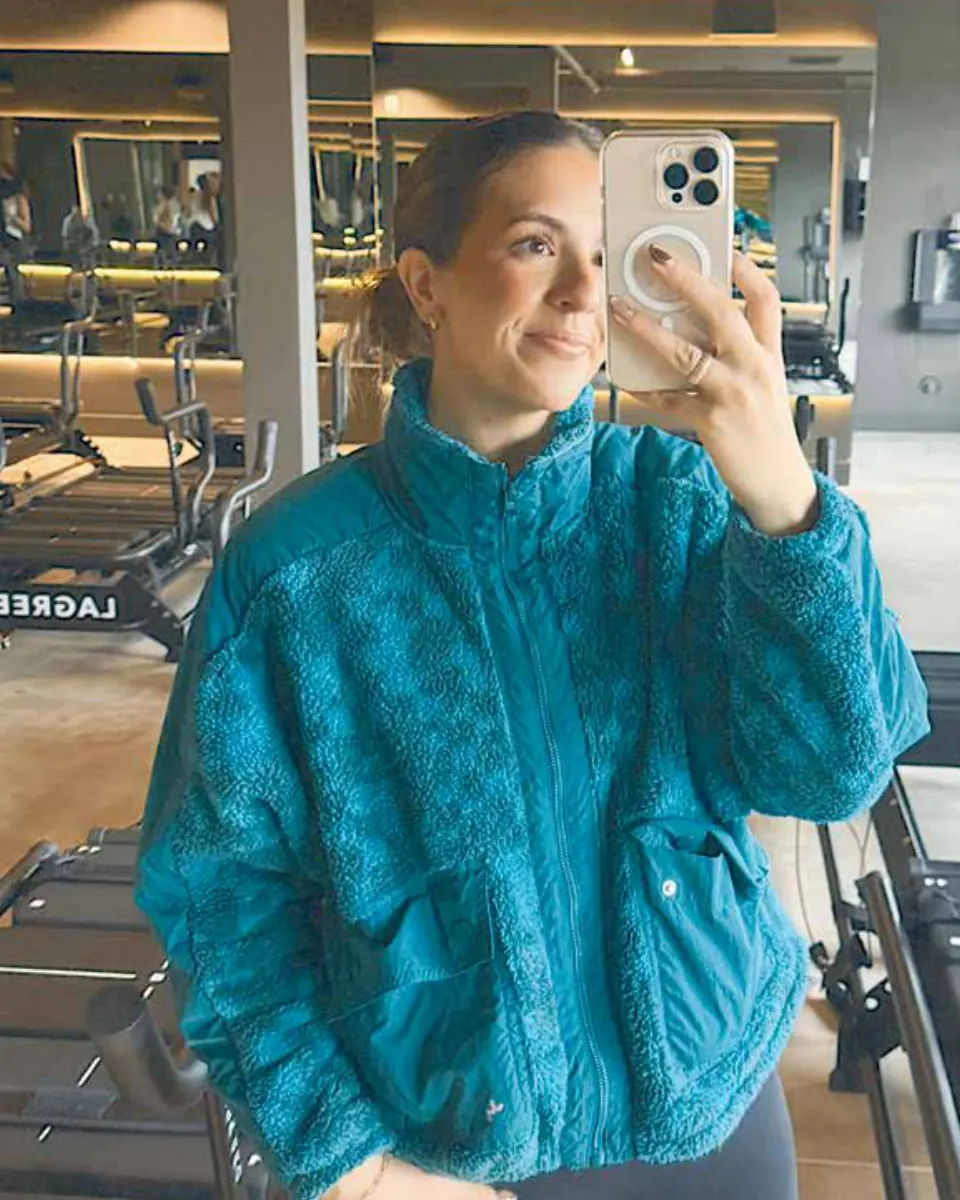
Ahalf-marathon isn’t about running for Alex Miles. It’s about discipline, identity, and becoming the kind of person who doesn’t stop when things get hard.
For most people, signing up for a half-marathon starts with a love of running, or at least some version of it, but for Alex, it begins somewhere much quieter and much more personal, rooted not in passion but in a kind of unfinished conversation she’s been having with herself for years.
“I’m not a runner,” she says plainly, without hesitation, and yet that’s exactly what makes this goal matter. Because this isn’t really about becoming someone who runs for the sake of it, or chasing a finish time, or even proving anything outwardly, it’s about something far more internal. “Running a half-marathon would represent that I am capable of doing hard things,” she says, and what she means is not just the race itself, but the ability to stay, to follow through, to not quietly walk away the moment it gets uncomfortable.
For years, running has lived in that space between intention and follow-through, something Alex believed she should be able to do, something she returned to again and again with a kind of hopeful determination, buying the shoes, starting strong for a week, convincing herself this time would be different, only to fall out of it just as quickly.
It wasn’t a lack of desire, or even effort, but a pattern she couldn’t quite break, one that slowly built into a quieter, more frustrating narrative about herself.
“I had no business thinking that I could run, have no plan, and still be successful,” she says now, recognizing that what looked like inconsistency on the surface was often just a lack of structure underneath it.
Over time, that kind of cycle doesn’t just affect what you do. It affects what you believe about yourself. It creates a subtle but persistent erosion of trust that makes it harder to begin again, let alone stay.
That loss of trust didn’t exist in isolation. It was layered into a much larger shift that had been happening quietly over the years, one that began after having kids, when her focus, like so many women, naturally shifted outward.
Days became organized around what they needed, what they were doing, and what came next. Somewhere in that constant motion, her own needs slowly moved further down the list until they were almost invisible.
“I was so focused on my kids. I rarely focused on my own needs,” she says.
The impact of that kind of shift isn’t always immediate. It builds gradually, showing up not just physically, but emotionally. In the way you feel in your body, your energy, and your sense of self, until one day you realize you don’t quite feel like yourself anymore.
That realization deepened during the years she ran her own business, a chapter that, on paper, looked like independence and growth, but in reality became all-consuming in a way she hadn’t anticipated.
The pressure to make it work, to find clients, and to keep everything moving narrowed her world until there was very little space left for anything else.
“You get into the biggest, deepest, darkest hole,” she says, describing a kind of tunnel vision where everything revolves around survival, and your health quietly falls to the side.
It wasn’t just about weight or energy levels. It was the cumulative effect of being stretched too thin for too long, of operating in a constant state of urgency without the structure or support to balance it.
The shift didn’t come from running, at least not at first. It came from something much simpler, and in some ways, much more revealing: a Lagree class.
What started as curiosity quickly became something else entirely, not because it was easy, but because it wasn’t. “It was the hardest workout that I’ve ever experienced,” she says, remembering how sore she was for days after that first class.
And yet, she went back. Then she went again. What she found there wasn’t just a workout. It was structure. It was community. It was a way of showing up that didn’t rely on doing it alone.
Surrounded by other women in similar stages of life, navigating similar challenges, the experience became less about pushing through alone and more about showing up together.
“I’m such a community person… all along, all I needed was a group class,” she says.
For the first time, movement didn’t feel like something she had to force herself into. It felt like something she could return to, something she could build consistency around.
Over time, that consistency added up in tangible ways. She lost more than 30 pounds, but more importantly, she rebuilt something deeper. Confidence. Trust.
The quiet but powerful understanding that she could stick with something. That she wasn’t someone who always stopped. That maybe the story she had been telling herself wasn’t entirely true.
And it’s from that place that the idea of a half-marathon began to take shape.
Still, even now, the fear hasn’t disappeared. It’s just changed form. It’s no longer about whether she can start. It’s about whether she can meet the expectations she might place on herself along the way.
“I think my biggest worry is disappointing myself,” she says.
For someone who is goal-driven, the instinct is to measure success by a number. A time. A benchmark. But this goal is asking something different.
To finish.
That shift requires letting go of perfection and choosing consistency instead. It requires redefining success in a way that prioritizes showing up over measuring up.
That’s part of why she chose to make it a destination race in Malibu. It gives her something to look forward to, but it also raises the stakes just enough to make backing out harder.
It turns the goal into something real. Something she’s committed to.
But even then, the race itself is only part of the story. Because when Alex imagines crossing that finish line, the moment isn’t just about her.
“I want my kids to see that I did something hard,” she says.
She wants them to see what it looks like to choose something difficult and stay with it. To understand that growth doesn’t stop, even when life is full, even when it would be easier not to try.
She’s already shown them what it looks like to work, to build something, and to change direction when something no longer fits. This becomes another extension of that. Another example of what it means to keep evolving.
She won’t be doing it alone. Her husband is running it with her, not as a motivator, but as a partner going through the same process, the same uncertainty, and the same challenge.
It’s something new for both of them. Something they’re choosing to do side by side.
And yet, at its core, this still comes back to her. To identity.
To the version of herself she’s been circling for years. The one who doesn’t just start, but stays. The one who doesn’t quietly decide halfway through that it’s not for her. The one who keeps going because she decided it matters.
She doesn’t need to be fast. She doesn’t need to look like the runners she sees online. She doesn’t need to love every mile.
She just needs to finish. Because for the first time, she’s not letting herself quit.
Firms already working with Finsmart
Accountants ready to support
Years of outsourcing expertise
Text adapted from the print edition of Élevé.
 Now, It’s Time to Fly
 The Phone Call That Made Him a Dad
 The Unfinished Part of an Otherwise Complete Career