Élevé · Issue 2 · Rooted in Resilience
Unseen Battles
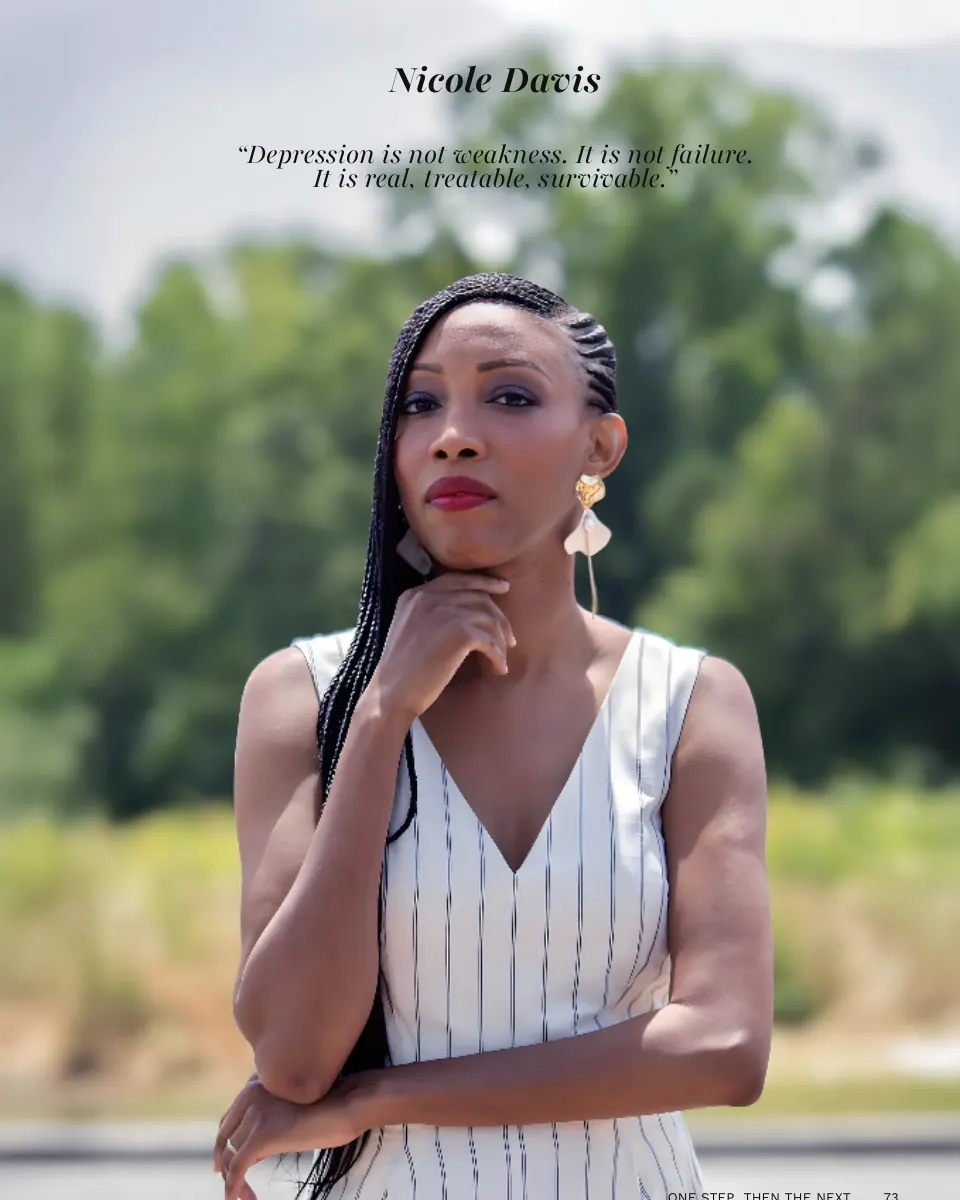
There is a hush that descends when a woman admits she has contemplated her own disappearance. It is a hush made of stigma, of fear, of generations taught that strength means silence. Nicole Davis remembers that hush. She remembers when her husband, JW, leaned in and asked the question that shifted everything: Are you okay? At the time, Nicole didn’t think anything was wrong. She was going through the motions, getting up, going to work, returning home to collapse into nothingness. The absence of appetite. The absence of energy. The intrusive thoughts that darkened her private hours. She believed this flatness, this fog, was simply how adulthood felt. “I thought it was very normal,” she recalls. “So normal that when I went to my first consultation with a healthcare practitioner, I relayed these same feelings to her. She said, there’s nothing normal about that. And that was a light bulb moment. That’s when I realized, I needed help.”
The slow descent
Nicole is clear: she did not grow up under the shadow of depression. Her childhood was joyful, animated to be skinny,” she says firmly. “I’m a Black woman, I want curves! But the symptoms lined up. I wasn’t trying to shrink my body, but depression had taken my appetite with it.” by her early entrepreneurial spirit, “I’ve had businesses since I was three years old,” she laughs. The storm arrived later, after college, when the convergence of life transitions came crashing at once. She was only 22 when she married, took on the responsibility of raising two children who moved in with them immediately, started her first post-college job in a new state without family nearby, and enrolled in graduate school. “It was a huge adjustment,” she says. “All of it together, instant family, new job, new state, grad school, I think that just triggered the depression.” At first, she did what so many high-achieving women do: she kept going. She pushed herself into a daily routine, convinced she could outpace the heaviness. But over time, her body began to tell the story she could not voice. “I’ve always been thin, but I was at the point where I barely weighed 75, 76 pounds,” Nicole remembers. “I didn’t want to eat. My nurse practitioner told me I was slowly starving myself to death.” There were whispers of anorexia in her medical chart, though Nicole never sought thinness. “I didn’t want
The turning point
What saved Nicole’s life was a combination of love and intervention. “It was definitely my husband,” she says. “He gave me the push to seek the help I needed. And my parents, too, they were like, Take some time off work. Get better. Get healthy.” Nicole did. She moved back home to Georgia, took medical leave, and entered outpatient treatment. There, in the group therapy rooms where strangers became lifelines, she learned the tools she still carries today. “They taught us how to kick negative thoughts out of gear,” she explains. “Not letting them run the show. Having a community, people who notice when you’re not okay. Eating healthy. Exercising. And my faith, leaning into something bigger than myself. Those things saved me.” She also started medication. “There’s this misconception that you can just snap out of it. I wish it were that easy. Sometimes you need meds to help kick your mind back into a positive space while you learn how to cope. That was true for me.”
Stigma and silence
For Nicole, one of the greatest hurdles was not the depression itself but the shame surrounding it. “I was hesitant to share because I thought people would look at me differently. That they’d think I was weak,” she admits. “But everyone I’ve told has been supportive. No one has made me feel less than. The stigma is in our heads, but it’s also in our culture. For too long, mental health has been whispered about, never spoken out loud.” Nicole’s first public step into that radical strength came onstage at a keynote. “Yes, that was my first time sharing with such a large group,” she says. “And afterwards, people came up to me, so many people, saying thank you, saying it gave them courage to share their own stories. Some even told me it pushed them to seek help they knew they needed.” She pauses, her voice catching. “That’s what makes it worth it. If my openness helps someone else, I’ll keep talking. I’m an open book.” Her candor is reshaping her industry. In accounting, a field where precision and perfection are prized, vulnerability is often buried. Nicole is helping to excavate it. “We carry so much stress,” she explains. “We’re holding people’s financial futures in our hands. And yet we don’t talk about the toll that takes. Sharing my story allowed my peers to say, Yes, I’m doing well here, but I’m struggling there. That honesty matters.”
Reframing the narrative
Nicole is part of a cultural shift. Younger generations are demanding workplaces where mental health is prioritized, where therapy is normalized, where leadership models vulnerability rather than masks it. For Nicole, that begins with benefits. “Companies need to make mental health care accessible and free,” she says. “If you come to work depressed, you’re not going to be productive. Offering therapy, offering time off, making it part of the culture, that’s how we create workplaces where people thrive.” But it’s not only about policy. It’s about permission. “If it comes from the top, if leaders say, I don’t have great days every day, it gives everyone else permission to seek help too. That’s powerful.”
The rituals of resilience
Today, Nicole has built an arsenal of daily practices that tether her to light when shadows return. “I’m big on affirmations. What you think, you are. I pray. I rest. If I feel myself going dark, I’ll literally take a nap to let my brain reset. I cook; it’s methodical, calming. I exercise, I lift weights, I feed myself brain foods instead of junk. And I’m still open to medication if I need it. Sometimes you just need that kickstart.” She’s learned to notice triggers, to respond rather than spiral. “Being self-aware is everything. And having relationships with people who value you, who act as a safety net, that makes you stronger. You’re not alone.”
A legacy of openness
Nicole’s advocacy continues beyond the keynote stage. On social media, she shares both triumphs and struggles. “I don’t want people to think it’s all rainbows and jelly beans,” she laughs. “There are good days, bad days, very bad days. Some days I take the whole day off. And I share that, because it’s real.” She also offers resources to anyone who reaches out. “If someone heard me speak and needs support, I’ll point them to the right place. We need to normalize asking for help.” Her advice to those quietly struggling? Start small. “Call your state’s crisis hotline. Talk to someone you trust. You don’t have to tell the full story, just say, I’m having a hard day. Use the last little bit of energy you have to reach out. That’s the hardest part, but it’s also the first step toward healing.”
Why her story matters now
More than 21 million adults in the U.S. experience at least one major depressive episode in their lives. In accounting, Nicole’s own field, the profession ranks near the top for mental-health crises. And yet, stigma still keeps too many silent. “I just think the more we talk about it, the more it will help others,” she says simply. Our parents and grandparents whispered about mental illness. Nicole and her peers are speaking it out loud. And in the space between whispers and speech, healing begins. Depression is not weakness. It is not failure. It is a common and serious mental disorder: real, treatable, survivable. Nicole Davis is living proof. And in telling her story, she reminds us of something vital: It’s okay to not be okay. And even more, it’s okay to ask for help.
Text adapted from the print edition of Élevé.
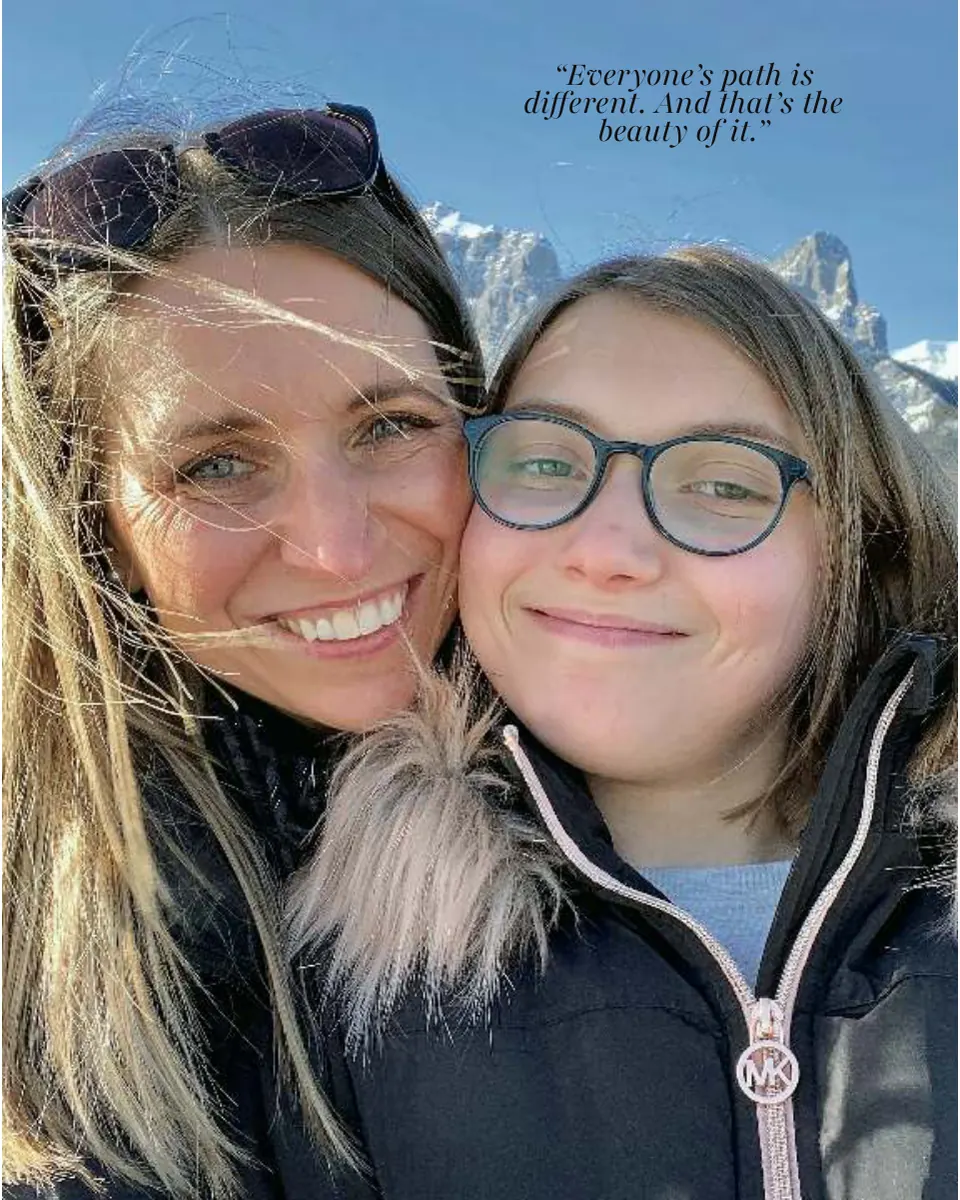 I Was Scared, but I Did It Anyway
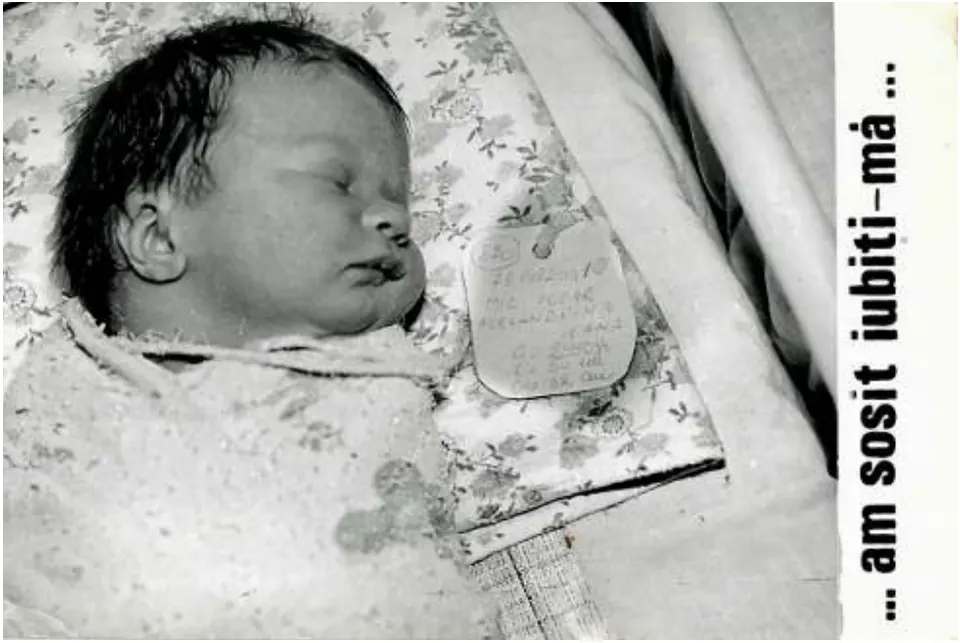 Growing Up Under Communism, Leaving Everything Behind, and Finding the American Dream
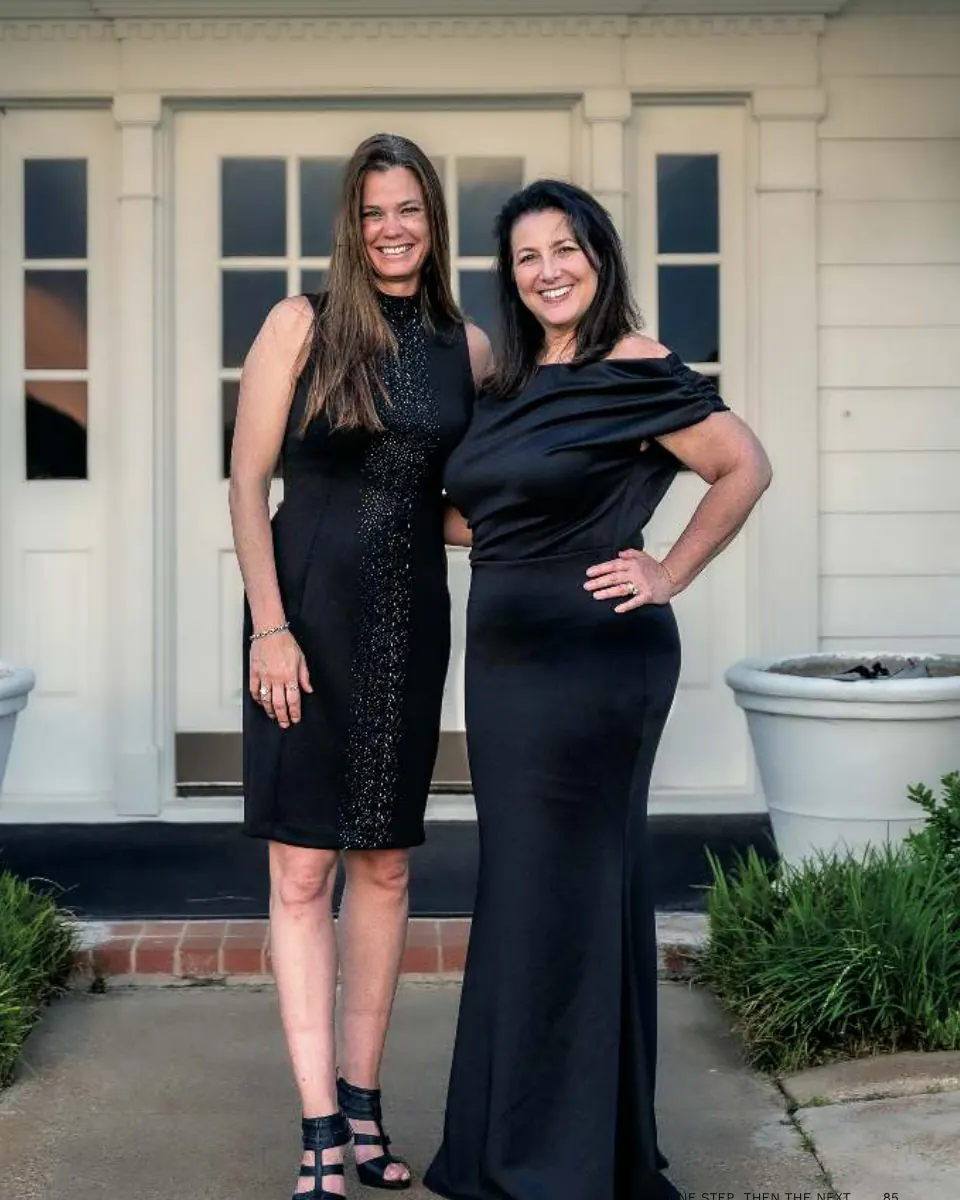 20 Episodes and Counting