Élevé · Issue 2 · Rooted in Resilience
Growing Up Under Communism, Leaving Everything Behind, and Finding the American Dream
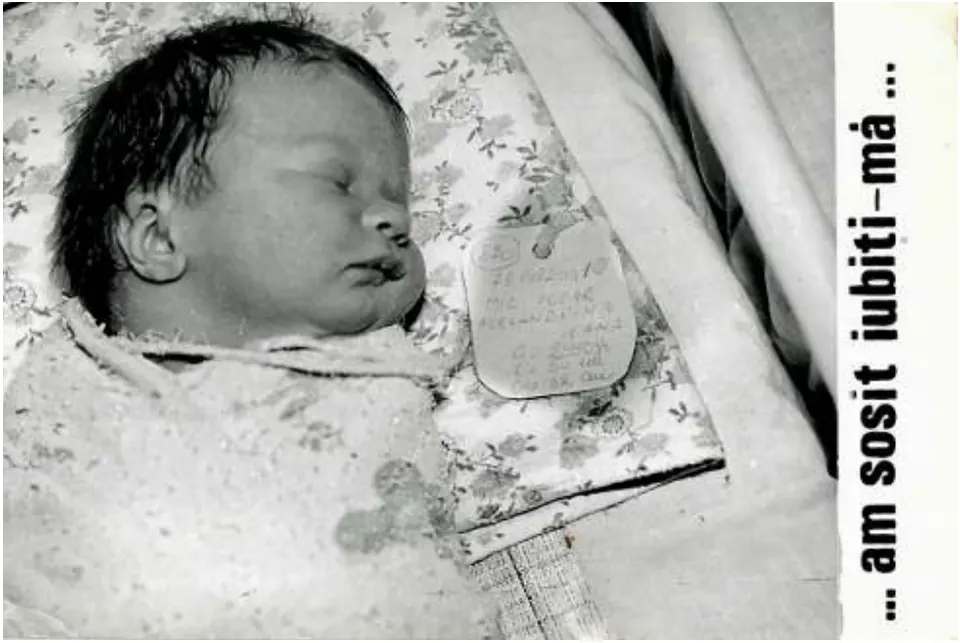
There are some lives that don’t justcross borders, they span worlds. For Alex Mic-Podar, that world began in a small Romanian village under Nicolae Ceausescu’s communist rule. It took her through bread lines, butchering restrictions, and whispered neighborhood deals, and eventually, across an ocean to the United States with just $50 in her pocket. Today, she calls America home, a citizen who built a business and a life from scratch. But her story is less about arrival and more about reinvention, resilience, and reimagining what it means to belong.
Childhood in Romania
“I grew up under communism,” Alex begins. “Families would get tickets for how much bread, milk, or meat they could have. You took the ticket to the store and only with that ticket could you get food.” As the youngest in her family, Alex often stood in line for bread. Sometimes she slipped between people’s legs to reach the front. Other times, neighbors would simply lift her forward, or tip her off when a fresh delivery would arrive. “It meant waking up at 3 a.m. to beat the line,” she remembers. Even food from one’s own animals was regulated. “If you butchered your own, you had to give fifty to seventy percent to the government. People found ways around it. Neighbors shared meat quietly, unreported.” For a child, it was a strange mixture of scarcity and independence. “I never had a wristwatch, I knew when to go home by the light outside. That’s why I’m obsessed with watches today. It was a very independent childhood. I had a lot of fantasy, and I think that helped me succeed later.”
When the world shifted
The fall of communism in late 1989 marked a turning point. In January 1990, Alex’s family moved to Hungary. She was eight years old. Tragedy struck in her early twenties when her mother passed away, just two weeks after she returned from a religious mission. “That was a shock,” she says quietly. “And I realized that most of my close friends were actually in the U.S., not Hungary.” Those friends became her lifeline. “They came together and paid for my first semester. My best friend Julie covered my first month of rent. My ex-boyfriend gave me fifty dollars for food on my layover in Amsterdam. That was all I had. Everything else was paid for by friends. So I came, by myself.”
Landing with fifty dollars and a dream
If Alex expected skyscrapers and movie scenes, she doesn’t say so. “I didn’t really have a vision,” she admits. “I was already an immigrant once.
I knew I had to work hard, and I had my friends. My only obstacles were money and English.” Utah became her first home in America, a place where her mission friends lived and where she could enroll in school. Her days started in the dark: custodial work from four to six a.m. She learned English not from books, but by speaking every day. The culture shock came in other forms. “In Hungary, McDonald’s was a fancy restaurant. In America, there was a one-dollar menu. I gained over seventy-five pounds in my first year.” She laughs at the memory, but the change was real. There were other lessons too: “I grew up believing only in hard work. In America, I learned you also have to work smart. And I learned positivity.”
Becoming American, on her own terms
Alex never set out to pursue the American dream. “It wasn’t why I came,” she says. “But it became that.” She helped her best friend Julie open a business, supporting it even when she briefly moved back to Romania. “The business grew so much it was able to sponsor my green card. I became a citizen three years ago. That’s the American dream, coming here with $50 in your pocket, working hard and smart, and building a life.” Returning to Romania for seven years only confirmed where she belonged. “I could never synchronize with the negativity there. In America, I never felt like an imposter. I’m driven, I love working hard, and I love when it’s appreciated.” One fight with a stranger in a grocery store, so intense it turned physical, was the final push. “That was my last nail in the coffin. I said, I’m going back. And I did.”
The philosophy of reinvention
Asked what she hopes the next generation takes from her story, Alex pauses. “Life isn’t as hard as we make it,” she says finally. “We overcomplicate it. I was a poor child in Romania who found a way to make money at fourteen, who found a way to come to America. You can build your circumstances. But if you choose to lick your wounds, you stay stuck.” Entrepreneurship, she insists, isn’t innate. “Anybody can do it. Don’t put yourself in a box. I was the black sheep in my family, a lost child. But I said ‘enough is enough’ and worked. That drive got me here.” She doesn’t romanticize hardship. She still struggles with depression but approaches it with pragmatism. “I give myself three guilt-free days. Maybe I don’t get out of bed, maybe I scroll TikTok all day. But on the fourth day, I get up like nothing ever happened. We put too much pressure on ourselves. Be fair with yourself. Be honest. And then get up and go.”
Text adapted from the print edition of Élevé.
 20 Episodes and Counting
 The Courage to Rebuild
 Learning Grace