Élevé · Issue 2 · Rooted in Resilience
20 Episodes and Counting

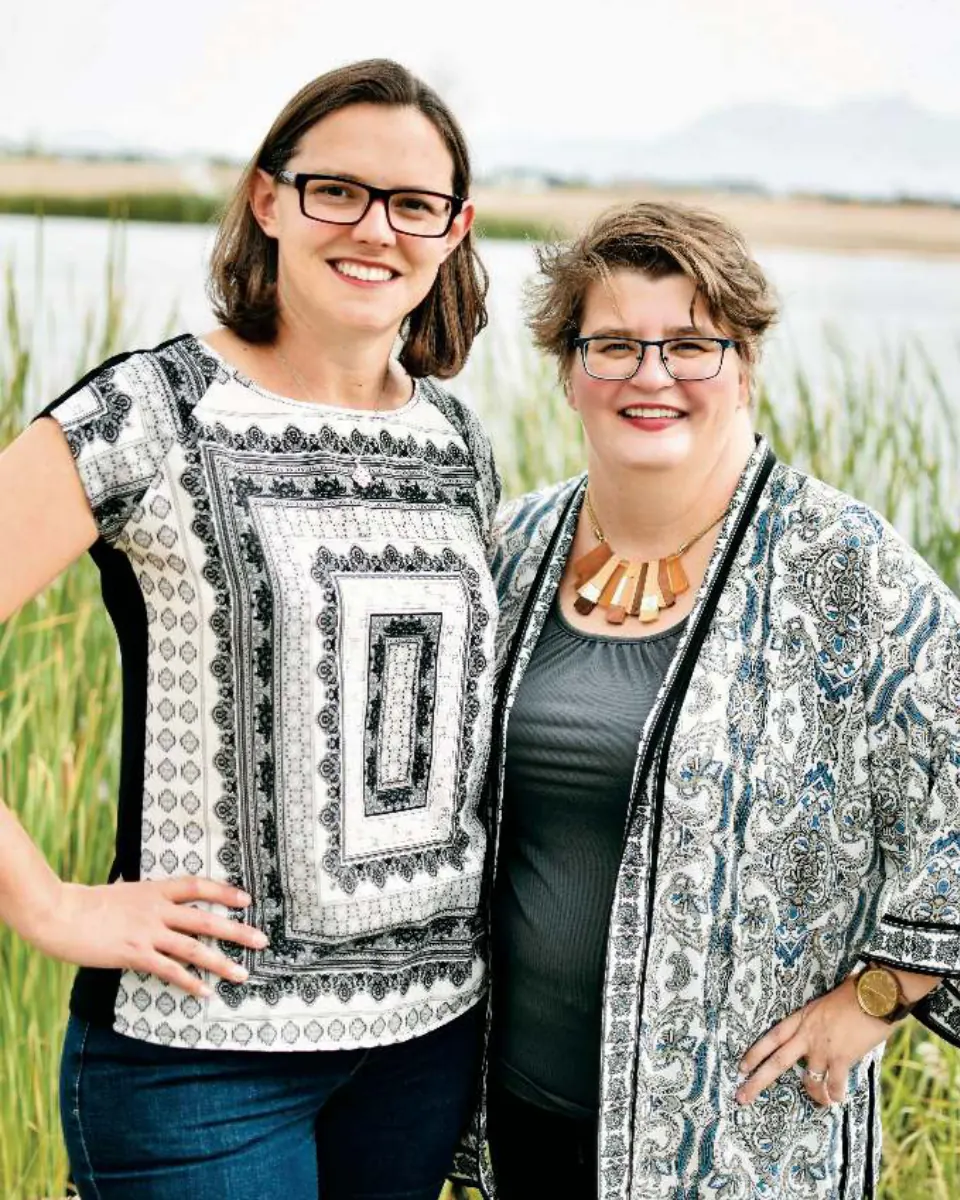
When the Unbalanced podcast launched, its premise was startling in its simplicity: two firm owners sitting down, with no script, no agenda, and no safety net, to tell the truth about what it actually means to run a business. There would be no highlight reels, no buzzwords, and no airbrushed success stories. Instead, there would be laughter, tears, confessions, regrets… because that’s real life. Now, more than 20 episodes later, Unbalanced has become something rare: a safe space in an industry that often rewards polish over vulnerability. Co-hosted by Candy Bellau and Sam Hallburn, and powered by Anchor, the show has resonated precisely because it is messy, honest, and unapologetically human.
Building a show on truth, not polish
Candy and Sam never set out to become media figures. Both run firms. Both know firsthand the isolation of ownership. When they first talked about creating a podcast, they feared it might feel like group therapy more than media. “We thought we’d need therapy afterward,” Sam laughs now. “But what we discovered was people taking their hardest seasons and transforming them into wisdom. We ended up laughing a lot.” Listeners picked up on the difference right away. “Every single one is magic,” Sam said. “Even as a co-host, I find myself learning new things on re-listens. Guests arrive willing to open their hearts, and every time, I walk away with a nugget I can use in my firm or in my life.” That openness led to unexpected levity. Sean Duncan had the team laughing off-mic. Robert Nordlander managed to fold therapy-grade insights into a Taylor Swift reference. And Tony Proctor’s reflections on leadership and employees stuck with Sam long after the recording.
The recurring themes
Across twenty episodes, three themes surfaced again and again: - Community is everything. Nearly every guest credited their survival or growth to relationships. Mentors, peers, and conferences weren’t “extras”; they were lifelines. Sam remembers walking into her first major conference terrified and convinced she didn’t belong. One introduction changed everything, setting off a chain of friendships and opportunities that reshaped her business. - Boundaries save lives. Stories of burnout, over-functioning, and working to exhaustion echoed across the season. Sam admitted to multiple periods of complete collapse, days when she couldn’t get out of bed, not from laziness but from depletion. Naming this out loud resonated deeply with listeners who had been there, too. The take-away was clear: saying no, raising prices, and delegating aren’t luxuries; they are survival strategies. - Partnerships are relationships. Listeners heard both the joy and the heartbreak of building with others. Marlon Wolfman and Jeanne Hardy shared candidly about working through difficulties together, while Dan Luthi and Nick Boscia emphasized the guardrails that keep a partnership healthy. Candy’s go-to analogy landed hard: “Partnerships are like dating. Chemistry is great, but compatibility over time is what matters.”
When it got personal
Not all episodes stayed lighthearted. Some invited listeners into raw, vulnerable territory. - Amanda Aguillard spoke openly about motherhood and the haunting sense of missing moments she couldn’t get back. - Kenny Harper shared the story of losing a dear friend, moving Candy to tears. - Jeanne Hardy described juggling newborn twins while holding a business together, an impossible balance that many working mothers recognized instantly. Sam admitted that the hardest episodes for her personally were the ones about employees, being betrayed, let down, or even harmed by those you trusted. Candy was most affected by guests who wove grief and grit into the same sentence. What might have been heavy instead became affirming: pain is real, but so is resilience.
Proof it matters
At Scaling New Heights, one of the profession’s largest conferences, Candy discovered just how much the podcast had landed. Attendees she had never met stopped her in hallways to offer long hugs and whispered confessions, things they weren’t ready to share publicly but needed to say to someone who understood. “They felt safe,” she recalled, her eyes filling with tears. “The podcast gave them permission. It reminded me that even if someone doesn’t want to be a guest, hearing these stories can still make them feel less alone.” This is what makes Unbalanced remarkable: it is more than content. It is community therapy, disguised as conversation.
Growing in real time
No one would mistake season one for a polished studio production. The team started with the gear they had. Early feedback focused on sound quality. They listened, adjusted, and improved. By episode twenty, the difference was night and day, cleaner audio, smoother pacing, and a natural rhythm between two co-hosts who clearly enjoy each other. That growth mirrors the point of the show itself: imperfection isn’t failure; it’s process. “Compare our first episode to our latest, and you’ll hear it,” Sam said. “We’ve come a long way.”
What’s ahead in season two
The second season promises not just more of the same, but deeper dives. Both hosts are eager to talk more openly about mental health and burnout, subjects still stigmatized in accounting. Sam cites sobering statistics: nearly 40% of new CPAs leave the profession within two years. “We need to talk about why,” she insists. Candy wants to broaden the conversation to include home life: illness, caregiving, divorce, shifting gender roles, and the rise of women running firms while husbands manage households. “We don’t talk about this enough,” she said. “But it’s reality for many of us.” And for guests whose stories barely scratched the surface, part twos are already on the horizon.
Text adapted from the print edition of Élevé.
 The Courage to Rebuild
 Learning Grace
 The Slow Evolution of Julie DeLong