Élevé · Issue 3 · Coming Back
“Why Are You Waiting?”
After reading Die with Zero, she stopped waiting for someday and started making the moments that matter now, beginning
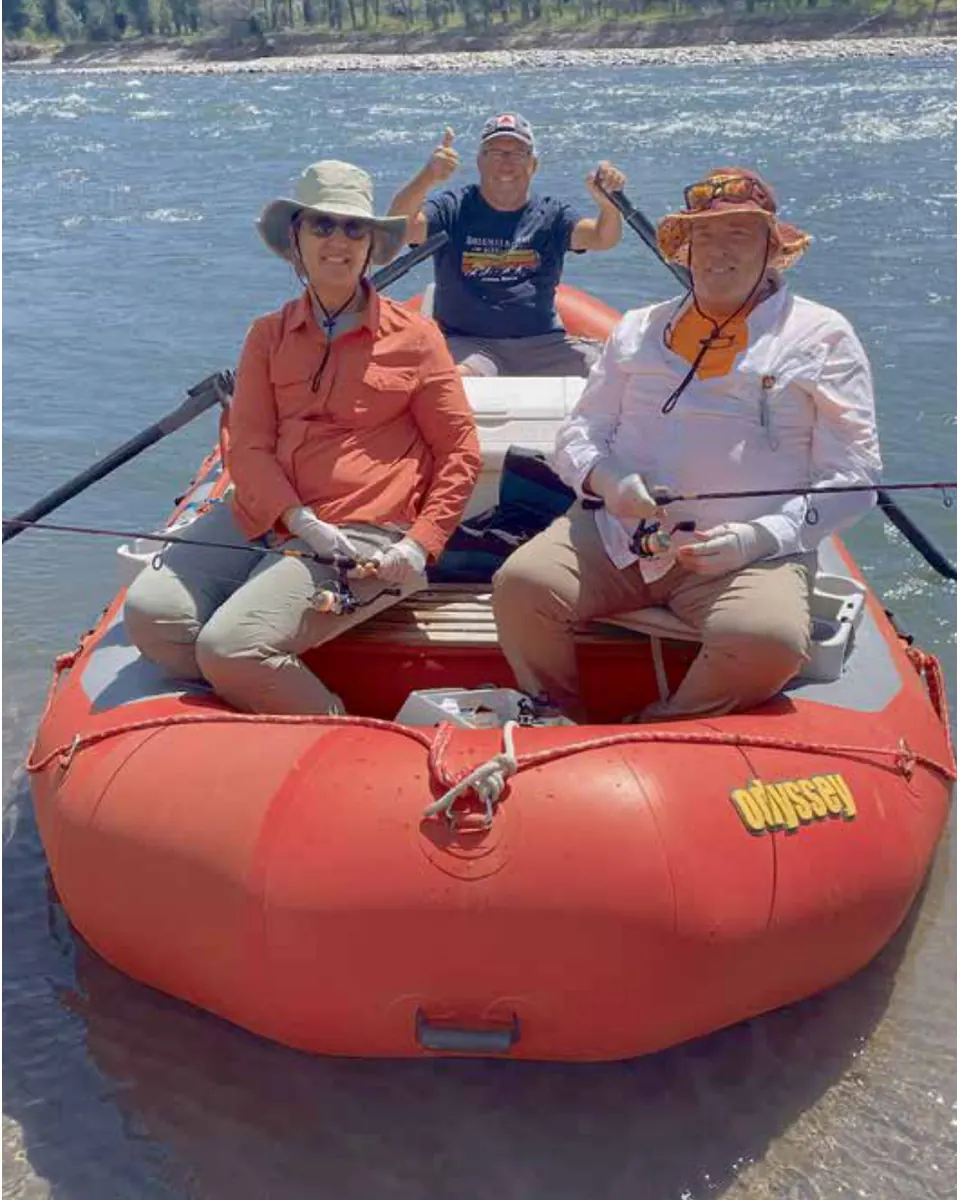
Deb Elver never thought of herself as someone with a formal bucket list. The dreams were there, places she wanted to go, experiences she imagined “someday,” but they weren’t urgent. They lived in the space most people reserve for later.
“I didn’t really have a bucket list written down,” she says. “But in my mind, it was like, when I retire, I want to do these things.”
It’s a familiar structure. One most people follow without questioning it. Build the life first. Work hard. Be responsible. Then, at some later point, enjoy it.
For a long time, that framework made sense. It felt disciplined. Thoughtful. Even necessary. But embedded in it is an assumption that rarely gets examined closely, that there will always be time later to do the things that matter most.
That assumption began to shift the moment Deb read Die with Zero, by Bill Perkins. One story, in particular, stays with her. Perkins writes about moving up his own milestone celebration, realizing that waiting could mean missing the chance to share it with the people he loves most.
It isn’t the scale of the story that lands. It’s the reasoning behind it.
Timing isn’t neutral.
“All we have is our memories,” she says.
The idea stayed with her longer than she expected. It followed her out of the book and into her own life, quietly reframing something she hadn’t previously questioned. Because if memories are the point, then delaying them starts to feel less like responsibility and more like loss. And suddenly, the idea of waiting didn’t feel responsible anymore. It felt like missing something you might not get back.
Within hours, that realization became personal. A place she had always talked about, Iceland, came to mind. It had lived comfortably in the category of someday. A place she would get to eventually. A trip that made sense for later, when there was more time, more space, fewer competing priorities.
But this time, someday didn’t feel neutral. “I just finished reading the book and thought, you know what, I really want to go to Iceland,” she says.
She walked into her office, opened her email, and saw an offer for a trip to Iceland waiting for her. A limited-time deal. A deadline. A small but undeniable push.
“It felt like it was meant to be.”
Within minutes, she brought it up to her husband. Shortly after that, she booked the trip. No long deliberation. No pushing it into the next year or the next phase of life.
It was a simple decision on the surface, but what it represented was not.
It wasn’t about Iceland.
Before, time felt abundant in a vague, undefined way. After, it felt more specific, still open, but no longer infinite.
That subtle shift changed how decisions felt. Because when time is assumed to be endless, waiting feels safe. When it’s understood to be finite, waiting starts to feel like a choice, one that comes with trade-offs.
In Deb’s world, that realization shows up every day.
“I think a lot of it is fear of running out of money,” she says.
It’s something she sees constantly in her work. People who have built successful careers, accumulated significant resources, and still hesitate when it comes to actually using what they’ve built. They plan carefully. They optimize relentlessly. They delay.
“If everybody knew the day they were going to die, it would be no problem,” she says.
Because then the math would be simple. But uncertainty creates caution. And over time, that caution can turn into something else. A habit of postponing. A tendency to believe that later will somehow be a better, more appropriate time to live fully.
The problem is, later isn’t static. Health changes. Energy shifts. Interests evolve.
“I see that with clients all the time,” she says. “One year they feel fine, the next year they don’t want to do the things they used to do anymore.”
The window for certain experiences doesn’t stay open indefinitely. It moves, often quietly, until one day it’s no longer there in the same way.
That’s the part people underestimate. Waiting isn’t neutral. It’s a trade. You’re trading the version of yourself who can do something now for the assumption that a future version will want to, or be able to.
Sometimes that trade works out. Sometimes it doesn’t.
That perspective has changed the way Deb approaches conversations with her clients.
On the surface, those conversations are about money. Taxes. Investments. Long-term strategy. But underneath, they often carry something more personal. Questions about what matters. What’s enough. What kind of life someone is actually trying to build.
She thinks about one client who wanted to carefully structure his finances to minimize taxes years down the line. It was a smart plan.
Technically sound. But it raised a different question for her.
“Who are you saving money for?” she asked. The answer shifted everything. Because the plan wasn’t really about his life. It was about preserving wealth for someone else, someday.
That’s where the mindset shift lives. Not in abandoning planning, but in re-centering it. In recognizing that money is not just something to protect. It’s something to use. To translate into experiences, time, and moments that actually shape a life while you’re still living it.
She sees the opposite approach, too. Clients who give generously while they’re still here. Who want to see the impact of what they’ve built. Who choose presence over preservation.
Those stories resonate differently with her now.
Because they reflect something she’s learning to practice herself.
That practice isn’t about constant spontaneity. It’s about intention.
“It doesn’t have to be travel,” she says. “It could be spending more time with your grandkids, or starting something you’ve been putting off.”
The specifics are different for everyone. The pattern is the same.
Stop deferring what matters.
For Deb, that shows up in how she structures her year now. Trips planned ahead of time. Space created deliberately. Experiences treated as priorities, not rewards that come after everything else is done.
It also shows up in how she protects that time. When she steps away, she fully steps away.
“I’m not even bringing my computer,” she says.
Because presence isn’t something that happens automatically. It requires boundaries. It requires choosing, again and again, to step out of the constant pull of work and responsibility.
“A lot of what we do is being a sounding board for people,” she says.
Clients come to her not just for technical answers, but for perspective. For reassurance. For help navigating decisions that are often emotional as much as they are financial.
That kind of work takes energy. And that energy has to be replenished. Experiences. Time away. Moments that feel fully lived.
What shifted for Deb isn’t loud or dramatic. It doesn’t look like a complete reinvention from the outside, and that’s what makes it so easy to miss. But internally, something fundamental has changed. She no longer sees time as something that will stretch to accommodate her plans. Instead, she recognizes that the life she’s been preparing for is already happening, and that waiting for a later version of it carries a cost.
Not always a visible one, but a real one. Because the longer something is deferred, the more it depends on variables no one can control. Health. Energy. Interest. The presence of the people you want to share it with. What once felt like a responsible delay begins to look more like a quiet risk.
For Deb, that realization didn’t show up as a single, defining decision. It showed up in smaller, more immediate choices. Booking the trip she had talked about for years. Taking the time instead of postponing it. Asking different questions about what her work and her money were actually for.
The trip to Iceland wasn’t the point. It was proof that the things we say we’ll do later are often available now, if we’re willing to move them forward. Proof that the version of life we imagine for the future isn’t something we arrive at, it’s something we either choose now, or quietly postpone until it’s no longer available in the same way.
And maybe that’s the question underneath all of it.
Text adapted from the print edition of Élevé.
 Not for Fame, Not for Numbers, Just to Feel Like Himself Again
 The Dream That Waited 20 Years
 Success Got Her Here. Now She’s Bringing Everyone With Her