Élevé · Issue 4 · Quietly Extraordinary
This Is Exactly Where We’re Meant to Be
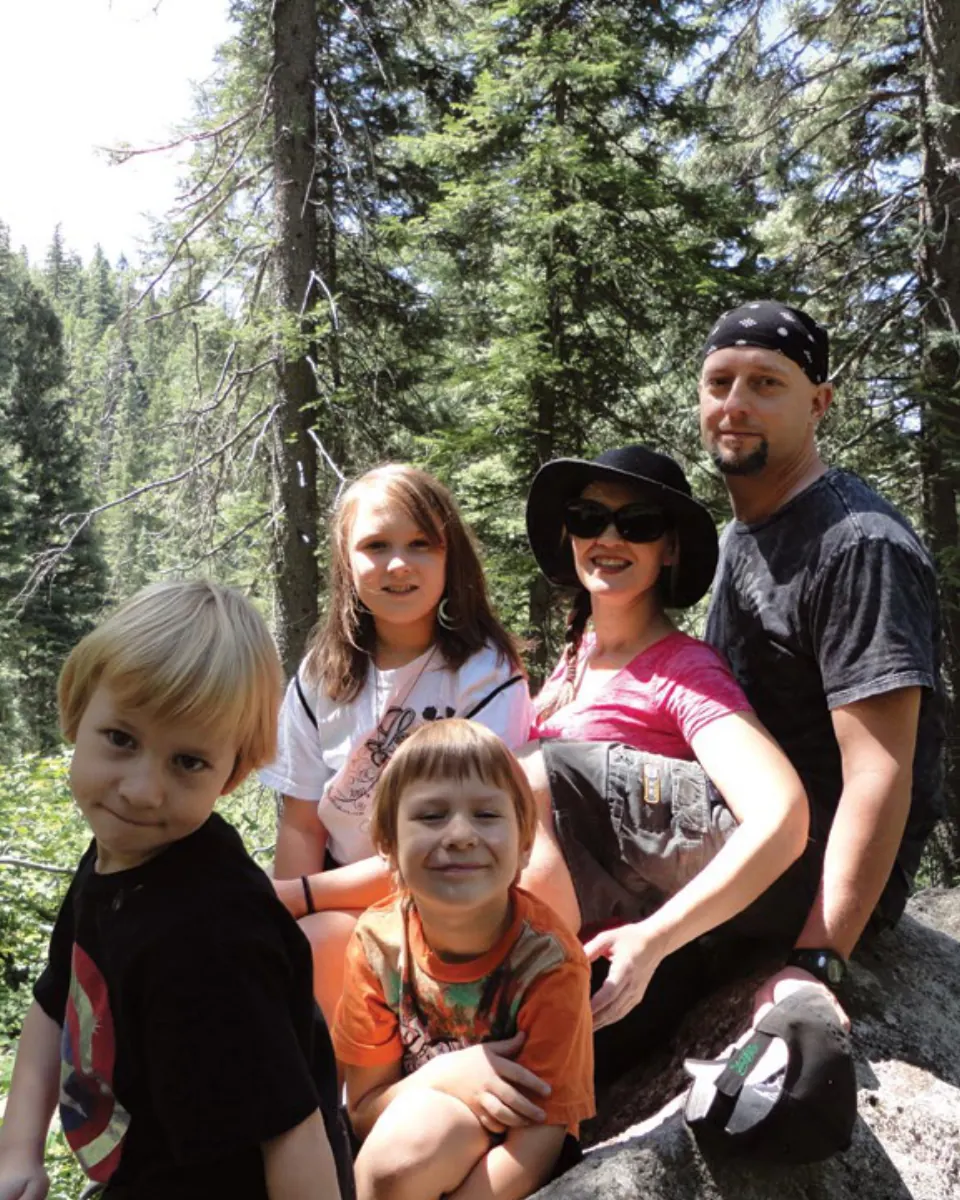
Everyone knows the version of Liz Scott who lives in the apps — the technology consultant, the automation trainer, the woman who can vanish into a workflow and resurface with a faster way to get the work done. What they miss is why. Every efficiency she builds gets bought back as time, and time is the one thing she refuses to waste. She learned that at seventeen, when she lost the grandmother who had been everything to her. She learned it again in 2020, when she poured herself into panicked clients until she lost sight of her own family. So she got a tattoo. One word: intentional. Then she built a life to match it.
Ask her peers, and they will say the same thing: Liz is the tech person. She is the one who connects the apps, brings AI into the workflow, and teaches firms how to automate the work they have always done by hand. All of that is true. It is also, she will tell you, the least interesting thing about her.
"I don't want to be known as the technology person," she says. "I want to be known as the person who helped find humanity, technology is the tool to get there just like a wooden spoon is a tool to stir a pot of stew."
That is the architecture underneath everything she builds. Ask Liz why she keeps chasing faster tools, and she will not start with the tools. She will start with the mother who wants to be with her children more, the business owner who built a company to support a family, and the awareness that time is already ticking by whether we are paying attention or not. “My end goal,” she says, “is to actively participate in the life I choose.”
Those instincts trace back to monumental loss. At seventeen, Liz was an only grandchild, and her grandmother was, in her words, part mom, part grandma, the person she measured herself against. When she died, When she died, Liz was devastated, knocked off course from being what she calls a productive human. What she found on the other side was a conviction she has never put down: time expires whether you spend it on purpose or not.
"Time was a resource I needed to use wisely," she says, "and that resource was my life."
When her children came, the belief turned concrete. Leaving them with someone else just to go make money felt backward. If she had to be away, she wanted the fewest hours for the most dollars — and streamlining, automation, sustainability, words that can sound like jargon, became deeply personal. They meant getting back to the life she actually wanted.
She saw the same math playing out in the entrepreneurs around her, her own family included, people building careers that pulled them out of their homes. Liz believed accounting should answer the question that made the sacrifice worth it: is the effort ROI in the positive? Her first job in the field disappointed her because the work stopped at compliance but did not help the client build a better life. To Liz, that felt like leaving the most important question unanswered.
So she kept chasing tools that gave time back. That curiosity took her on the road with Intuit, teaching QuickBooks master classes across the country, sometimes six cities a month. She loved teaching. She didn't love how far it pulled her from the mission that started it all. When COVID ended the travel in 2020, relief cut through the upheaval.
Then 2020 asked for more. Her phone filled with business owners in tears — how do I keep the doors open, how do I feed my family, how do I keep the house? Liz answered every call. And answered. And answered. By the end of that year, she realized she'd poured herself into other people's survival until she'd drifted far from her own mission.
Her grandfather used to tell her the mother is the most important person in a family — if she isn't mentally and physically well, it's harder for anyone else to be. In 2020, that lesson landed hard. Caring for everyone else while neglecting herself was not sustainable, no matter how useful she was being.
"Never again," she decided, "will I spin my wheels and lose focus of who I am."
She made it permanent: Intentional, tattooed on her arm. She loves other people's tattoos and can never commit to her own, because she's always evolving. This one she committed to, because underneath the evolving is a fixed core: be mindful of what's limited — time, money, energy, health — and spend it on purpose.
By 2023, that word had a new resolution: a three-day work week.
It arrived in stages. First a four-day week, Fridays set aside to work "on the business instead of in it," though what those Fridays actually needed was a pen, paper, and a set of hard questions. Mondays became planning days, the house quiet before the week could organize her instead. Tuesday through
Thursday held the desk work. Saturday and Sunday, she was fully present, which she calls the hardest discipline of all.
"Accountants and entrepreneurs struggle with being present with their family," she says. "They struggle with setting that piece of their brain down at the desk, and then actually being with the most important people doing the things we love most."
None of it made her less ambitious. Income held. Productivity held. What changed was intention, and everything that grew from it. The four days away from formal work aren't empty; they're the recovery that lets her bring focus to the three days she works.
In early 2021, with the world still strange and shut in, Liz and her family hit the road and went camping, what she calls the 3D world: unplugged, present, out in nature. Yoga came in to recover the muscles, and yoga opened onto sound baths, where the brain detoxes into instrumental sound and the heart can regulate itself against a drum. In those circles she met people who practiced breath work, and they became dear friends.
Breath work wasn't new to her, she'd learned to regulate it on the track team, watched her own kids learn it for band. What was new was practicing it on purpose, for her health, and then seeing how directly it fed her work. When she trains a room of overwhelmed accountants, she watches for the moment tension steals their ability to absorb anything new, and brings them back to the body: breathe, move, let the nervous system settle enough for the brain to listen again.
It's the same logic behind The ‘Appy Hour, the education platform she built with Heather Day. The idea came from watching accountants relax at a bar after conferences and finally talk honestly with app developers about their real problems. The ‘Appy Hour brought that premise into the classroom: relax first, then learn.
Right about when Liz wondered if she'd taken automation as far as it could go, AI arrived. By the end of 2024, automation had let her business run with five fewer team members, not because cutting people was the goal, but because better systems were. Now she's chasing something bigger: what she calls AI Financial Advisory Dashboard Consulting, the question that disappointed her at her first accounting job finally answerable — what can the numbers based on all the data points tell a business owner about what to do next?
Picture an e-commerce business whose QuickBooks file tells only part of the story. AI can pull together ad spend, sales channels, inventory, and the ledger into one place, so the owner sees not just whether the books reconcile, but whether a campaign is paying off, or whether a product with fifteen days of inventory and a twenty-eight-day replenishment cycle needs its ads turned down before it sells past zero. That's the level of decision-making Liz believes small businesses have been missing.
If more of month-end close automates itself, she argues, compliance can't be the finish line anymore. The profession has the opportunity to answer the long standing question, how do make the most of my time spent in the business. Her answer is advisory, not as a buzzword, but as human connection: helping a client see where their time, money, and attention will do the most good.
“Liz Scott is intensely curious and all about squeezing the most out of life. She once brokered the opportunity to see flesh-eating beetles at work with a client as part of her engagement terms. Whatever she does, she's all in and intent on learning everything she can about it. And she always does it with a sprinkle of glitter and a dash of pink.” - Heather Day, Director of Education and Media, Woodard
Her family has noticed her joy and excitement for live return after a long season of too many hours spent at her desk solving other peoples live. They know she needs the outlet for her creativity and desire to share with others and they know they count on her presence of mind to be with them in off hours. Mondays and Fridays, she's there, for the doctor, for school, for the cooking that's a real priority in a house that takes turns at the stove.
Where she is headed now bends toward the body and the ground: more gardening, more herbs grown and cooked with for the people she loves, and certifications outside her profession that would let her do more of that work. It all circles back to a question she first asked at 17 and has never put down:
Her advice for anyone running flat out and afraid to slow down is plain, and she wants it on the record: it isn't soft. Athletes use breath work. Special ops team use it before and after missions. Musicians use it. People use it before they walk onto a stage. A few deliberate breaths can calm the nervous system and supply needed oxygen to make the next hard thing easier to meet. Move. Walk. Stretch. The method doesn't matter. What matters is remembering that a body and a brain have to be protected if you expect them to sustain your ambitions.
Liz Scott
Four counts in. Four counts out. Slow down enough to speed up.
"My motivation for technology is actually to become more human," Liz says. She wants to spend the least time working that she can, so she can spend more of her life with what matters. That's who she is at the core. The apps, the AI, the automation, those are just the tools for getting back there.
It's not woo-woo to slow down and take a breath. Calming the body to let the brain do its best work is science. Her message to all is apply the science so you can live the most impactful intentional life. when she is gone, will people remember the values she believed in? If she does not live those values now, she knows, they will not be seen if they were not demonstrated..
Text adapted from the print edition of Élevé.
 From Banana Hats to Flight Lines
 I Do Belong Here
 Finding Her Way Back to the Game