Élevé · Issue 1 · Beyond the Title
The Quiet Glamor of Starting Over
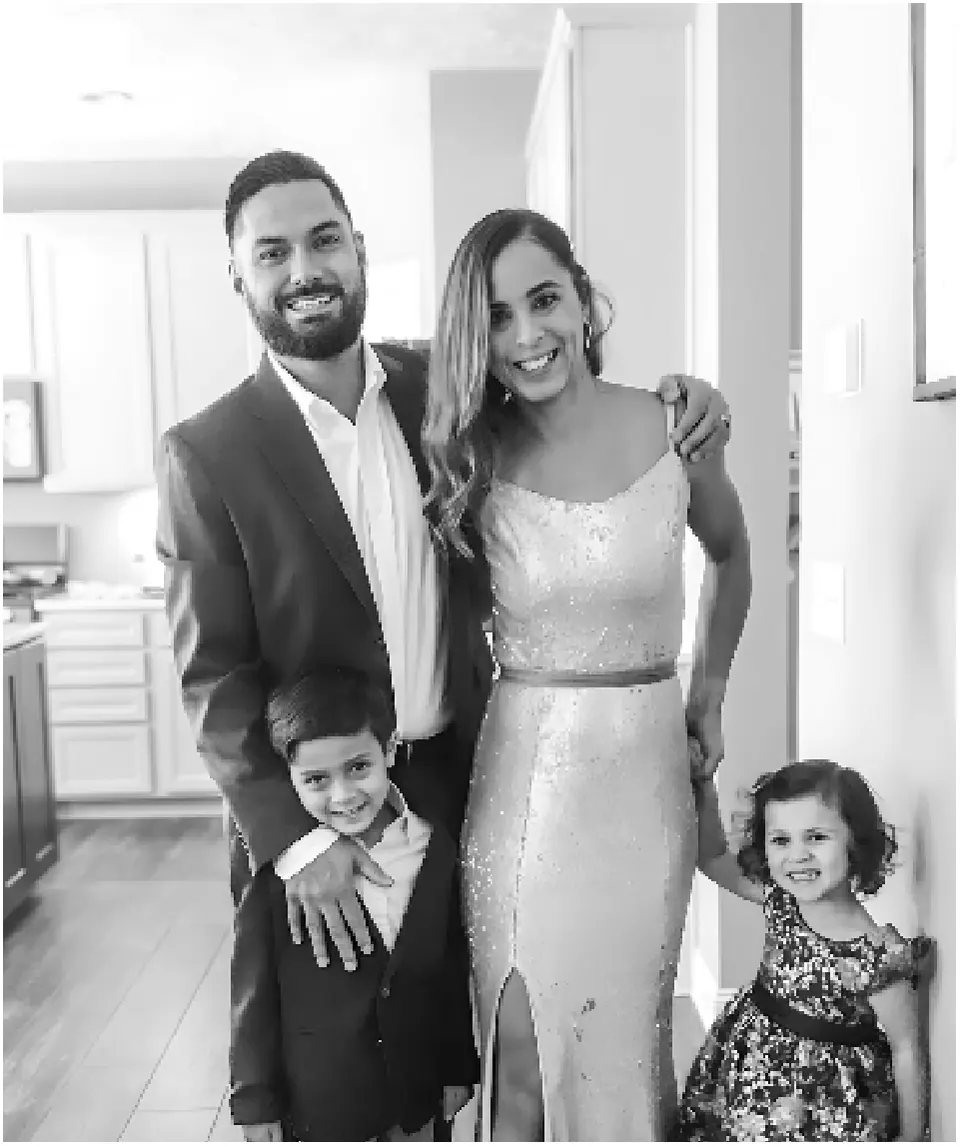
The morning light in Yuma is slow and golden. It spreads across the desert like honey, warm and silent. But for Erin Pohan, that silence felt like isolation. “I remember baking cookies and drinking mimosas at 9 a.m. just to pass the time,” she says. “I didn’t have a job or kids. I didn’t even know who to call for coffee.” There’s a certain quiet drama to the way Erin tells her story, not loud, not performative. Just honest. The kind of woman who makes reinvention look elegant, even when it feels anything but. Her story begins years earlier, in a Marine Corps uniform shop in Virginia. That’s where she met the man who would change everything. “All the girls knew who he was the second he walked in,” she says, a smile rising like muscle memory. One year later, they were married. Then came
Texas.
Reinvention as a way of life
There’s a version of femininity that doesn’t need to shout. It’s found in resilience, in adaptability, in the art of starting over again and again without losing yourself. Erin embodies that. From the sticky humidity of Florida to the dry expanse of Arizona, each move was a new chapter. A different version of herself, military spouse, young wife, solo woman in a new city, took center stage. At 24, she landed in Yuma. The town felt sun-bleached and still. Everyone around her full of periods. “I went to a baby shower and cried afterward,” she says. “I felt so out of place.” But slowly, things shifted. She took a job at a local CPA firm, her first step toward anchoring herself professionally. When her husband deployed for a year, they brought her back without hesitation. “They didn’t have to do that. But they did. And seemed settled. She felt like a question mark in a world that job kept my whole career going.”
Arrival with a passport and a
pregnancy test
Then came Japan. “We told our parents we were pregnant, and then basically said, oh also, we’re moving to Japan next week.” It should have been chaos. And in some ways, it was. But it was also magic. They lived off-base, in a quiet Japanese neighborhood tucked between cedar trees and winding streets. Christmas lights strung across their balcony lit up the street. Their neighbors watched curiously as the young American couple hosted backyard barbecues. “They were amazed we made burgers from scratch,” Erin laughs. “They went out and bought their own teppanyaki grill to do it themselves.” She gave birth to both of her children there. Learned to navigate motherhood in a country where everything felt unfamiliar, and yet, somehow, freeing. Their Husky made frequent escape attempts. The days were long and messy and full of wonder. Her favorite memory? “We had a two-year-old and a baby at home, and one night we just said let’s do it. Let’s stay out until sunrise. We wandered Tokyo, watched salarymen get tossed out of karaoke bars, and just lived a little.” It wasn’t a vacation. It was a moment reclaimed.
The detour that became home
After Japan, the plan was North Carolina. But the orders changed… again. “It was just this email that said: Welcome to Philadelphia.”
No warning. No discussion. Just a new direction. “It turned out to be my favorite place we lived. Besides Japan, of course. We made real friends there, not just military friends. And we still talk to all of them.” Philadelphia was a surprise. A good one. Now in Seattle, with her husband in the Marine Reserves and her children settled into their own routines, Erin feels the stillness, and she’s not entirely sure she likes it. “We’re both itching for a new place. The military used to tell us where and when. Now we have to figure that out ourselves.”
Letting the story be hers
For years, Erin believed her story had to wait. “I used to think being a military spouse meant my story had to wait,” she says. “But looking back,
I see that every place, every season, built something in me.” What she’s built isn’t a perfect narrative. It’s better. It’s real. She’s the kind of woman who can pack up a house with a baby on her hip and a spreadsheet in her hand. Who can wander Tokyo until sunrise, then make it home in time for breakfast. Who can walk into a room full of strangers and find something familiar. Her advice? “Say yes to coffee invites. Make the first move. Find people you connect with, even if they’re not living the same life. And when you find someone who gets it, hang on tight.” The orders may have stopped, but Erin’s life is still in motion. Only now, she’s the one giving the directions.
What if your smartphone could feel a little less… smart? And a little more
satisfying? That’s the idea behind Clicks, a new
keyboard case that’s bringing physical buttons back in style, and not just for nostalgia’s sake. Designed to snap onto your iPhone (and now, some Androids too), Clicks lets you actually feel every letter as you type. No more autocorrect fails. No more glass-screen typos. Just that glorious click-click-click you didn’t realize you missed.
And yes… it’s giving BlackBerry energy.
apps or perform actions with a single
tap. It’s part retro, part futuristic. Clicks launched with iPhone compatibility (14, 15, and now 16), but Android users can join the fun too, versions are now available for Google Pixel, Motorola Razr, and Samsung Galaxy
But this isn’t your dad’s old business phone. Clicks comes in bright, playful colors, lights up in the dark, and leaves your whole screen visible by shifting the keyboard below it. Think texting, tweeting, or typing long notes with fewer “oops” and more control. It’s especially handy for people who write a lot on their phones, whether you're drafting captions, journaling,
models. So, is it a little extra? Maybe. But isn’t
that the point? For those who miss the feeling of real buttons, or just want to text with flair, Clicks is the throwback you didn’t or keeping up with your group chats. Plus, there’s a cool bonus: customizable shortcut keys that let you open know you needed.
It used to be that wearing glasses meant one thing: better vision. Now? It means you can take a call while walking your dog, stream your favorite playlist on a grocery run, and still look totally normal doing it. Meet the Krypton 1 Smartglasses by Solos, sleek, stylish, and surprisingly smart. These aren’t bulky VR headsets or clunky tech frames. They’re lightweight, classic-looking glasses that happen to have tiny speakers and mics built right in. Think of them as your new everyday accessory… that also just happens to talk back. You can answer calls hands-free, get directions whispered to you during a walk, or listen to your go-to podcast while folding laundry. And no, no one around you will even notice. The open-ear audio design means you hear everything clearly, without blocking out the world around you. They pair effortlessly with your phone via Bluetooth, and with just a quick tap on the frame, you’re in control of calls, music, or voice assistants. Bonus: they come in a few stylish options, so you don’t have to sacrifice fashion for function. For multitaskers, commuters, or anyone who’s ever dreamed of being a little more hands-free, these glasses are a game changer.
It looks like a compact mirror. Or a designer phone charm. But don’t be fooled, this whisper-thin accessory is quietly redefining how we work, create, and remember. Enter the Plaud Note: a voice recorder so chic, you might mistake it for jewelry. It snaps onto the back of your phone with MagSafe ease and captures everything, meetings, musings, poetry drafts, lecture rambles, late-night voice memos… before your mind forgets. But here’s where it gets good: Plaud doesn’t just record. It listens and understands. Powered by the same generative AI behind ChatGPT, it transcribes your recordings in real time and distills them into crisp summaries, to-do lists, even mind maps. It’s like having a personal assistant, minus the NDA.
Yes, it’s smart. But it’s also quietly elegant. Featherlight. Ultrathin. A subtle shimmer of hardware designed for people who move fast and speak often, founders, writers, stylists, artists, anyone who lives in voice notes and needs to translate chaos into clarity. With 64GB of storage, 30 hours of continuous recording, and a 60-day standby time, Plaud isn’t just tech, it’s survival. For the over-scheduled, the overheard, and the overlooked. In an era of performative productivity, this is the opposite.
It doesn’t ask for attention. It gives you yours back. Plaud is for the ones who think aloud. Who need to remember things they haven’t even thought of yet.
Text adapted from the print edition of Élevé.
 The Road to Zeke
 How to Become a Go-Go Girl at 40
 Made with Love