Élevé · Issue 1 · Beyond the Title
How to Become a Go-Go Girl at 40
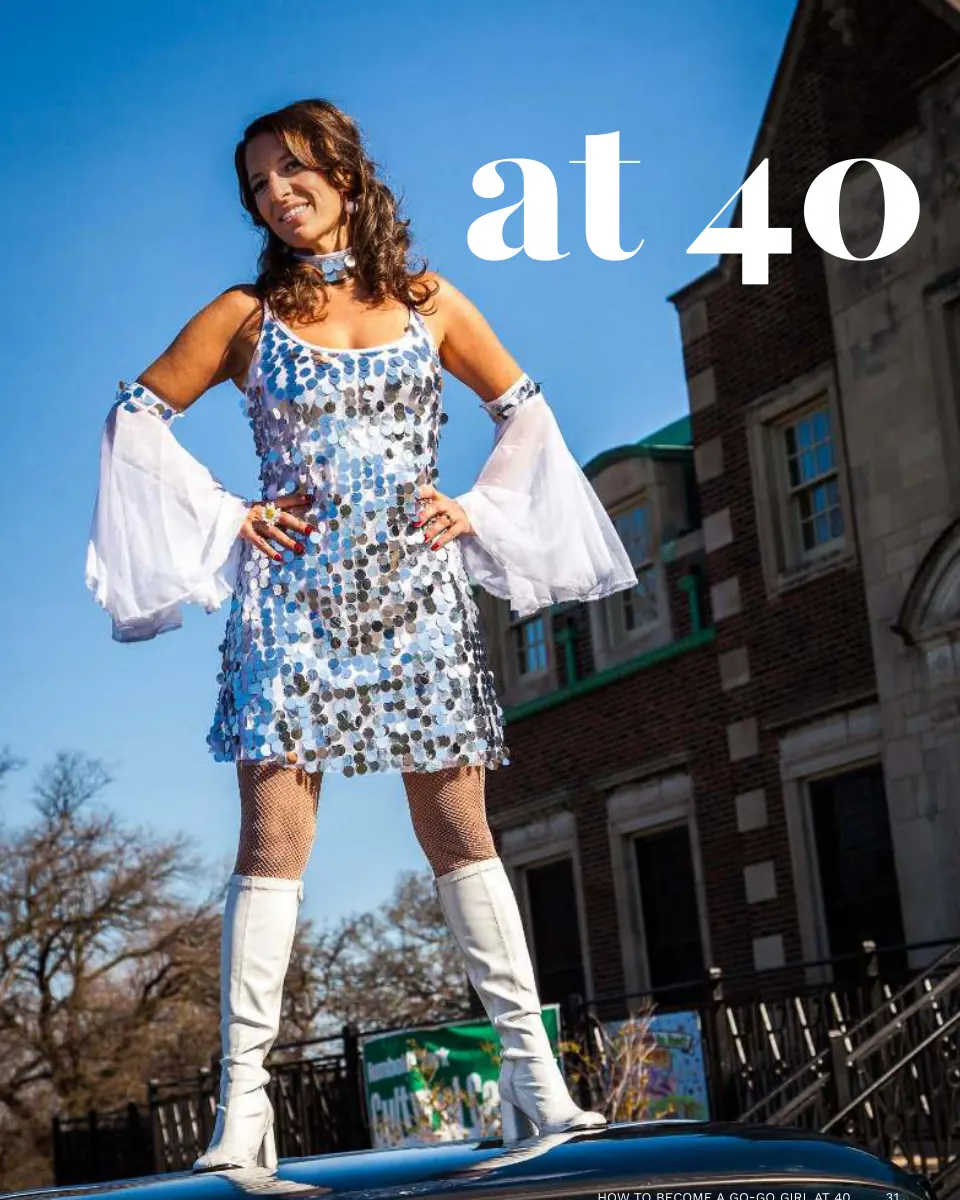
Let’s start with a vision: white go-go boots, a cassette tape blasting ABBA, and a little girl climbing onto the back of a sofa to perform for no one but herself. That girl? Nancy McClelland. And while she didn’t officially become a dancer until she was 40, she’s been ready for the stage
It happened in a cafe. One of those unremarkable tables where remarkable things get said. Nancy, turning 40, was chatting with a friend when the question came up: Is there anything you thought you’d do by now that you haven’t? She paused. Then it came out. “I thought I would’ve studied go-go dancing by now.” The reply? Immediate and unapologetic. “Then why haven’t you?” Nancy offered the usual: Where would I go? Is that even a thing? It’s probably silly. since childhood. “I would climb on top of the sofa and do gymnastics and dancing,” she says. “I was pretty sure
I was fabulous.” Spoiler: she was. She still is.
A midlife confession… and a dare
“Just Google it,” her friend said. So she did. The result? A go-go dance class in Chicago. Ten minutes from her house. Run by a local troupe called The Janes. Monday and Tuesday nights. She showed up that week. Then the next. “A couple months later, they asked me to join the performance troupe,” she says. “It really was meant to be.” “My husband bought me go-go boots. And I danced around the house like the first scene in
Austin Powers.”
The diagnosis that changed everything
Nancy’s dancing life almost didn’t happen. At 27, she was in excruciating pain, hunched over, unsure if she’d ever walk properly again. “I was born with an extra vertebra. It’s wedge-shaped. One fused to the vertebra above, and two below fused together.
There’s spinal stenosis. Multiple scoliosis curves. Herniated discs. It’s a mess in there.” Some doctors told her she’d never walk normally. Others said surgery might leave her paralyzed. She chose neither. Instead, she went to physical therapy and made a quiet, radical request: “I just want to dance again.” She wasn’t talking about the stage. At that point, it was just about being able to move, at a party, in a club, surrounded by friends and music. “That was the goal. That’s what kept me going.” Years later, she still lives with pain and flare-ups. One brutal stretch in 2017–18 left her unable to sit or lie down for 107 days. Sleep came after seizures. But even then, her answer to What do you want most? remained the same.
“I want to dance.” “Sometimes when I dance, I forget I’m in pain. It’s that powerful.”
400 dancers and one unforgettable night
There’s one performance Nancy still talks about with misty-eyed joy. Grant Park. Downtown Chicago. Summer routines. “We usually do these goofy jazzercise moves at bars,” she laughs. “But this time... 400 people danced with us. It was huge.” They danced to Michael McDonald’s Sweet Freedom, Laura Branigan’s Gloria, and Easy Lover by Phil Collins and Philip Bailey. “The crowd smiled the whole time. It was magic. I told my husband it might’ve been better than our wedding day.” Her words. Not ours. “We were on stage, under the lights, leading 400 people. It was euphoric.”
Dance Festival. Her group, the cheekily named Fabulous Ladies of Fitness, was invited to lead a crowd in silly, retro-inspired dance
No pre-show ritual, just rhythm
Unlike public speaking (which she also does), Nancy doesn’t need a pre-performance ritual for dance. “I just throw myself into it,” she says. “Dancing feels natural. Effortless. It’s not conscious.
I’m just in it.” She’s currently rehearsing with the Chicago Chorus Girl
Project for Motoblot, a high-energy motorcycle and music festival. One moment she’s rehearsing in sequins... the next, she’s on a plane to speak at Scaling New Heights, an accounting conference. She contains multitudes.
David Lee Roth,
but make it glam
Does dance bring out a different version of Nancy? Not exactly. “I’m not a reserved person to begin with,” she says. “But inside me, I feel like David Lee Roth. I’m spastic and funny and noholds-barred. That version of me comes out when I dance.” And the song that makes her dance, no matter what? “September by Earth, Wind & Fire. It’s the happiest song in the world. I challenge anyone to top it.” She even choreographed a routine to it for her troupe’s disco night. When another dancer said,
“We don’t do disco,” Nancy’s response was iconic: “Shut up. I’ll choreograph it.” And she did.
Yes, her husband dances too
yours.” She once laughed at her high school prom date’s dancing, and regrets it to this day. “I think he never danced again. That breaks my heart.” Now? She cheers for everyone on the dance floor. The brave ones. The goofy ones. The quiet ones who dance anyway. So if you’ve got a favorite song and a little room to move? Put it on. Start dancing. The rest will follow.
“He’s very introverted. If he’s not in the mood, don’t push him. But when he is? He’s a great dancer. We’ve taken swing classes. He loves 80s new wave.” She pauses, softens. “I didn’t know it mattered to me to marry someone who dances. But I’d be so sad if I didn’t have that in my life.”
“Dance isn’t about being good. It’s about being yours.”
If there’s one thing Nancy wants people to know, it’s this: “You don’t have to be good. You don’t need to get the moves right. You just need to let yourself respond to music in a way that’s
Text adapted from the print edition of Élevé.
 Made with Love
 Under the Lid
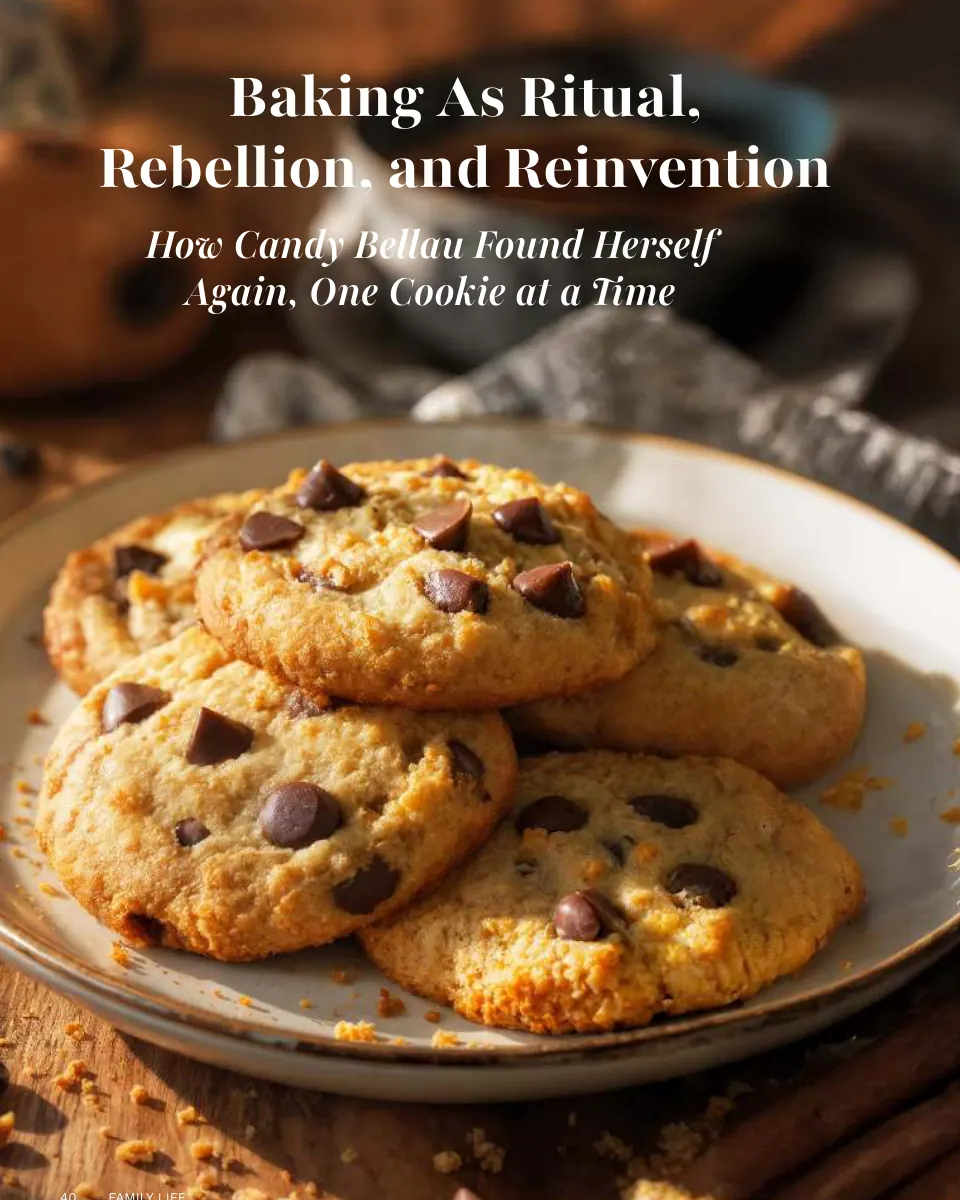 Baking as Ritual, Rebellion, and Reinvention