Élevé · Issue 4 · Quietly Extraordinary
“Maybe This One Is for Me”
She spent twenty-seven years supporting everyone else. At fifty-one, she finally started something that belongs to no one but her.
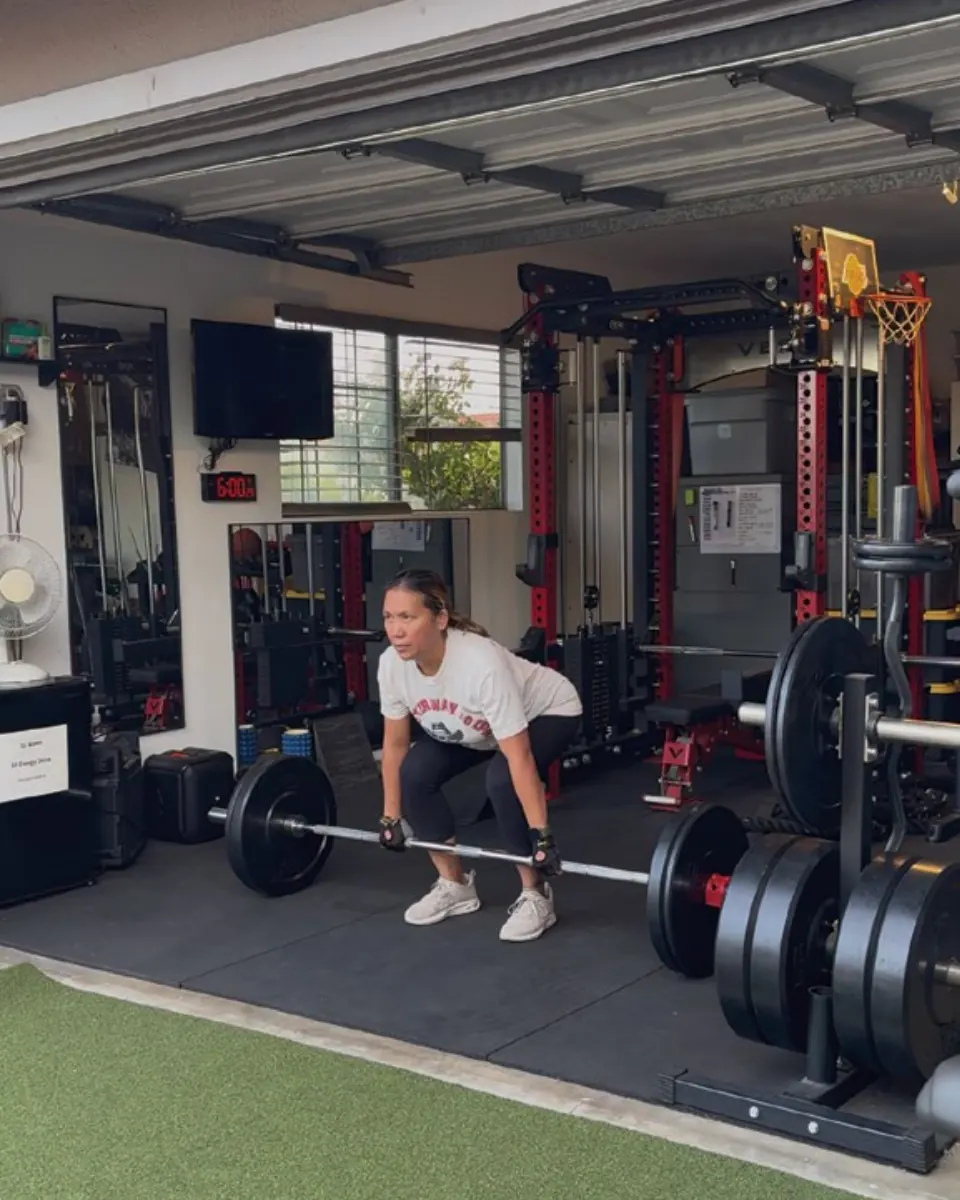
Rheena Zoellers did not want a personal trainer.
She wanted a gym membership, nothing more. But the sign-up came bundled with training hours, her two daughters were egging her on, and she caved. Then she canceled. Again and again. “I was really kind of relieved,” she laughs, remembering the appointments she dodged for months while the charges quietly piled up on her credit card.
Forty pounds down, she’s doing box jumps and chasing pull-ups she never imagined at fifty-one. And, more surprising to a woman who has spent twenty-seven years in the background of everyone else’s life, she has found the one thing that is hers alone.
“Maybe this one is for me,” she thought. She was right.
To understand why that sentence matters so much, you have to understand how rare it is for Rheena to say it. For twenty-seven years (before she had kids, and long after) she has worked in a support role, and she means support in the fullest sense of the word.
“I’ll do whatever grunt work you need me to do,” she says, “so you don’t have to worry about the little things.”
She is not a CPA. She is not an enrolled agent. “I hate numbers,” she admits. “I don’t even know why I’m in this kind of work.” What she does instead is make everyone around her look good, and she has spent a career being deliberately, contentedly invisible while doing it. When colleagues want to thank her, she has a standing request: “Gifts are appreciated but skip the shoutout. I get uncomfortable.”
Five lines from Rheena Zoellers
On the before
“It’s never my schedule.”
On claiming it
“It’s my own now.”
On the turn “This is actually cool.
She raised her daughters the same way she runs a firm’s back office: from just behind them. Her eldest is a dancer, deep in the world of color guard and competitions. Her youngest played indoor and beach volleyball. For years, their calendars were her calendar.
I can actually do this.”
On the habit “After a while, it was just addicting.”
On what’s next
“It’s never my schedule,” she says. Then the girls grew up, graduated, started driving themselves to their own lives. And Rheena found herself, some days, with time she didn’t know what to do with. She began to notice the shape of everyone’s passions but her own.
“My husband has bowling. My eldest has dance, my youngest has volleyball,” she says. “What do I have? Nothing.”
That was the question sitting in the back of her mind when her eldest signed up at a new gym, and Rheena decided she wanted in too. What she did not want was accountability. She knew exactly what a trainer would mean: someone watching, someone checking, someone who would notice when she skipped.
So she found her exits. A campus tour with her youngest ended in a fall. She tripped, couldn’t work out, and canceled two or three sessions in a row with something close to relief. Weeks passed. She never rebooked. The trainer texted, then stopped. Months later, she opened a credit card statement and realized she’d paid a lot of money for training she never used. She went back to the gym almost out of spite for the waste. “I might as well get my money’s worth,” she figured, “then just leave.”
She did not leave.
The first couple of months, by her own account, she wasn’t really trying. But her trainer eventually struck out on his own, coaching clients from his garage, and asked if she wanted to come along. She still had a few paid sessions left; he offered to honor them for free. “I’ve got nothing to lose,” she remembers thinking. “If anything, what I have to lose is just the weight.”
And this time, for reasons she can’t fully explain except that she finally decided to, she listened. She did what he told her. And she felt it.
“This is actually cool. I can actually do this,” she recalls. “I felt lighter, I felt more energized, and my brain fog just cleared.” What began as obligation turned into something she now protects fiercely. “After a while,” she says, “it was just addicting.”
The program that changed her wasn’t built on deprivation, which is the only reason it worked. Dieting had always failed her.
“When I’m hungry, I’m hangry,” she says flatly. “Let me work out more, but don’t reduce my food.”
Her trainer’s rule was the opposite: eat more of the right food, prioritize protein, make smarter versions of the things you love rather than banishing them. So she still eats her In-N-Out (a Double-Double, even, because that’s double the protein); she just skips the spread or the cheese, not both. Her Chick-fil-A order became grilled nuggets with one shake of sauce instead of four packets to dip in. Her yogurt swapped artificial sweetener for plain nonfat with a drizzle of honey and fruit.
Small, sustainable, and, crucially, not a punishment. What she couldn’t get from anyone else was the part she says she hated most: someone who wouldn’t let her off the hook. Her family, she knew, never would. “My kids would say, ‘It’s okay, mom, you can skip today, you deserve to rest, you work hard,’” she says. Her trainer says the opposite. He reviews her logged food and workouts, texts her when the numbers move the wrong way, asks why.
“I hate it,” she says, and then, immediately: “But that’s what I pay him for.”
It is, quietly, the first arrangement in her life built entirely around holding her accountable instead of the other way around.
The results have a way of rewriting how she sees herself. She dropped from a size twelve to a size eight. She learned she could do a burpee and a push-up at once, something she’d watched other people do and assumed was permanently out of reach. The first time she attempted a box jump, she was terrified; now she lands it.
“If someone else can see me doing it,” she says of her trainer’s certainty, “then maybe I can do it.”
For a woman who used to pick her clothes for comfort over anything trendy or nice, she’s started to wonder, cautiously, whether she might dress to feel good rather than just to disappear. “Maybe I can be comfortable but look nice at the same time,” she says. “That has never been in my mind before.”
The confidence is leaking, gently, into the rest of her life. Training new hires still gives her anxiety every month, but less than it used to. She’ll press a colleague for an answer now where before she’d have stayed quiet. “What’s the worst that can happen?” she reasons. “They won’t answer me.”
Saying yes to this very interview was another rep of the same muscle. “I just want to try and push myself out of my comfort zone,” she says, even as she admits that the closer the day came, the more she second-guessed it.
None of this has changed the part of her that loves being in the background. She’s careful about that. “I still love helping people, putting them in front of me,” she says.
“Rheena Zoellers is one of those team members who is just so easy to work with and be around. She's responsive, dependable, proactive, and always willing to jump in and help. And she does so with genuine warmth and positivity. She consistently follows through, cares about the people around her, and truly makes our team better by being part of it!” - K.C. Eames, Director of CAS, Dark Horse CPAs
“Nothing’s changed there.”
What’s new is simply that she has finally added herself to the list.
She’s already hit her goal weight, which meant a new question from her trainer: what now? She surprised herself with the answer. Not more weight loss; that was only ever a side effect. She wanted performance. She wanted to do something she genuinely didn’t think she could.
So she chose pull-ups. She’s working on them now, and she sees the thread running straight from the gym to the page you’re reading. “Let me try to achieve a pull-up,” she says. “Let me try to be open to something like this, opening up a part of my life, not just on social media, but to the public.”
And if she could tell the woman who first walked into that gym anything, it’s the thing she’s still learning to believe.
“Don’t be scared to try. The worst that can happen is that nothing changes, and you remain exactly where you are, safely within your comfort zone. But if you take the chance, you might discover just how much more is possible beyond it.”
Text adapted from the print edition of Élevé.
 Why Not Us
 How One Diagnosis Rewrote Her Whole Story
 Choosing Where the Light Goes