Élevé · Issue 2 · Rooted in Resilience
The Decade She Stayed Silent
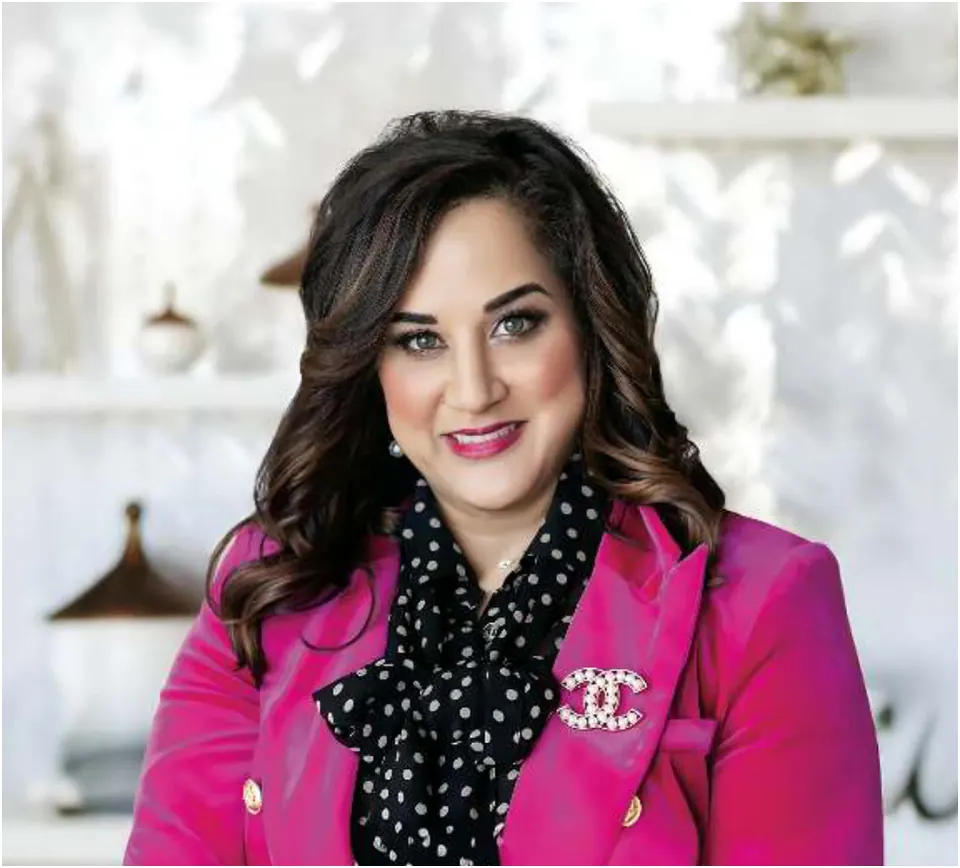
Michelle Mitchell was 42 when her life tilted. One moment she was in the grocery store, pulling a gallon of milk from the cooler. The next, she realized something was terribly wrong. “The milk felt warm,” she recalls. She swapped it for another. Still warm. A third. Same thing. Only when she picked it up with her other hand did she understand, she couldn’t feel temperature in her right hand at all. Days later, she couldn’t feel water on her skin in the shower. A puppy’s scratch left no sensation. Her husband rushed her to the ER. Tests followed: MRI scans, bloodwork, then a spinal tap at the Cleveland Clinic. The diagnosis came quickly, multiple sclerosis. “I had no idea what was going on. Fear came up first,” she says. “What is this? How is it going to impact me?”
Starting a business in secret
The timing couldn’t have been worse. Michelle had just launched her own bookkeeping business. Instead of celebrating a new chapter, she was terrified her clients would see her as incapable. “I didn’t want them to know that I had a health issue going on,” she admits. “I wanted them to know that I was capable of taking care of their books and doing the things that I had agreed to with them.” So she made a choice: silence. For ten years, she told no clients and not even her employees. Only her husband and children knew. “I didn’t want to give the disease any energy. I didn’t want to give it any life in my life.”
Boundaries and balance
In those early years, Michelle managed by setting strict limits. Client visits, still the norm in 2010, were carefully rationed. Rest was scheduled like an appointment. Stress, which can trigger flare-ups, had to be kept in check. “It was about managing my energy,” she explains. “Certain dates, certain hours, and when I was done, I had to rest. I couldn’t overcommit myself.”
At home, her husband stepped in. The family adjusted. Her kids, then in elementary and high school, asked if she was going to die. “That was hard,” she says softly. “MS is not a death sentence. But if you don’t keep the progression under control, it can affect your lungs, your heart, your cognitive ability. We all had to learn together.”
A decade of silence
For ten years, Michelle kept her secret. Not until 2020 did she finally tell her team why she worked the way she did, why her availability was different, why boundaries mattered. “My team has just been rock stars,” she says. “They were like, of course, we will protect your time. We will help you manage that.” When she eventually began telling clients, she realized her fear had been misplaced. “They were caring people. They cared about me as a person first.” By then, she had built a strong team to support her work.
Life beyond business
MS didn’t just reshape Michelle’s company. It changed her definition of success. “Before, success was income, status, what you have,” she says. “Now, my metric of success is how much freedom I have. Life is short, and you should be enjoying your 24 hours, not just one or two weeks of vacation.” It also reshaped her friendships. Support came in the form of meals, offers of help, understanding. Learning to say yes to those gestures wasn’t easy. “For a person with a chronic illness, sometimes you just have to accept when people offer,” Michelle explains. “It makes your life better when you do.”
The mindset shift
Living with MS has given her empathy, not just for herself but for others. “A lot of times people with chronic pain come across as short or angry,” she says. “I try to give people grace. There could be something underlining that they don’t even know is causing their emotions. Having MS taught me to lead with understanding.”
It also sharpened her boundaries. “As women, we take on the weight of everybody else,” she reflects. “With MS, I just couldn’t. I had to set limits.” That shift became a guiding philosophy. Her mornings now begin slowly, with stretches and journaling. Exercise happens later in the day, when her body is ready. Regular massages keep fatigue at bay. She leans on technology to conserve energy, recording client meetings instead of scribbling notes. Vacations are frequent and non-negotiable.
Speaking the truth out loud
For a decade, Michelle’s diagnosis remained private. Then came her first public admission, on stage at Scaling New Heights. “I was so nervous,” she recalls. Her session was about stepping away from your business, and she anchored it with her own reality: “I have multiple sclerosis. I’ve been hospitalized. When
I was new in business, my business stopped. I had to figure out how to move forward and stay in business while managing this disease.” The audience gasped. Some said, “You don’t look like you have MS.” Michelle met it with calm truth: “I don’t look like what I’ve been through. But I’ve been through a lot.” The reaction affirmed her choice to finally speak out. “Even if you’re going through a lot, you don’t have to look like it. You can overcome it. That’s really the message.” Fifteen years later, the diagnosis is still with her, but so is the life she’s built, family, business, friendships, freedom.
Text adapted from the print edition of Élevé.
 You Can Go There, but You Can’t Stay There
 In the Company of Horses
 The Freedom of Far Away