Élevé · Issue 1 · Beyond the Title
A 90-Pound Pivot
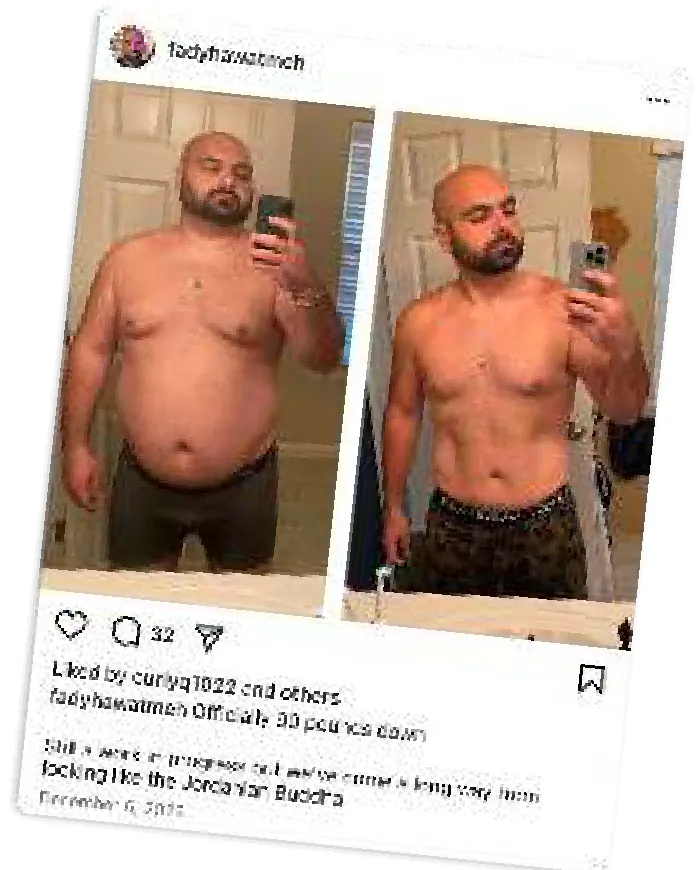
The number wasn’t just high. It was humbling.
Fady Hawatmeh, founder and CEO of the fintech company Clockwork, stood on the scale in silence as it blinked: 308 pounds. He wasn’t shocked, exactly, but it still knocked the wind out of him. “I stepped on and just froze,” he says. “I thought, there’s no way I’m 300-something. That was it. I was done making excuses.” Clockwork had taken up his sleep, his time, his body. He was working 18 to 20 hours a day, sleeping four. “I kept telling myself I was too busy to be healthy,” he says. “But the truth is... I just stopped taking care of myself.” He didn’t move. He barely ate until late at night. Then he’d binge on pizza, pasta, chips, anything that felt like comfort after the chaos. “I wasn’t just unhealthy.
I was hiding from it.”
A promise between siblings
The push didn’t come from a fitness influencer or a New Year’s resolution.
It came from his sister. “She told me she was starting her own journey,” he says. “Seeing a weight loss doctor, getting serious about her mental and physical health. I told her,
‘If you do it, I’ll do it too.’” It was meant to be supportive. But the scale moment made it real. Together, they held each other accountable. Texts, check-ins, shared progress. “She ended up losing almost 90 pounds, too,” Fady says. “We did it side by side.” “Even when I was fat, I was confident.
But I was in pain. And I was hiding.” He doesn’t downplay the truth. “I’ve always been a confident guy. But I wasn’t okay. I was in physical pain. My joints hurt. My clothes didn’t fit. And the depression... it was bad.” That was the thing most people didn’t see. The quiet mental fog that settled in alongside the extra weight. “You can’t feel good when your body is constantly inflamed. It’s like your brain is underwater.”
Walk first, then everything else
Fady’s transformation didn’t start with a personal trainer. It started with a treadmill. “I started walking,” he says. “Incline at 15%, three miles per hour, 30 minutes a day. Five days a week. That’s what started the change.” No excuses. No missed days. Even now, he walks 12,000 steps every day, rain or shine. “Vacation? I’m still walking. It’s who I am now.” He added in pushups and squats, 100 of each, every day, and kept things simple. “Nothing fancy. Just discipline.” And then he overhauled his meals.
“I ate the same thing every day for six months,” he says. “Egg whites, low-carb tortillas, turkey tacos. It was robotic. But it worked.”
“They think it’s complicated,” Fady says. “They want some perfect macro
The alcohol exit
plan. But really? It’s about being honest with yourself.” Move more. Eat less. Stop overthinking. Start walking. “You’re not going to die from being a little hungry,” he says with a grin.
He also gave up drinking. “I wasn’t a big drinker, but when I drank, I drank to get drunk,” he says. “Then I’d eat like crap. Then I’d feel like crap. It was a whole cycle.” Cutting out alcohol helped him cut ties with temptation. “If you can say no to drinks in Vegas at 6 a.m., you
“You’ll survive. And you’ll get stronger.” “I lost 90 pounds. But what I gained can say no to anything.” But the side effect? He lost friends. “You stop drinking, you stop going out. You stop being the fun guy. And was clarity.” This isn’t just a weight loss story. It’s a clarity story. A story about deciding you’re worth the time. The early mornings. The awkward goodbyes. The moments when no one’s clapping people fade away.” He’s okay with it. “I’ve always had a small circle. The people who stayed, but you show up anyway. “You don’t have to suffer,” Fady says. those are the ones who matter.”
“I used to feel guilty after eating a burger. Now I just move on.”
It took time to unlearn the guilt. “At first, I had cheat meals. Then I’d fast for two days to punish myself. It wasn’t healthy,” he says. “Now I eat because I enjoy it. If I want a burger on a Tuesday, I’ll have it.” That shift didn’t happen overnight. “It took me almost two years to find balance. To realize I don’t have to be shredded year-round. I just have to be consistent.”
The routine that rebuilt him
His current rhythm is tight and intentional. Up at 6 a.m. Walk to work, 1.6 miles. No breakfast. At 2 p.m., lunch: eggs, cheese, low-carb wrap. Afternoon walk. Home. Lift weights. Dinner around 7. Popcorn. Greek yogurt. Bed. “It sounds boring. But it gives me structure. It frees up brain space.”
What most people get wrong “You just have to start.”
Text adapted from the print edition of Élevé.
 There’s an Art to Shitposting
 Diamond Days
 Sacred Rhythm